How to Maintain Compliance with Your TAN Card
Struggling with tax deductions? Learn how to maintain compliance with your TAN card easily with this expert guide from CA4Filings. Keep your business safe.
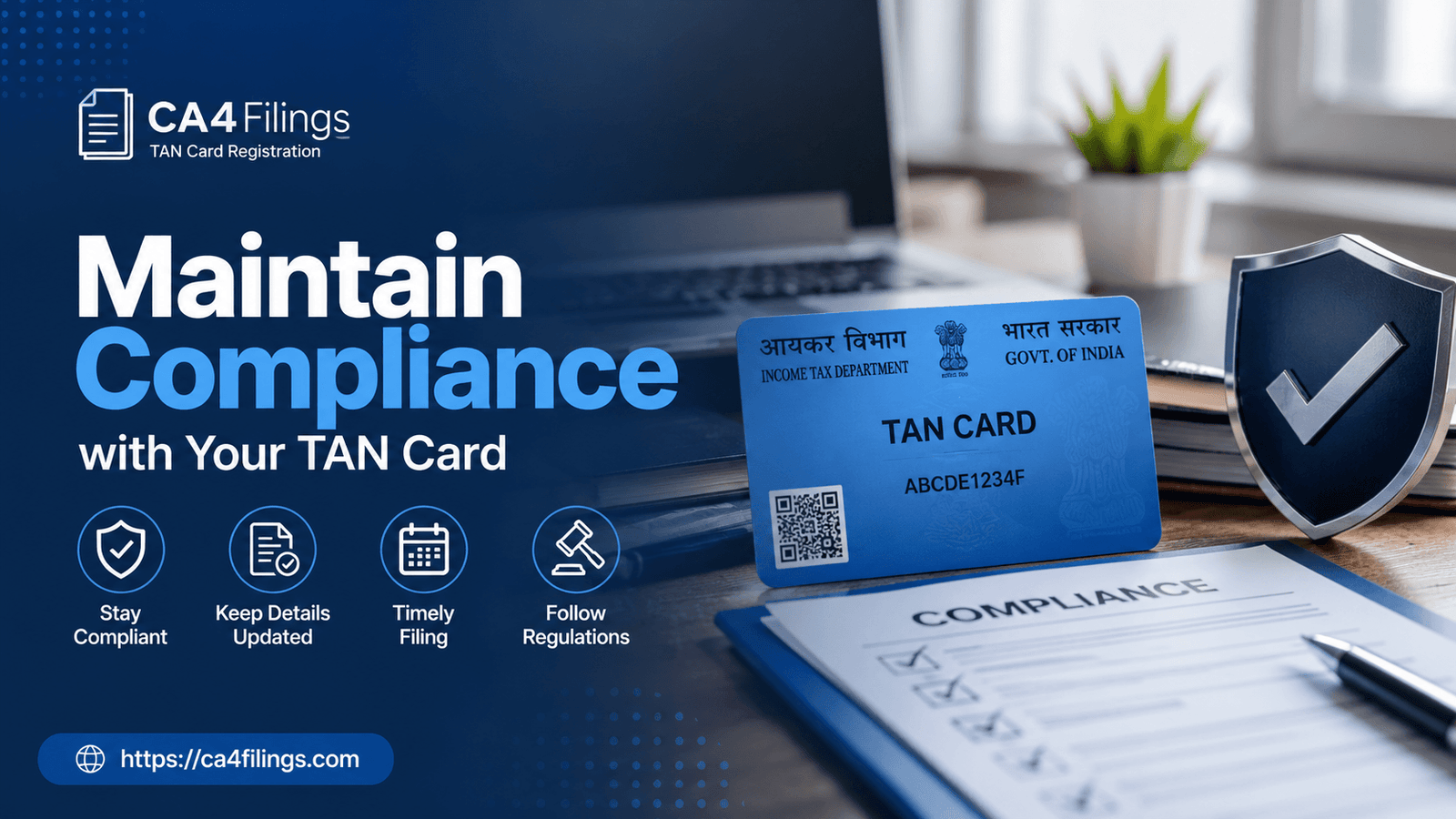
Managing a business in India comes with a fair share of paperwork, but few things are as critical as tax compliance. If you are deducting tax at source (TDS), you already know that a Tax Deduction and Collection Account Number (TAN) is your primary identity. Many business owners approach us at CA4Filings asking for help with Tan Card Registration, but the real challenge often starts after the registration is complete. Understanding how to maintain compliance with your TAN card is not just about avoiding penalties; it is about keeping your financial health in check and your business reputation pristine.
In this guide, I will break down exactly how to maintain compliance with your TAN card so you can focus on growing your business while we handle the technicalities.
Why TAN Compliance Matters for Your Business
Think of your TAN as the backbone of your TDS obligations. Every time you make a payment—whether it is for rent, professional fees, or contractual work—the Income Tax Department expects you to deduct a portion as tax and deposit it using your TAN. If you fail to do this correctly, the department views it as non-compliance, which can lead to hefty interest, penalties, and even late filing fees.
When we look at how to maintain compliance with your TAN card, we aren't just talking about a one-time setup. It is a recurring process of discipline. If your filings are irregular, you risk getting notices that consume your valuable time and resources.
The Pillars of TAN Compliance
To master how to maintain compliance with your TAN card, you need to keep three core pillars in mind: Timely Deduction, Accurate Deposit, and Regular Filing.
1. Timely TDS Deduction
Every payment you make that falls under the TDS net must have the tax deducted at the time of payment or credit—whichever is earlier. Never delay this. If you are unsure whether a payment requires TDS, it is better to consult a professional than to assume.
2. Depositing Tax on Time
Once you deduct the tax, that money belongs to the government, not you. You are essentially a custodian. The deadline for depositing TDS is generally the 7th of the following month. For March, it is extended to April 30th. Keeping track of these dates is the most important step in how to maintain compliance with your TAN card.
3. Filing Periodic TDS Returns
This is where most businesses struggle. You must file quarterly TDS returns (Form 26Q or 27Q) consistently. Even if no tax was deducted in a quarter, you must file a "Nil" return. Skipping a filing period is a major red flag for the tax authorities.
Practical Tips on How to Maintain Compliance with Your TAN Card
As a Chartered Accountant, I see common mistakes every day. Here is my professional advice to keep your records spotless:
Maintain a TDS Register: Don't rely on memory. Keep an Excel sheet or accounting software record of every transaction, the vendor’s PAN, the TDS rate applied, and the deposit date.
Verify Vendor PANs: Always ensure you have the correct Permanent Account Number (PAN) of the person you are paying. If the PAN is invalid or missing, you will be forced to deduct TDS at a higher rate (often 20%), which complicates your reconciliation.
Reconcile with Form 26AS: Periodically check your status online. If there is a mismatch between your records and the government’s data, you need to rectify it immediately.
Update Contact Details: Ensure your email ID and mobile number linked to the TRACES portal are active. This is where the department sends all crucial notices and updates.
Dealing with Notices and Errors
Even the most diligent business owners can make a mistake. If you receive a notice regarding a TAN discrepancy, do not panic. The first step in how to maintain compliance with your TAN card after receiving a notice is to analyze the demand. Often, these are simple interest calculations on late deposits. Respond promptly, pay the interest, and file your correction statements. At CA4Filings, we help our clients navigate these notices by verifying the data and providing accurate responses to the tax department.
Frequently Asked Questions
What happens if I do not file TDS returns on time?
You will be liable to pay a late fee of ₹200 per day until the filing is complete, capped at the amount of TDS deducted. Continued non-compliance can lead to further scrutiny and penalties.
Can I use the same TAN for multiple branches?
Yes, you can use one TAN for the entire organization, provided you are filing consolidated returns. However, some large organizations prefer separate TANs for different branches for better administrative control.
Is it mandatory to file a return if no tax was deducted?
Yes, filing a "Nil" return is highly recommended to keep your compliance record clean and to avoid unnecessary system-generated notices.
How often should I check the TRACES portal?
I suggest checking it once a quarter, immediately after filing your TDS returns, to ensure that the credit is properly reflected against your TAN.
Partnering for Compliance
Mastering how to maintain compliance with your TAN card is essential for any business owner who wants to operate without the fear of legal notices or financial strain. It is a continuous process of accuracy, punctuality, and vigilance. If you find the tax regulations overwhelming, you don't have to navigate them alone.
At CA4Filings, we specialize in simplifying complex tax compliance. Whether you need help with your initial registration or require ongoing support to ensure your TDS filings are error-free, our expert team is here to guide you. Don’t let compliance issues stall your business growth—reach out to us today and let us ensure your business stays audit-ready and compliant.
Latest Updates
ca4filings.com Services



























-registration.png)