The Difference Between Startup Registration and Trademark Registration
Confused about legal needs? Learn the difference between startup registration and trademark registration to secure your business and brand effectively.
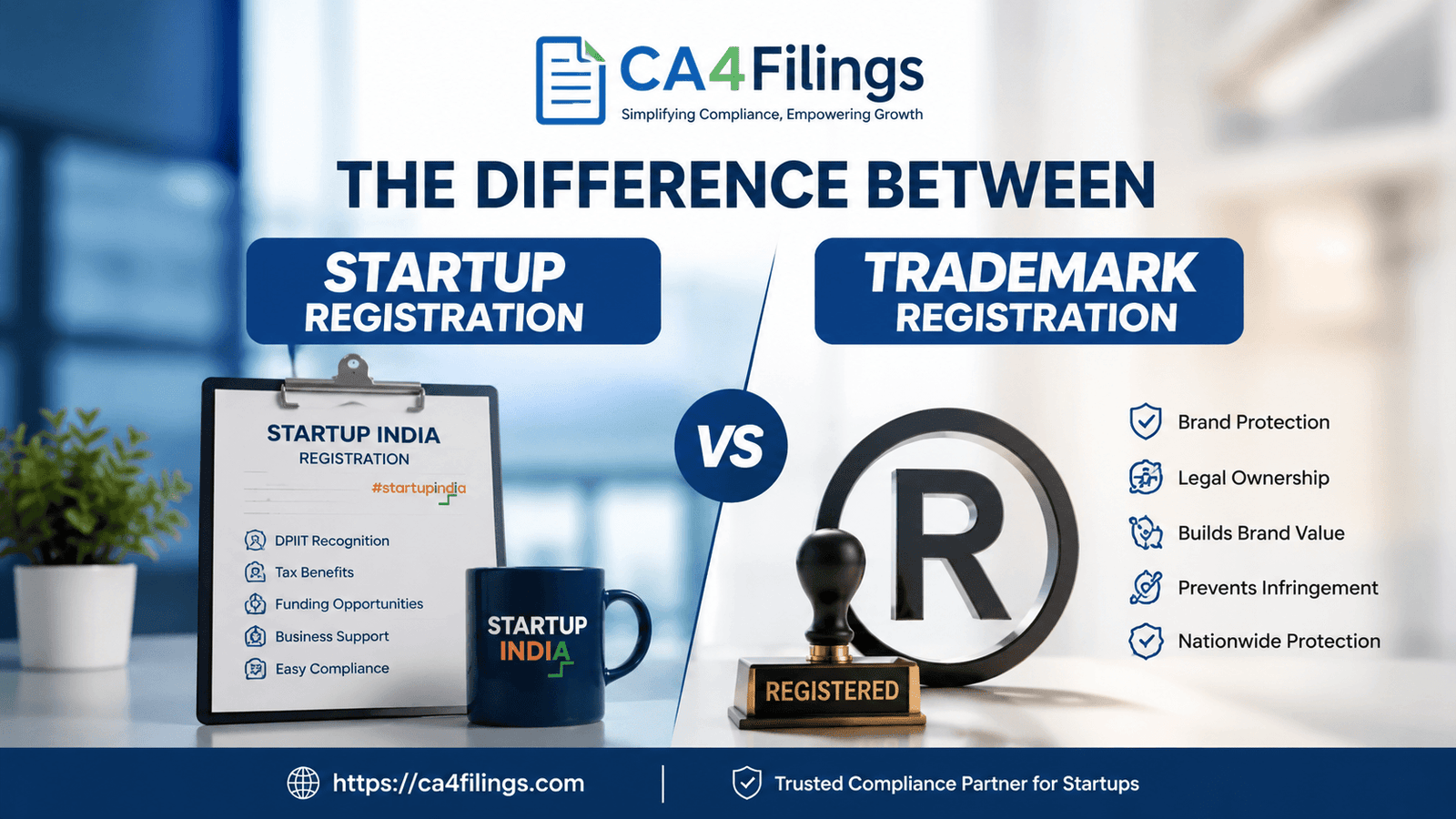
Every day, at CA4Filings, we encounter enthusiastic entrepreneurs who are ready to turn their vision into reality. However, the path to building a successful venture is often cluttered with legal terminology that can be overwhelming. Two of the most common questions we get are about business recognition and brand security. Many founders struggle to understand the difference between startup registration and trademark registration, often assuming they serve the same purpose. To streamline your growth, you might consider our expert Startup India Registration services to ensure your business foundation is rock-solid from day one.
While both processes are vital for a growing enterprise, they operate in completely different spheres of law. Think of business registration as the act of giving your company a birth certificate, while trademarking is like giving your brand a suit of armor. Confusing the two can lead to significant hurdles down the line, which is why we are breaking down the critical differences between startup and trademark registration today.
What is Startup Registration?
At its core, startup registration is about establishing the legal entity of your business. Whether you are forming a Private Limited Company, an LLP, or a Partnership, this process makes your business a recognized "person" in the eyes of the law. It gives you the legal authority to enter into contracts, open bank accounts, and pay taxes.
When we talk about the specific government-recognized "Startup" status under the DPIIT (Department for Promotion of Industry and Internal Trade), we are referring to a special classification. This classification offers several benefits, such as:
Access to government tenders.
Tax exemptions under the Income Tax Act.
Easier compliance norms for labor and environmental laws.
Simplified winding up of the company.
In essence, this is your structural identity. It defines who owns the company and how it functions legally.
What is Trademark Registration?
While your company registration covers your corporate existence, trademark registration covers your brand’s personality. A trademark is a form of intellectual property protection that covers your brand name, logo, slogan, or even a unique sound or color associated with your products.
The primary goal here is business branding development and business identity protection. By securing a trademark, you are preventing others from using a name or logo that is confusingly similar to yours. This is your primary weapon for trademark infringement prevention. If you don't trademark, a competitor could potentially use a name almost identical to yours, leading to customer confusion and dilution of your hard-earned reputation.
Key Differences Between Startup and Trademark Registration
To clarify the difference between startup registration and trademark registration, let’s look at the primary objectives they serve:
| Feature | Startup Registration | Trademark Registration |
|---|---|---|
| Primary Focus | Entity formation & compliance | Brand protection |
| Legal Scope | Corporate/Tax law | Intellectual Property law |
| Main Benefit | Tax benefits, funding, tenders | Prevention of identity theft |
| Mandatory? | Yes, to operate legally | No, but highly recommended |
Why You Need Both for Your Business
Often, new founders ask if they can skip one in favor of the other. Our advice at CA4Filings is always the same: treat these as two pillars of a stable business.
Legal protection for businesses: Startup registration protects your equity and liability, while trademarks protect your market goodwill.
Startup legal requirements: You cannot avail of specific startup tax incentives without the DPIIT recognition, which comes after business registration.
Market Presence: As you scale, your brand name becomes your most valuable asset. A trademark ensures that your brand remains exclusively yours.
The Trademarking Process: A Brief Overview
The trademarking process is distinct from business formation. It involves a thorough search of the trademark registry to ensure your name isn't already taken. Once the application is filed, the trademark office examines it. If there are no objections, your mark is published in the Trademark Journal. If there is no opposition, the registration is granted. This process is entirely focused on protecting your unique business name registration and imagery from being exploited by competitors.
Frequently Asked Questions
Is trademark registration part of the startup registration process?
No. They are two separate processes. You can register a company without a trademark, and you can register a trademark for a sole proprietorship that isn't a "startup" entity.
Does registering my business name mean I have a trademark?
This is a common myth. Registering your company with the Registrar of Companies (ROC) only provides the right to use that name as a legal entity. It does not provide the same broad intellectual property protection that a trademark does.
Can I apply for a trademark before registering my startup?
Yes, you can file a trademark application as an individual (proprietor) even before your formal company is incorporated.
How long does trademark registration take?
The timeline can vary, but generally, it takes 6 to 12 months, depending on whether there are any objections or oppositions filed during the process.
Understanding the difference between startup registration and trademark registration is essential for every Indian entrepreneur. One builds your house, and the other puts a lock on the door. By neglecting either, you leave your business vulnerable to unnecessary legal risks.
At CA4Filings, we specialize in helping businesses navigate these complexities with ease. Don’t leave your brand’s future to chance. Whether you need assistance with entity formation or require professional help to secure your intellectual property, our team is ready to guide you. Contact CA4Filings today and let us handle your legal filings so you can focus on what you do best—growing your business.
Latest Updates
ca4filings.com Services






















-registration.png)