The Role of Section 8 Companies in Rural Development
Discover the role of Section 8 companies in rural development. Learn how these non-profits drive social change and empower India's rural communities.
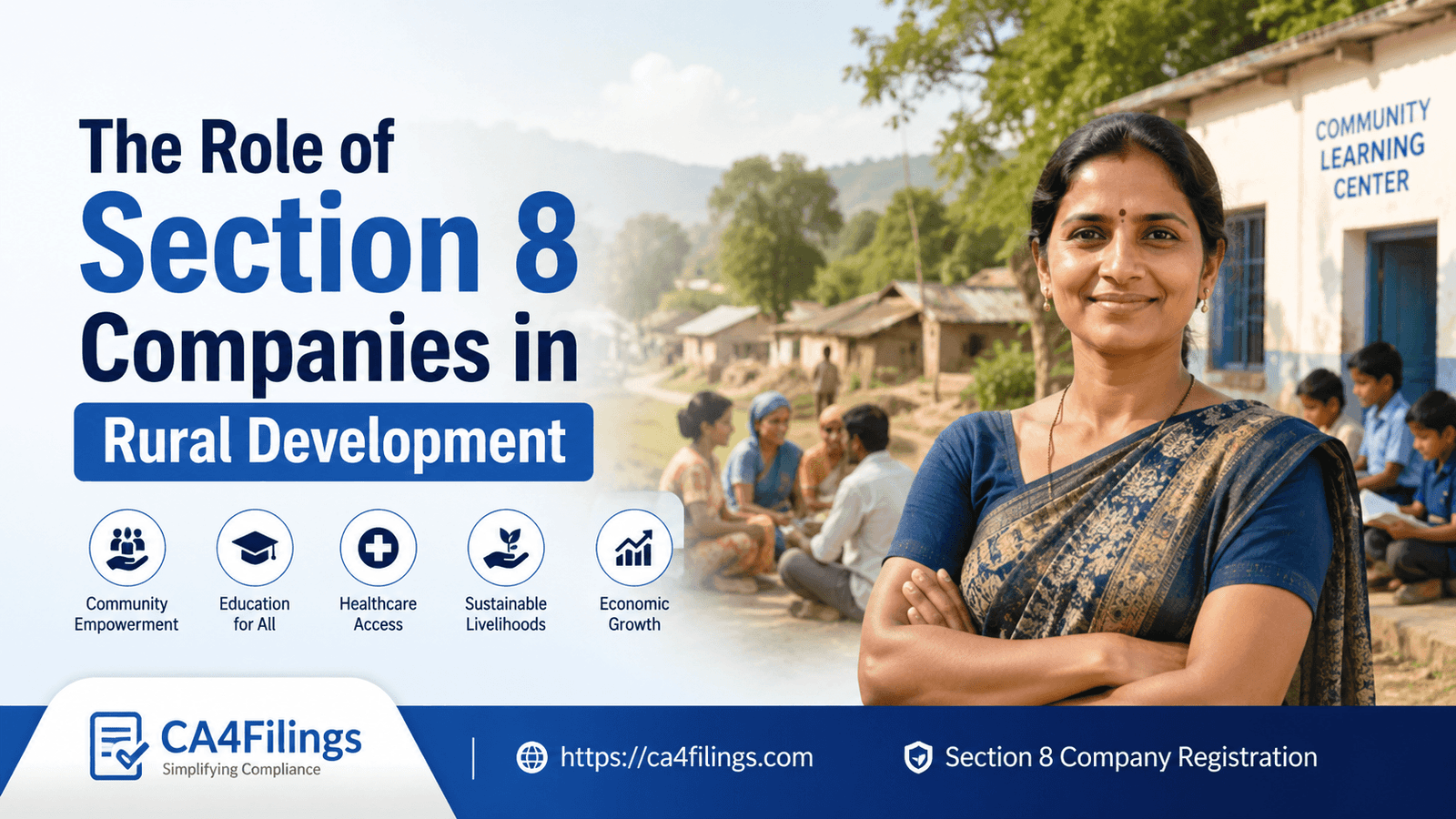
Rural India is the backbone of our economy, yet it faces persistent challenges in infrastructure, education, and healthcare. At CA4Filings, we often talk to visionaries who want to bridge this gap, and one of the most effective vehicles they choose is a non-profit organization. When you decide to initiate the Section 8 Company Registration process, you are essentially setting up a formal structure designed to foster social welfare rather than profit-seeking. The Role of Section 8 Companies in Rural Development is increasingly pivotal, as these entities offer a professional, transparent, and sustainable way to execute long-term grassroots projects.
Understanding the Structure of Section 8 Companies
Many of our clients ask, "Why not just start an NGO or a Trust" While those options are valid, a Section 8 company operates under the Companies Act, 2013, providing a corporate veil and a higher level of regulatory compliance. This builds immense trust among donors, corporate partners, and government bodies.
In the context of rural India, this credibility is everything. When a company is registered under Section 8, its objective is clearly defined: to promote art, science, sports, education, or social welfare. Because they are governed by strict ministry regulations, rural communities often feel more secure working with them, knowing there is accountability for every rupee spent on development.
How Section 8 Companies Drive Rural Transformation
The Role of Section 8 Companies in Rural Development goes beyond simple charity. These entities function more like social enterprises. Here is how they create tangible change:
Skill Development and Vocational Training: Many Section 8 companies establish centers that train rural youth in traditional crafts, modern digital skills, or sustainable farming techniques. This creates local employment and reduces migration to urban centers.
Infrastructure Support: By partnering with local panchayats, these companies often facilitate the construction of clean water facilities, solar lighting, or community sanitation centers.
Healthcare Access: Operating mobile clinics or rural health camps allows these companies to provide medical services where government reach might be limited.
Agricultural Empowerment: From introducing better irrigation technology to providing training on high-yield crops, Section 8 companies provide the knowledge necessary to improve farm incomes.
The Synergy Between CSR and Section 8 Entities
One of the biggest advantages of operating as a Section 8 company is the ease of attracting CSR (Corporate Social Responsibility) funding. Indian law requires certain profitable companies to spend a portion of their profits on social good.
These corporate houses prefer working with Section 8 companies because of their organized nature, audit trails, and professional management. If you are focused on rural development, your entity becomes a magnet for CSR funds, which can scale your impact from a single village to an entire district. This financial stability is crucial, as rural development is not a short-term sprint; it is a marathon that requires steady, long-term funding.
Operational Advantages for Rural Projects
Why does the structure matter for the rural worker on the ground? It comes down to consistency.
1. Sustainability and Scalability
Unlike individual volunteer groups that might dissolve when interest fades, a Section 8 company is a legal person. It lives on even if the original founders move on. This ensures that a school or clinic built by the organization continues to receive funding and maintenance for years to come.
2. Regulatory Compliance as a Tool for Trust
The mandatory annual filings and audit requirements might seem like a burden, but they are a shield. In rural areas, where corruption can sometimes plague development projects, the rigorous compliance required for Section 8 companies acts as a beacon of transparency. Donors know exactly where their money is going.
Challenges and The Path Forward
While The Role of Section 8 Companies in Rural Development is transformative, it is not without hurdles. Bureaucracy, the difficulty of reaching the most remote areas, and the need for constant community engagement can be taxing.
At CA4Filings, we guide our clients through these challenges by emphasizing the importance of a clear "Articles of Association" and a dedicated board of directors. Success in rural India requires you to be part of the community, not just an outsider providing aid. Building local leadership within your project is the key to true sustainability.
Frequently Asked Questions
Is a Section 8 company better for rural work than a Trust?
Generally, yes. Section 8 companies provide a more robust corporate structure, which is often preferred by international donors and large corporate houses looking to partner for CSR activities.
Can a Section 8 company earn a profit?
Yes, it can generate revenue, but that money cannot be distributed as dividends to shareholders. It must be reinvested back into the company’s objectives, which is perfect for sustaining long-term rural development projects.
How does tax exemption work for these companies?
Section 8 companies can apply for 12A and 80G registrations under the Income Tax Act. This allows them to receive tax-exempt donations and provides tax benefits to their donors, which is a major incentive for funding.
Do I need a large team to manage a Section 8 company?
Not necessarily. You can start small, but as you scale your rural development work, you will need a mix of operational staff and administrative support. The key is having a strong governance structure from day one.
The impact of organized, mission-driven entities cannot be overstated. The Role of Section 8 Companies in Rural Development is to provide the structure, transparency, and longevity required to solve systemic problems in India’s heartland. By choosing this path, you are not just helping a village; you are contributing to the building blocks of a new, empowered India.
If you are ready to start your journey in social impact, CA4Filings is here to simplify the complex registration process for you. We understand the nuances of the law and the passion behind your vision. Contact us today, and let’s work together to turn your ideas into a force for rural change.
Latest Updates
ca4filings.com Services


















-registration.png)