Steps to Achieve ISO 14001 Certification: An Environmental Perspective
Learn the exact Steps to Achieve ISO 14001 Certification: An Environmental Perspective to build sustainable business operations with CA4Filings.
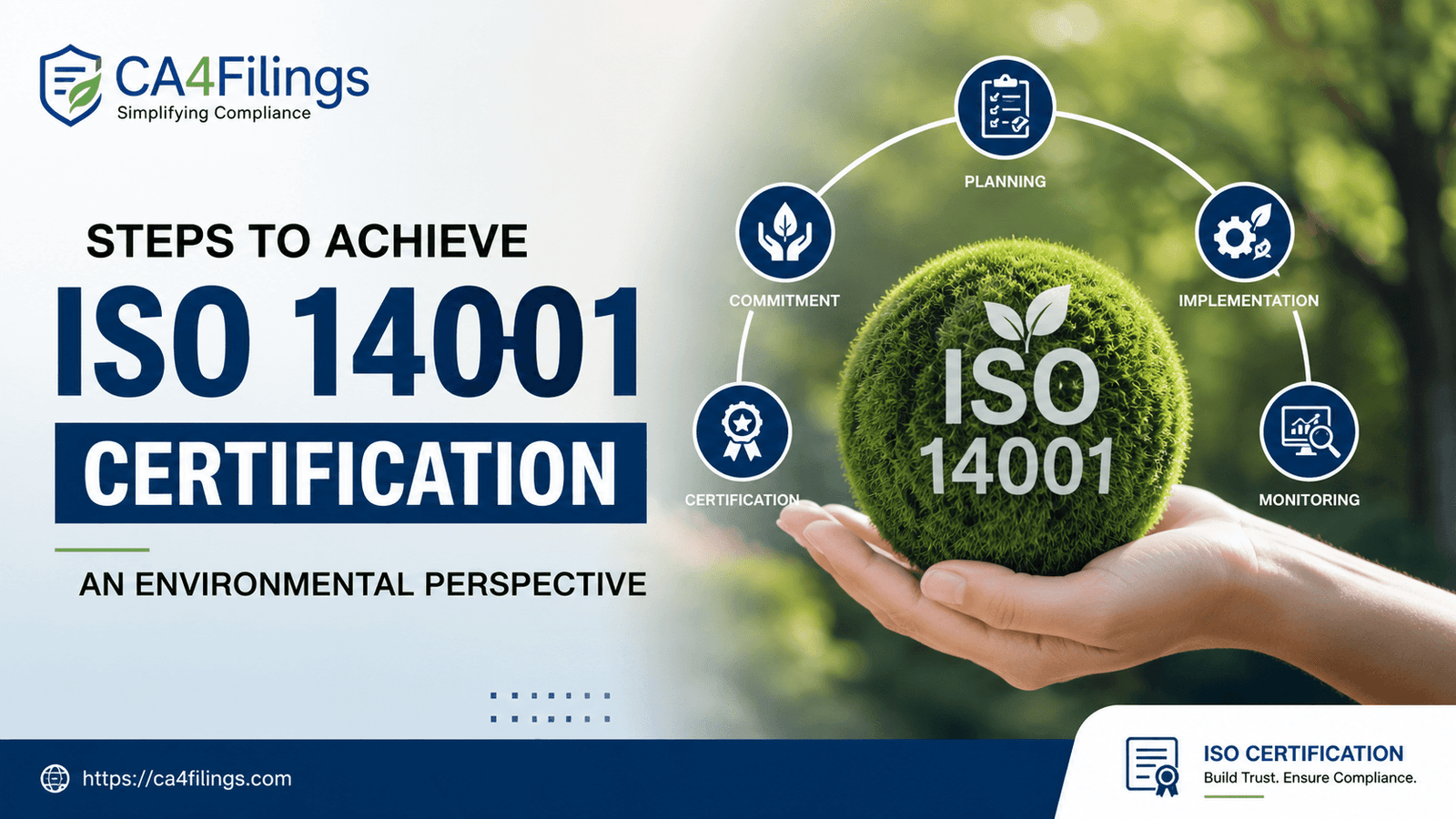
In today’s rapidly evolving corporate landscape, running a successful business is no longer just about maximizing profits or balancing the ledger. As Chartered Accountants, we assist businesses daily with tax compliance and corporate structuring, but we are also witnessing a massive shift toward corporate green initiatives. Investors, consumers, and government bodies are now judging businesses by their environmental responsibility. If you want your business to stand out, cut operational waste, and showcase your commitment to the planet, implementing an environmental management system (EMS) is the way forward. At CA4Filings, we believe that understanding the Steps to Achieve ISO 14001 Certification: An Environmental Perspective is the first definitive stride toward aligning your commercial goals with global environmental standards.
Achieving this framework is not a mere paperwork exercise; it is a strategic business transformation. Navigating global compliance can look intimidating, especially when balancing day-to-day finance and operations. However, secure frameworks like an officially recognized ISO Certification give your business a trusted roadmap to streamline processes, manage environmental impact, and comply with strict environmental regulations. Let us dive deep into how your organization can systematically approach the Steps to Achieve ISO 14001 Certification: An Environmental Perspective.
What is ISO 14001 and Why Does It Matter?
Before looking at the structural phases, it is vital to understand what this standard represents from an environmental perspective. ISO 14001 is an internationally accepted standard that sets out the requirements for an effective EMS. It doesn't state specific environmental performance metrics; rather, it provides a structured blueprint that a company can follow to improve resource efficiency, reduce waste, and drive down costs.
From an environmental perspective, this certification helps companies move away from reactive fixes toward proactive environmental impact management. Instead of dealing with an environmental mishap after it occurs, your business builds defensive systems to prevent resource depletion, minimize pollution, and champion sustainable business operations.
Preparatory Phase: Setting the Foundation
Achieving ISO 14001 certification requires dedication across all tiers of management. It is not something an organization can rush through in a week.
1. Securing Management Commitment
Any significant operational overhaul requires a green light from top-tier leadership. Management must treat sustainability practices not as an optional marketing gimmick, but as a core pillar of corporate governance.
2. Conducting a Gap Analysis
Before implementing new changes, you must map out where your business currently stands.
Review your existing waste disposal methods.
Analyze current energy consumption patterns.
Audit your supply chain to check for eco-friendly practices.
Identify gaps between your current workflows and global environmental standards.
Detailed Steps to Achieve ISO 14001 Certification: An Environmental Perspective
The core architecture of the ISO 14001 framework revolves around the classic Plan-Do-Check-Act (PDCA) cycle. Let us break down the actionable phases required to secure this milestone.
Step 1: Define Your Environmental Policy
Your journey begins with a formal document signed by leadership. This environmental policy acts as the Constitution for your company's green initiatives. It must explicitly state your commitment to:
Continual improvement of your EMS.
Prevention of pollution and reduction of carbon footprints.
Full compliance with regional and national environmental regulations.
Step 2: Identify Environmental Aspects and Impacts
This is the most critical step from an environmental perspective. An "Aspect" is how your business interacts with the environment (e.g., electricity consumption or chemical waste discharge). An "Impact" is the actual change to the environment resulting from that aspect (e.g., resource depletion or soil pollution).
For instance, if you run a manufacturing unit, using plastic packaging is your aspect, while plastic accumulation in landfills is the impact. You must document every single aspect of your company's operations.
Step 3: Establish Objectives, Targets, and Programs
Once you identify your high-priority environmental impacts, set clear, quantifiable goals. Do not just say, "We want to be eco-friendly." Instead, declare, "We will reduce our paper consumption by 40% and transition to 20% solar power within the next twelve months." Assign clear timelines and budgets to these programs.
Step 4: Implementation and Operation (The "Do" Phase)
With your plan finalized, it is time to move it into live operations. This involves:
Competence and Training: Ensure your employees understand the new sustainable business operations. Run workshops explaining how minor adjustments—like turning off unused machinery or sorting waste—contribute to the bigger picture.
Communication: Establish reliable channels for internal and external communication regarding your EMS performance.
Documentation and Control: Maintain precise records of chemical usage, waste logs, and energy bills. From an audit perspective, if it isn't documented, it didn't happen.
Step 5: Checking and Corrective Action
How do you know if your green frameworks are working? You must measure performance continuously. Track your metrics against your initial targets. If you find your energy consumption spike unexpectedly, initiate immediate corrective actions to address the root cause.
Step 6: Internal Audit and Management Review
Before bringing in an external registrar, execute an internal audit. Have a qualified internal team or external professionals review your entire system to ensure strict compliance with the framework. Following the audit, top management must evaluate the findings to ensure the system remains effective and aligned with the company’s strategic goals.
The Final Milestone: External Certification Audits
Once your internal systems are running smoothly, you will contact an accredited third-party certification body to conduct the official review. This assessment happens in two distinct phases:
Stage 1 Audit (Documentation Review)
The external auditor reviews your written policies, documented aspects, legal compliance logs, and internal audit reports. They check whether your framework meets the structural criteria of the international standard.
Stage 2 Audit (On-Site Verification)
The auditor visits your business premises to watch your operations live. They interview employees, check waste storage areas, examine machinery maintenance logs, and verify if your team actually follows the processes outlined in your documentation. If they find no major non-conformities, they officially grant your ISO 14001 certification.
Frequently Asked Questions (FAQs)
How long does it take to get ISO 14001 certified?
For small to medium enterprises, the process typically takes anywhere from 3 to 6 months. For large-scale manufacturing operations or multi-location corporations, it can take up to 9 to 12 months to properly integrate and document all environmental workflows.
Can small businesses apply for ISO 14001 certification?
Absolutely. The framework is designed to scale with businesses of all sizes. Small businesses often find it easier to implement because their operational lines are shorter and communication flows faster.
What are the main benefits of achieving ISO 14001 certification?
Beyond the obvious environmental benefits, it dramatically reduces waste disposal and energy costs, opens doors to international clients who prefer green supply chains, ensures legal compliance to avoid heavy government fines, and boosts your overall brand value.
Partner with CA4Filings for a Greener Tomorrow
Embarking on the Steps to Achieve ISO 14001 Certification: An Environmental Perspective is a powerful testament to your organization’s long-term vision. Transitioning to sustainable business operations and reducing your environmental footprint protects our planet while optimizing your financial bottom line through reduced resource consumption.
As corporate compliance experts, CA4Filings is here to simplify your entire certification roadmap. From initial gap analysis and documentation support to navigating external audits seamlessly, our experienced team ensures your compliance journey is entirely stress-free. Let us help you convert your green initiatives into your brand's ultimate competitive edge. Get in touch with CA4Filings today to start your transition toward certified environmental excellence!
Latest Updates
ca4filings.com Services















-registration.png)