How to Overcome Common Challenges in IEC Registration
Struggling with the DGFT portal? Learn how to overcome common challenges in IEC registration with expert tips from CA4Filings to ensure a smooth process.
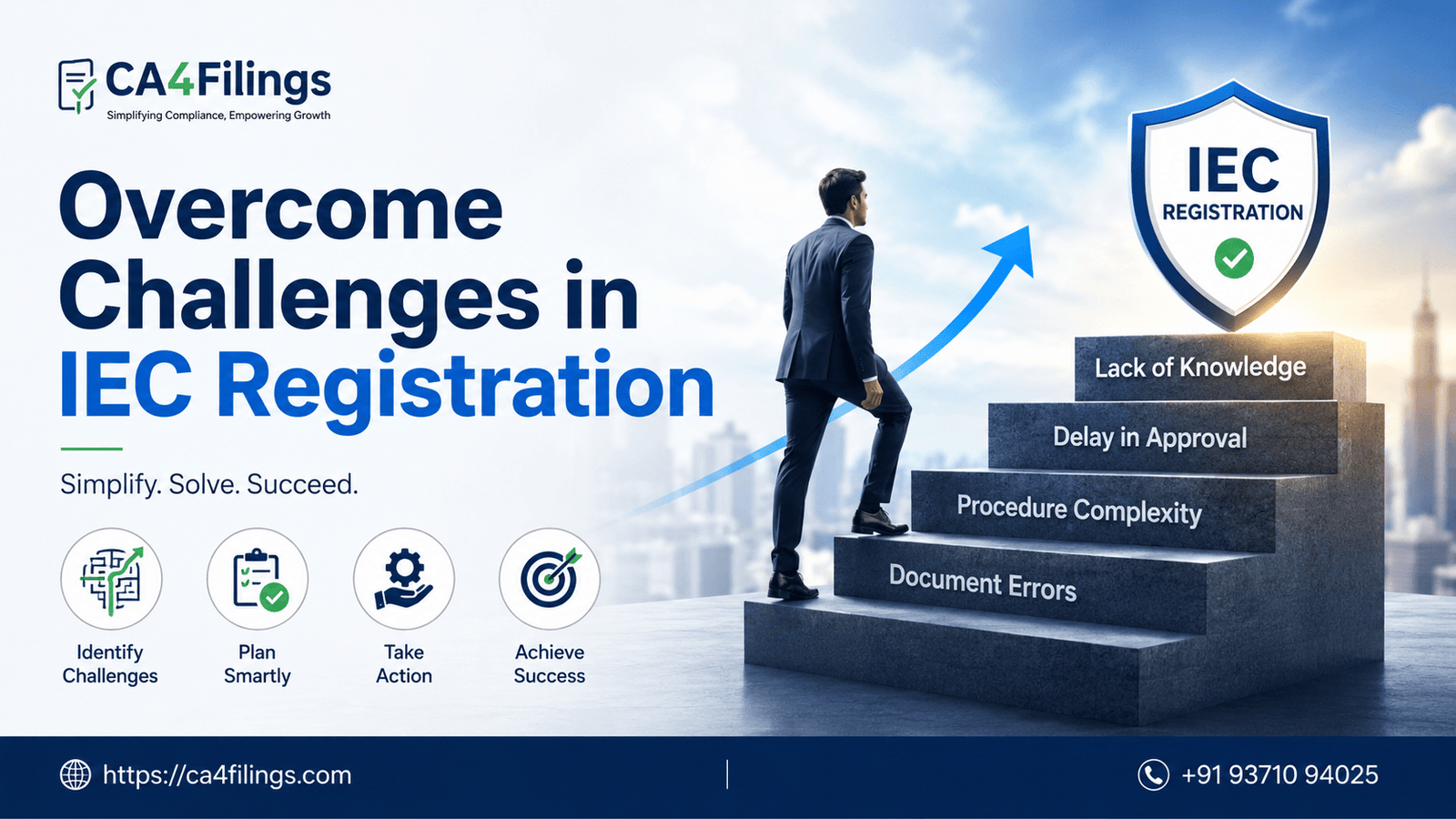
Expanding your business across international borders is a dream for many Indian entrepreneurs. However, the first hurdle in this journey is obtaining your Import Export Code (IEC). If you are looking for guidance on how to overcome common challenges in IEC registration, you are in the right place. At CA4Filings, we have helped hundreds of businesses navigate the complexities of IEC Registration to ensure their global trade journey begins without unnecessary delays. While the process is digitized, many applicants still find themselves stuck due to technical errors, documentation mismatches, or confusion over DGFT guidelines.
In this guide, we will break down the most frequent obstacles and provide you with actionable strategies to move past them, ensuring your application gets approved on the first attempt.
Understanding the Common Roadblocks
Before we dive into the solutions, it is important to identify why applications get rejected or stuck in the "Query Raised" stage. Most issues are not due to complex legal requirements but rather simple oversights. As a Chartered Accountant, I often see business owners struggling with the same recurring issues:
Mismatch in Entity Details: Discrepancies between PAN data, bank records, and the application form.
Technical Glitches: Issues with digital signatures or OTP verification on the DGFT portal.
Incomplete Documentation: Uploading blurry or incorrect documents that do not meet the specified format.
Wrong Classification: Incorrect mapping of business activities or branch details.
How to Overcome Common Challenges in IEC Registration: Step-by-Step Advice
1. Ensuring Data Consistency Across Documents
The most frequent reason for a rejected application is a mismatch in names or addresses. The DGFT system automatically validates your data against the Income Tax Department's database. If your name on your PAN card is "Rahul K. Sharma" but your bank account is registered as "Rahul Kumar Sharma," the system may flag this.
Expert Tip: Before you start your application, ensure that your name, address, and entity type are identical across your PAN card, Aadhaar, and the cancel check or bank certificate you intend to upload. Consistency is the secret to a fast approval.
2. Dealing with Technical Issues on the DGFT Portal
The DGFT portal is robust, but it can be finicky. Sometimes, applicants face issues with DSC (Digital Signature Certificate) integration or OTPs not reaching their registered mobile numbers.
Clear Cache and Cookies: If the page freezes, clear your browser data or try an incognito window.
Check DSC Compatibility: Ensure your browser has the necessary components/extensions installed for your specific DSC provider.
Use Updated Browsers: Always use the latest version of Chrome or Edge.
3. Mastering the Documentation Requirements
To know how to overcome common challenges in IEC registration, you must master the art of document preparation. The portal has specific requirements regarding file size and format.
File Size: Keep your PDF/JPEG files under the specified limit (usually 5MB or less).
Clarity: Ensure all stamps and signatures on your bank certificate are clearly visible. A blurry scan is an automatic trigger for a query.
Valid Bank Details: Ensure the bank account is active and that the cancelled cheque clearly shows the IFSC code and the account holder's name.
Avoiding Procrastination: Why Accuracy Matters
Many business owners rush the process, hoping to save time. Ironically, this is where most delays occur. When a query is raised by the DGFT officer, your application goes to the back of the queue. Re-submitting corrected documents can take anywhere from a few days to a couple of weeks. By being meticulous the first time, you save yourself this waiting period.
Frequently Asked Questions
What should I do if my IEC application is rejected?
Don't panic. Check the "Query" section on your dashboard. It will specify exactly why the application was sent back. Fix the specific document or data point mentioned and re-submit it promptly.
Is it mandatory to have an export order before applying?
No. One of the biggest myths is that you need an export order to apply. You can obtain an IEC even if you are just planning to start your business.
How long does it typically take to get the IEC after fixing errors?
Once you have responded to the queries with the correct information, the approval process is usually expedited, often taking 2–3 working days.
Can I change my address after IEC registration?
Yes, the DGFT portal allows for modifications to your IEC after it has been issued. However, try to provide the correct address initially to avoid the hassle of post-registration amendments.
Navigating government portals can feel like a daunting task, but knowing how to overcome common challenges in IEC registration makes the process significantly smoother. Whether it is ensuring data consistency or handling technical portal requirements, the key is preparation and attention to detail.
At CA4Filings, we specialize in making trade compliance effortless. If you want to bypass the stress and ensure your documentation is perfect from day one, our team of experts is here to assist you. Don't let paperwork hold your business back—let us handle the filings while you focus on scaling your international trade.
Latest Updates
ca4filings.com Services













-registration.png)