Latest Updates and Changes in FSSAI Regulations
Stay updated with the latest updates and changes in FSSAI regulations. CA4Filings explains key compliance shifts for your food business in 2026.
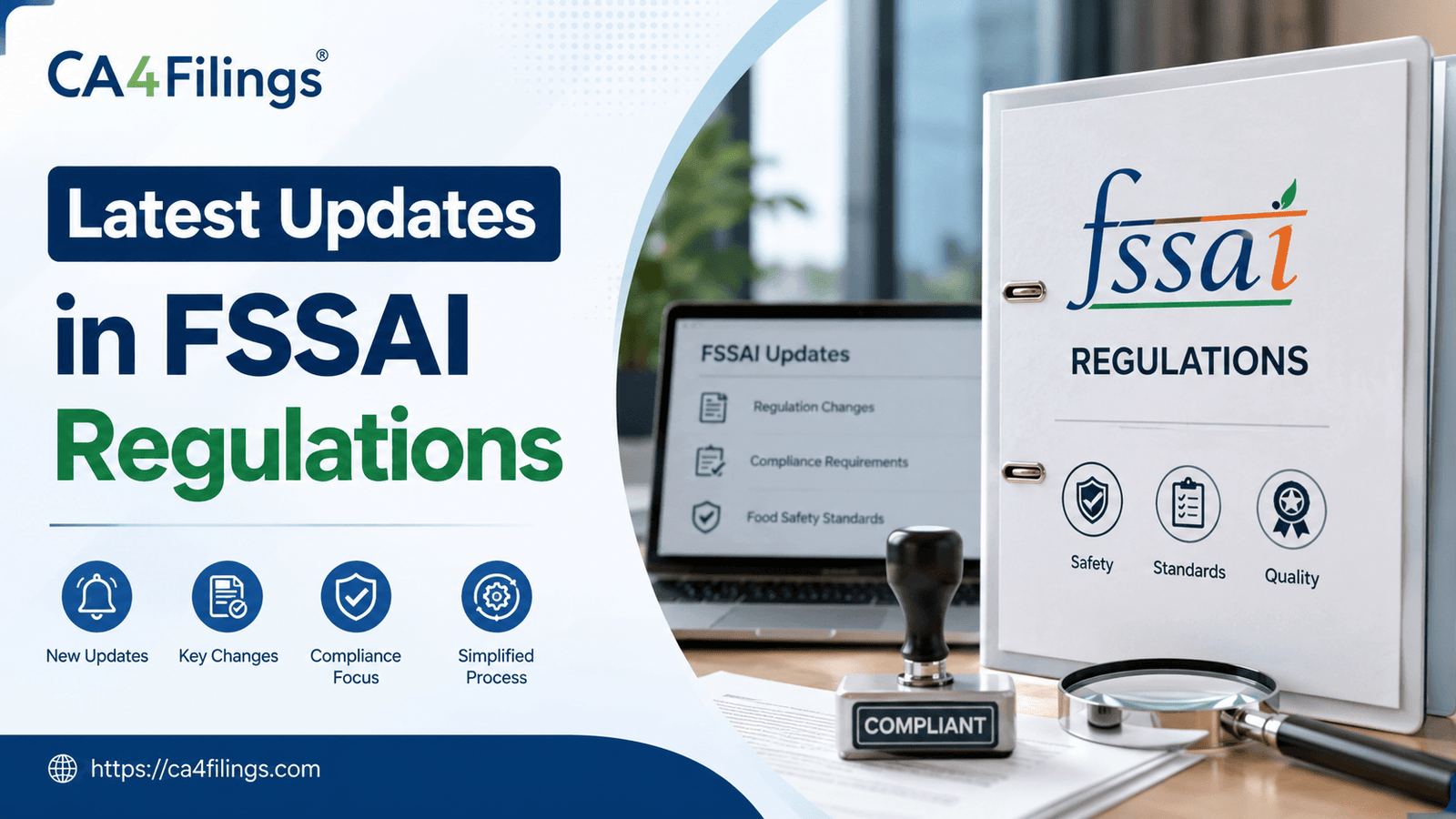
Running a food business in India is an exciting venture, but keeping up with the legal maze can feel like a full-time job. At CA4Filings, we often see entrepreneurs get so caught up in operations that they miss crucial regulatory shifts. If you are looking to streamline your compliance, you might want to explore our FSAAI Registration services to ensure your business stays ahead of the curve. Today, we are breaking down the latest updates and changes in FSSAI regulations that every Food Business Operator (FBO) needs to know for 2026.
Why Staying Updated on FSSAI Regulations Matters
The food industry in India is evolving rapidly. With a growing focus on consumer health, the Food Safety and Standards Authority of India (FSSAI) is consistently refining its standards. Whether it is about food fortification, labeling norms, or digital tracking of safety standards, the latest updates and changes in FSSAI regulations are designed to ensure transparency and safety. Ignoring these isn't just a legal risk—it’s a risk to your brand’s reputation.
Key Focus Areas in the Latest Updates and Changes in FSSAI Regulations
As we move through 2026, the regulatory landscape is leaning heavily toward "preventive" safety rather than just reactive enforcement. Here are the core pillars of the recent shifts:
1. Digital Surveillance and Traceability
The FSSAI has been pushing for stronger digital surveillance. They are encouraging the use of rapid detection tools at the field level, moving away from slow, manual lab-only processes. If you are a manufacturer, ensure your traceability documentation—who provided your raw materials, where they were processed, and how they reached the consumer—is digitized and readily accessible.
2. Standardized Labelling and Nutrition
There is a stricter emphasis on how food labels communicate risks. The latest updates and changes in FSSAI regulations focus on clear disclosure of ingredients, especially regarding allergens, chemical additives, and naturally occurring toxins. If your product packaging hasn't been audited in the last 12 months, now is the time.
3. Food Safety Management Systems (FSMS)
For many businesses, the "one-size-fits-all" approach to safety is over. Regulatory bodies are now mandating sector-specific FSMS. This means a restaurant’s hygiene requirements are being evaluated differently than a large-scale food grain processor. If you haven't implemented a formal HACCP (Hazard Analysis and Critical Control Points) plan where required, you are likely non-compliant.
Practical Insights for FBOs
At CA4Filings, we tell our clients that compliance shouldn't be a "once-a-year" event. It’s a daily habit. Here is how you can practically adapt to the latest updates and changes in FSSAI regulations:
Audit Your Supply Chain: Don't just trust your suppliers. Keep updated documents for every batch of raw materials you receive.
Invest in Staff Training: Many violations occur because the frontline staff—waiters, kitchen helpers, or packaging assistants—don't understand the "why" behind the hygiene rules.
Monitor FSSAI Alerts: The regulator frequently updates the "Permissible Limits" for contaminants. Keep an eye on the official portal for new circulars regarding your specific product category.
FAQs: Understanding the Shift
What are the biggest recent changes in compliance for small businesses?
The focus has shifted toward high-quality record keeping. Even for small outlets, maintaining a clean, sanitized facility with proper waste management and pest control is non-negotiable.
Are there new rules for labeling in 2026?
Yes, there is an increased focus on transparency regarding additives and nutritional profiles. You must ensure your labels match the actual biochemical parameters of your product.
How often should I review my FSSAI license?
You should review your status every time you add a new product line or change your business address. The latest updates and changes in FSSAI regulations imply that any discrepancy between your license and your actual operations can lead to immediate penalties.
Do I need a specialized consultant?
While you can manage basics yourself, the complexity of 2026 regulations often requires an expert eye. A Chartered Accountant or a compliance specialist can help you map your operations against the law to avoid costly fines.
The latest updates and changes in FSSAI regulations might seem daunting, but they are ultimately here to build a safer, more trust-based food ecosystem in India. Being compliant isn't just about avoiding a penalty; it is about building trust with your customers.
At CA4Filings, we are committed to helping you navigate this landscape with ease. Whether you are struggling with a renewal, a new registration, or simply need to understand how these changes apply to your specific product, our team is here to assist. Don’t wait for an inspection to find out where you stand—contact CA4Filings today and let us take the burden of compliance off your shoulders!
Latest Updates
ca4filings.com Services
























-registration.png)