The Process of Creating a Trust Deed: Essential Components
Master The Process of Creating a Trust Deed: Essential Components with this complete guide by CA4Filings. Learn key terms, steps, and legal tips.
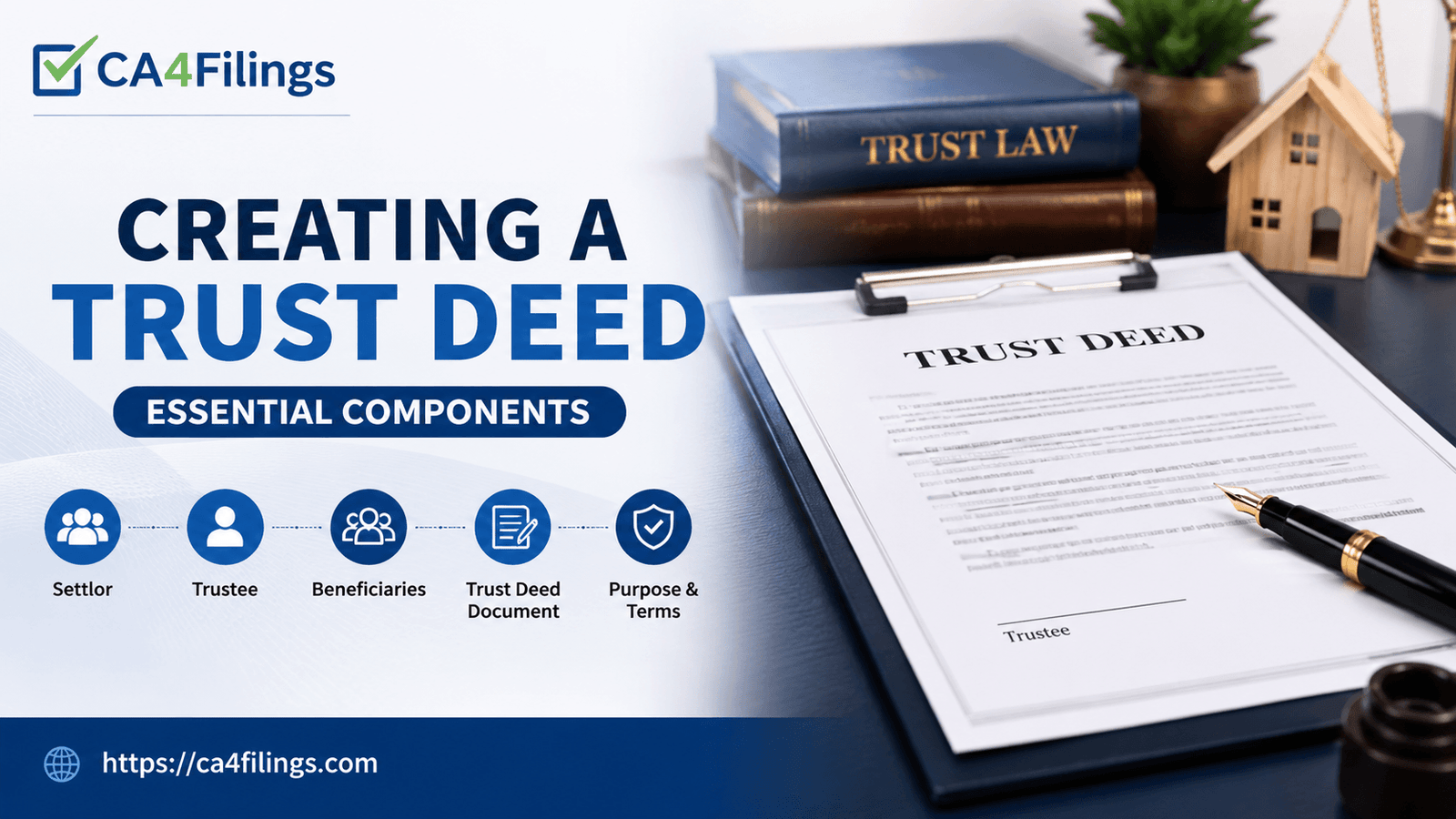
When planning your estate or setting up a charitable venture in India, security and clarity are paramount. Many families and business owners often ask me, "How do we ensure our hard-earned wealth is protected and used exactly the way we intend" The answer almost always lies in creating a robust trust. At CA4Filings, we have helped hundreds of clients navigate this journey. Whether your goal is setting up a private family trust for estate planning or establishing a public charitable institution, the foundation of your entire structure rests on one critical legal document: the trust deed. Today, we will break down The Process of Creating a Trust Deed: Essential Components so you can approach your structuring with complete confidence.
What is a Trust Deed and Why is it Critical?
Before diving into the steps, let us understand what this legal document actually does. In simple terms, a trust deed is the constitution of your trust. It is a formal, written trust agreement that defines why the trust exists, how it will operate, who will run it, and who will benefit from it.
Without a properly drafted deed, a trust cannot legally hold assets or open a bank account. For anyone interested in establishing a trust, getting this document right is the difference between seamless asset protection and endless legal disputes down the road. If you are setting up a public or charitable trust, this deed serves as the primary document required for your official Trust Registration, which unlocks tax exemptions under the Income Tax Act.
The Process of Creating a Trust Deed: Essential Components
Drafting this document requires a blend of legal precision and practical foresight. Let's look at the core elements that must be included to make the deed legally binding and operationally smooth.
1. The Three Essential Parties
Every trust requires three distinct entities to exist. Your deed must clearly identify and state the details of:
The Settlor: This is the person who creates the trust. As the settlor, you are the one transferring ownership of your property or funds to the trust for a specific purpose.
The Trustees: These are the individuals or corporate entities appointed to manage and administer the trust assets. They hold a fiduciary duty, meaning they must always act in the best interest of the trust.
The Beneficiaries: These are the individuals, families, or sections of the public who will receive the benefits or asset distribution from the trust.
2. The Trust Property (Assets)
A trust cannot exist in a vacuum; it needs something to manage. The deed must explicitly mention the initial settlement amount or the specific assets (like real estate, shares, or cash) being transferred by the settlor.
3. The Objectives of the Trust
Why are you creating a trust? The deed must state the clear purpose of the trust. If it is a private trust, the objective might be the education and maintenance of your children. If it is a public trust, the objectives must align with charitable purposes like education, medical relief, or poverty alleviation.
4. Powers and Duties of the Trustees
To avoid internal deadlock, the terms of the trust must clearly outline what the trustees can and cannot do. Can they sell trust property? Can they invest funds in mutual funds or equity? How is a new trustee appointed if one resigns? Spelling out these rules prevents future litigation.
Step-by-Step: Establishing a Trust in India
Understanding The Process of Creating a Trust Deed: Essential Components also means knowing how to execute it in the real world. Here is the workflow we follow at CA4Filings to bring a trust to life:
Step 1: Conceptualization and Asset Identification
First, decide on the name of your trust and define the beneficiaries. You also need to isolate the specific assets you wish to dedicate to the trust.
Step 2: Drafting the Trust Agreement
This is where the actual writing happens. Based on your goals—whether it is purely for estate planning, tax efficiency, or asset protection—the clauses are drafted meticulously.
Step 3: Execution and Stamp Duty
The deed must be printed on non-judicial stamp paper. The value of the stamp duty varies significantly from state to state in India and depends on whether you are transferring movable or immovable property. The settlor and at least two witnesses must sign the document.
Step 4: Registration with the Sub-Registrar
To give the trust legal finality, the deed must be registered with the local Sub-Registrar of assurances. Both the settlor and the trustees need to be physically present (or represented via a valid Power of Attorney) along with ID proofs.
Real-World Insight: The Power of Customization
As a CA, I often see people trying to use generic, downloaded templates for their trust deeds. This is a risky shortcut.
Expert Advice: A trust deed is not a "one-size-fits-all" form. For example, if you are creating a trust for a child with special needs, the terms of the trust must be highly specific regarding asset distribution, medical expenses, and successor trustees. A generic template will fail to address these unique family dynamics, leaving your assets vulnerable.
Customizing your deed ensures proper asset protection, shielding your family wealth from business liabilities, creditors, or matrimonial disputes.
Frequently Asked Questions
Can a settlor also be a trustee in India?
Yes. The settlor (the person creating a trust) can legally be one of the trustees. However, to ensure proper governance and check-and-balance, it is usually recommended to have additional independent trustees.
What is the difference between a private trust and a public trust?
A private trust is created for the benefit of specific, identifiable individuals (like family members). A public trust is created for the benefit of the general public or a large section of society, usually for religious or charitable purposes.
Is it mandatory to register a trust deed?
If the trust involves immovable property (like land or a building), registration under the Indian Registration Act is mandatory. For movable property (like cash or shares), registration is technically optional for private trusts but practically essential if you want to open bank accounts, obtain a PAN card, or claim tax benefits.
Can the terms of a trust deed be changed later?
It depends entirely on how the deed is written. If the deed includes an "Irrevocable" clause without a amendment provision, altering it is extremely difficult and may require court intervention. If it is a "Revocable" trust, the settlor retains the power to alter or cancel it.
Let CA4Filings Handle Your Trust Creation
Navigating The Process of Creating a Trust Deed: Essential Components requires a deep understanding of both the Indian Trusts Act and regional registration laws. One minor oversight in your clauses can compromise your entire asset protection strategy or delay your registration for months.
At CA4Filings, we take the stress out of the entire process. Our team of experienced Chartered Accountants and legal experts will understand your specific goals, custom-draft a bulletproof deed, calculate the exact stamp duty for your state, and manage the registration process from start to finish.
Latest Updates
ca4filings.com Services
















-registration.png)