How to File TDS Returns for Salary Payments
Struggling with compliance? Learn How to File TDS Returns for Salary Payments with our expert guide. Ensure accuracy and meet deadlines with CA4Filings.
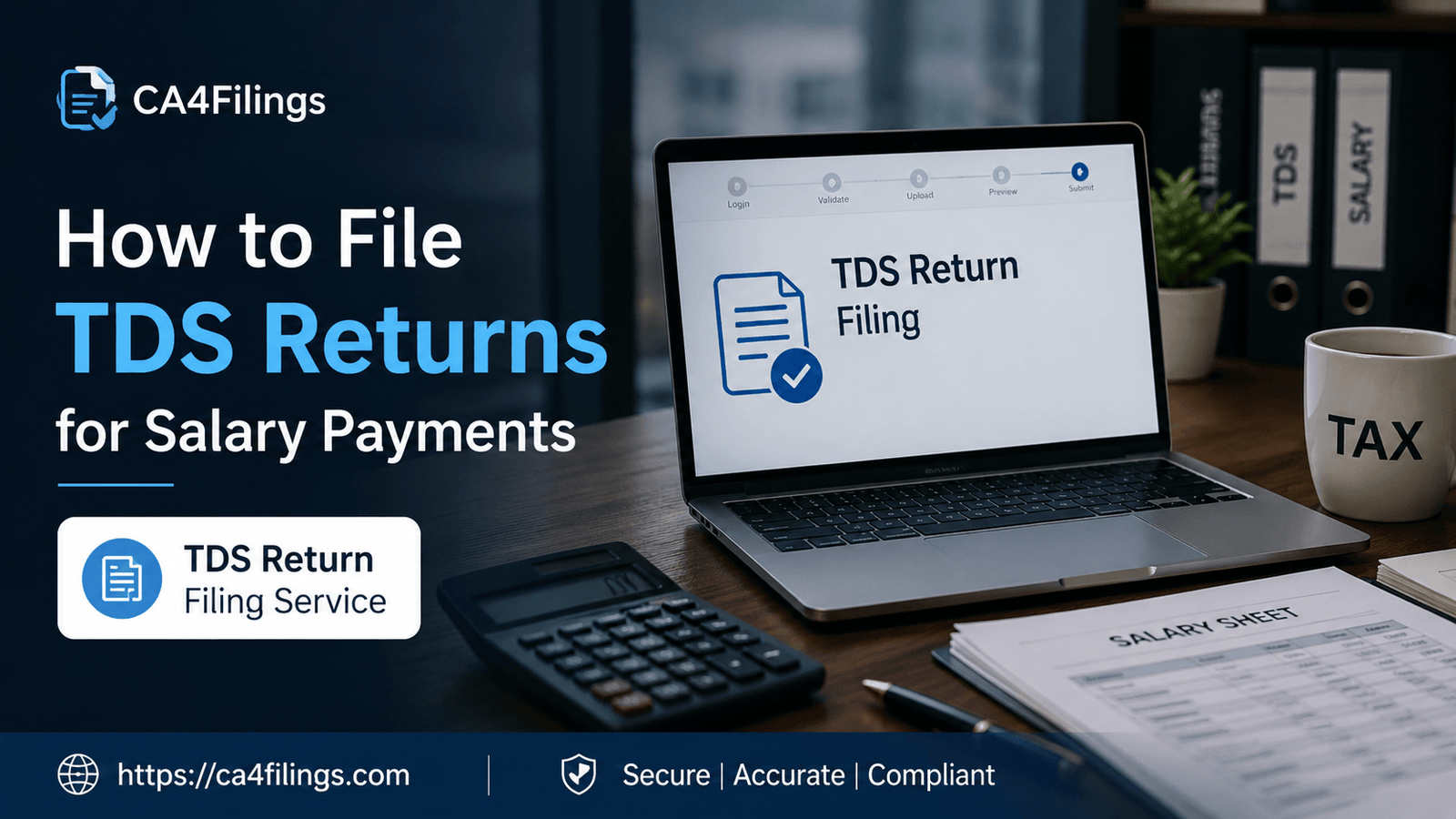
Managing payroll can be one of the most demanding tasks for any business owner in India. Beyond the monthly calculations and disbursing salaries, there is the critical responsibility of statutory compliance. If you are wondering how to file TDS returns for salary payments, you are certainly not alone. Many employers find the tax deduction landscape complex, but getting it right is essential to avoid penalties. If you find the regulatory requirements overwhelming, our TDS Return Filing Service is designed to handle the heavy lifting for you, ensuring that your business remains compliant while you focus on growth.
Understanding TDS on Salary
Tax Deducted at Source (TDS) is a mechanism introduced by the Income Tax Department to collect tax from the very source of income. When you make salary payments to your employees, you are legally obligated to deduct a portion of their income as tax, provided their total estimated income exceeds the basic exemption limit.
Filing TDS returns is the process of reporting these deductions to the government. It is not just a formality; it is a legal requirement that keeps your business records transparent and compliant with Indian tax laws.
The TDS Return Filing Process: A Step-by-Step Guide
Mastering how to file TDS returns for salary payments requires attention to detail. The process is primarily done through the TRACES portal. Here is a breakdown of the steps involved:
Calculate Tax Accurately: Before you even think about filing, ensure you have deducted the correct amount of tax based on the employee's tax slab and declarations.
Deposit the TDS: The deducted tax must be deposited with the government using Challan 281 by the 7th of the following month.
Prepare the TDS Return Statement: You must file Form 24Q, which is specifically for TDS on salary.
Validate via File Validation Utility (FVU): Once your data is ready, run it through the NSDL-provided FVU to ensure there are no errors.
Submit to the Department: Upload the validated file through the TRACES portal.
Issue Form 16: After the return is processed, you must issue Form 16 to your employees, which serves as their TDS certificate.
Critical TDS Return Guidelines for Employers
When learning how to file TDS returns for salary payments, keeping these guidelines in mind will save you from future headaches:
Quarterly Filing: TDS returns for salary are filed quarterly. Ensure you mark your calendar to avoid missing the TDS return deadline.
Accuracy is Key: The TDS return accuracy is paramount. Mismatches between your records and the employees’ Form 26AS can lead to notices from the Income Tax Department.
PAN Verification: Always double-check the PAN of your employees. Providing an incorrect PAN can result in higher tax deduction rates, causing unnecessary stress for your team.
Navigating the TDS Return Due Date
Missing a deadline is the fastest way to invite a penalty. Currently, the TDS return due date for Form 24Q is the 31st of the month following the end of each quarter (e.g., July 31st for the first quarter).
If you fail to submit by the due date, you will be liable to pay a late fee under Section 234E of the Income Tax Act, which is ₹200 per day until the return is filed. This is why having a robust TDS return step-by-step guide and a reliable filing system is non-negotiable for any organized business.
Best Practices for Seamless TDS Return Submission
To ensure the TDS return submission goes smoothly every quarter, we recommend the following expert tips:
Maintain Digital Records: Keep a folder of all tax challans and communication with employees regarding their tax-saving investments.
Review Regularly: Don't wait for the last week of the quarter. Start your reconciliation process early.
Stay Updated: Tax laws evolve. Ensure your payroll software or accountant is updated with the latest changes in slabs or surcharge rates.
Frequently Asked Questions (FAQs)
What is Form 24Q?
Form 24Q is the specific statement used for quarterly filing of TDS on salary payments. It contains details of all payments made to employees and the tax deducted against them.
What happens if I file my TDS return late?
A late filing fee of ₹200 per day is charged for every day the delay continues, until the fine reaches the total amount of TDS deducted.
Can I revise my TDS return if I find an error?
Yes, the system allows for the filing of a "Revised Return" if you discover errors in your original submission. However, it is always better to get it right the first time to avoid unnecessary scrutiny.
Is it mandatory to issue Form 16?
Yes, it is mandatory to issue Form 16 to all employees from whom TDS has been deducted. It is their proof of tax payment.
Partnering for Compliance
Mastering how to file TDS returns for salary payments is a journey of precision and discipline. From ensuring TDS return accuracy to adhering to the strict TDS return due date, the burden of compliance falls squarely on the employer. While we have provided these TDS return tips to help you stay ahead, we understand that your primary focus is running your business.
At CA4Filings, we specialize in simplifying these complex tax procedures for you. Whether you are a startup or an established enterprise, our experts ensure your filings are timely, accurate, and fully compliant with current Indian tax laws. Stop worrying about the complexities of filing TDS returns for salary and let us handle your compliance journey. Contact us today for professional support!
Latest Updates
ca4filings.com Services



























-registration.png)