Understanding the TAN Card Application Form: A Breakdown
Need help with your taxes? Our guide on Understanding the TAN Card Application Form: A Breakdown simplifies the process to ensure a hassle-free registration.
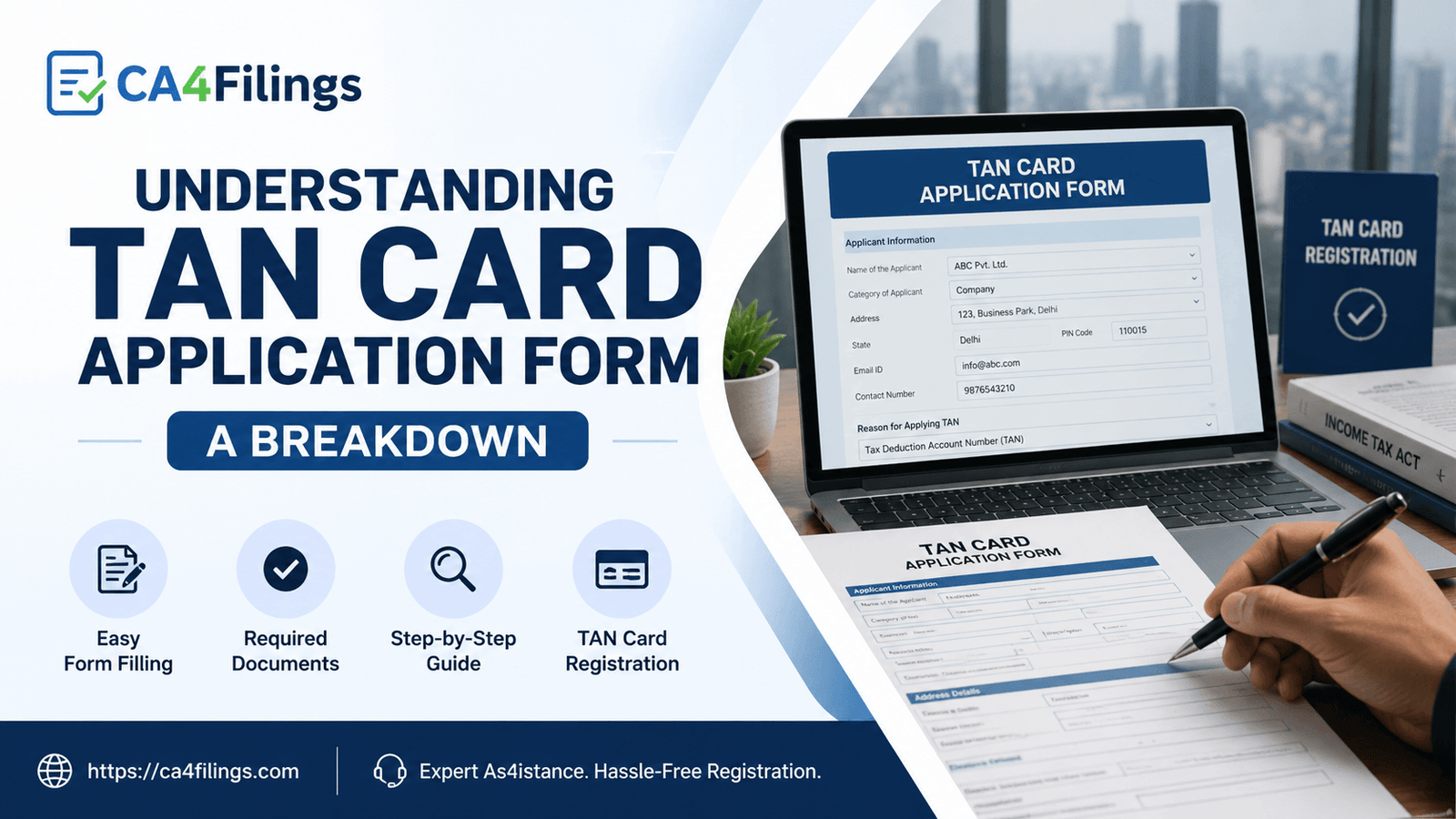
Managing a business in India comes with a fair share of paperwork, and if you are dealing with TDS (Tax Deducted at Source), a TAN is non-negotiable. Many of our clients at CA4Filings often feel overwhelmed when they first look at the official documents, which is exactly why we created this guide on Understanding the TAN Card Application Form: A Breakdown. Navigating the legalities of tax compliance doesn't have to be a headache. If you are ready to get started, you can streamline your process by visiting our Tan Card Registration page to ensure everything is filed correctly from the start.
Why the TAN Card Form Can Feel Intimidating
When you sit down to apply for TAN card, it is natural to feel a bit cautious. The TAN card application form (Form 49B) asks for specific financial details that, if entered incorrectly, can lead to delays or rejection.
From my experience as a Chartered Accountant, most errors happen because applicants rush through the TAN card details without verifying their existing business registrations. Whether you are a sole proprietor or a private limited company, the Income Tax Department needs precise information to link your tax deductions to the correct legal entity. Think of this TAN card form guide as your roadmap to avoiding those common pitfalls.
Breaking Down the Sections of Form 49B
To make Understanding the TAN Card Application Form: A Breakdown easier for you, let’s look at how the form is structured. You aren't just filling out boxes; you are verifying your business identity.
1. The Category of Deductor
This is the most critical part of the TAN card form breakdown. You must select the correct category—be it a company, a partnership firm, or an individual. Selecting the wrong category is the most common reason for application rejection. Ensure that the status you choose matches the PAN card or the Certificate of Incorporation of your entity.
2. Identifying Details
Here, you will provide the name of the entity, the branch, and the address. It is essential that the address provided here matches the proof of address document you intend to upload. Even a minor discrepancy in the building name or pincode can trigger a query from the assessing officer.
3. Contact and Designation
This section asks for the contact details of the person responsible for TDS compliance. TAN card application tips from us at CA4Filings: always ensure the contact person is someone who is consistently available, as the department may reach out for clarification during the processing phase.
Essential TAN Card Requirements You Need Before You Start
Before you open the portal, gather these documents. Having these ready is the secret to a smooth TAN card application process:
Proof of Identity: A copy of the PAN card for the entity or the individual.
Proof of Address: Recent utility bills, rent agreements, or property tax receipts.
Authorization Proof: Board resolution or a letter of authority if you are signing on behalf of a company.
Proactive preparation is the best way to handle TAN card requirements. When you have your digital copies ready, the entire process takes mere minutes.
Common Mistakes to Avoid During Your Application
Even with a detailed TAN card application help manual, mistakes happen. Here is what we see most often:
Mismatch in Data: The name on the TAN application must be identical to the name on the PAN.
Incorrect Jurisdictional Code: Ensure you select the correct Assessing Officer code. If you aren't sure, don't guess—look it up on the NSDL website.
Incomplete Contact Details: Missing out on an email address or a valid phone number will cause you to miss updates regarding your application status.
Frequently Asked Questions (FAQs)
Is a TAN card the same as a PAN card?
No. A PAN is for tax identification of an entity, whereas a TAN (Tax Deduction and Collection Account Number) is specifically required for persons who are responsible for deducting or collecting tax.
How long does it usually take to receive the TAN?
Once you submit the application and the payment is successful, it typically takes 7 to 10 working days to receive your TAN allotment letter via email.
Can I track my application?
Yes. Once you submit the form, you will receive an acknowledgment number. You can use this to check the status on the official NSDL/Income Tax portal.
Do I need a physical card?
Unlike a PAN card, a "TAN card" is essentially an allotment letter. You don't receive a plastic card, but the allotment letter serves as your official document.
Let CA4Filings Handle the Complexity
We hope this guide on Understanding the TAN Card Application Form: A Breakdown has cleared the fog surrounding the registration process. While it may seem like a straightforward form, the legal nuances can be tricky. At CA4Filings, we specialize in helping businesses stay compliant so you can focus on what you do best—growing your business.
Latest Updates
ca4filings.com Services



























-registration.png)