The Future of Startup India: Trends and Predictions
Explore The Future of Startup India: Trends and Predictions. Learn about key sectors, emerging technologies, and expert strategies for 2026.
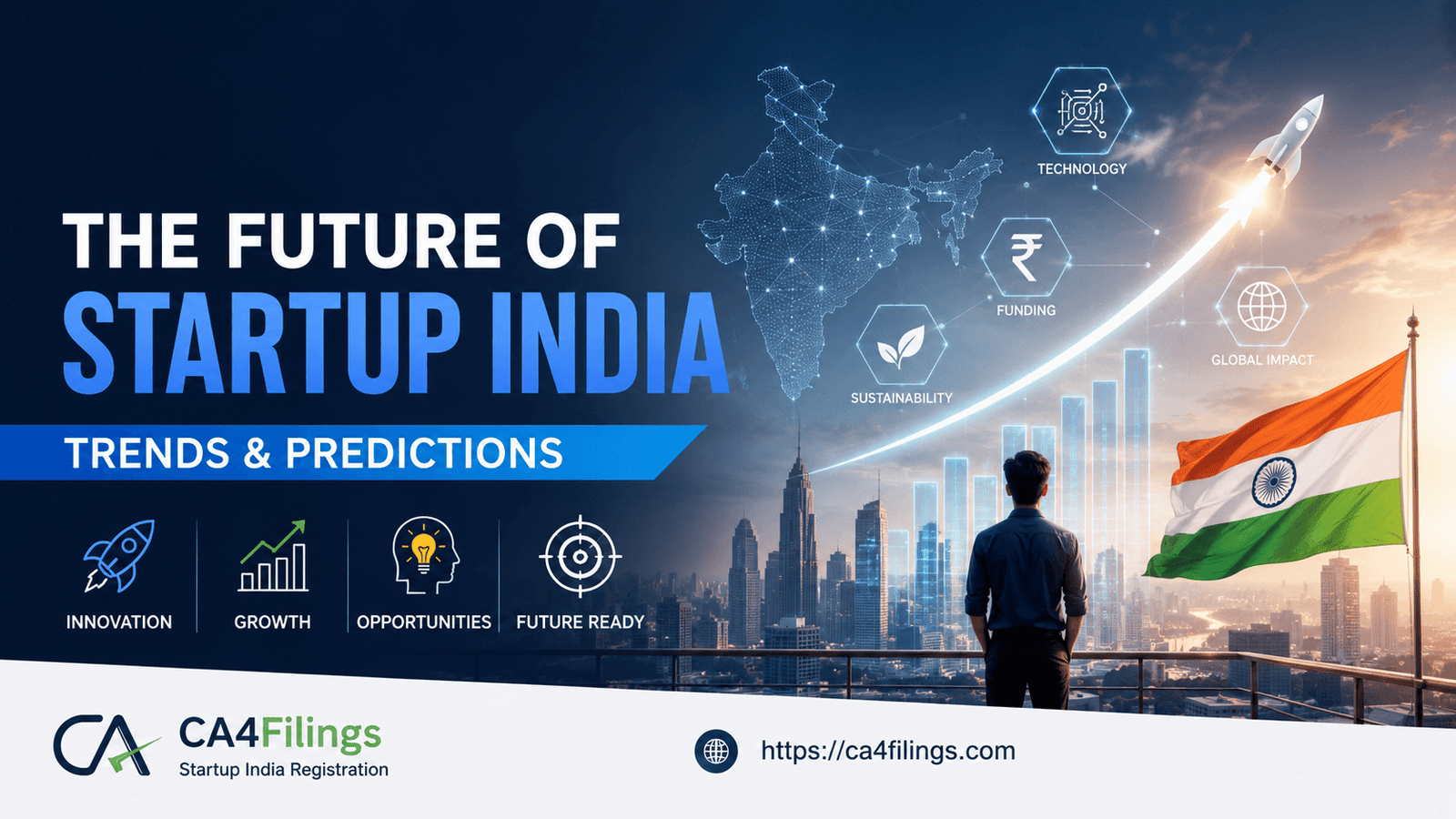
The Indian startup landscape has evolved significantly over the last decade. As we navigate through 2026, it is clear that we are moving past the era of "growth at any cost" and stepping into a period of disciplined, intelligent scaling. For any entrepreneur looking to enter this space, getting your Startup India Registration in place is the essential first step to securing government benefits and building a solid foundation. Understanding The Future of Startup India: Trends and Predictions is not just about keeping up with headlines; it is about future-proofing your business model in an increasingly competitive market.
The Evolution of the India Startup Scene
If you look at the India startup scene today, the transformation is palpable. We have moved from a decade defined by simple consumer internet plays to one dominated by deep tech and B2B solutions. Investors are no longer just looking at pitch decks; they are performing deep due diligence. This shift towards profitability and sustainable unit economics is the biggest change in current market trends.
As a Chartered Accountant, I often tell my clients that the "funding winter" wasn't a signal of a dying ecosystem, but a necessary correction. It pushed founders to prioritize growth strategies that rely on actual revenue rather than just vanity metrics.
Key Sectors Driving Growth
When we talk about The Future of Startup India: Trends and Predictions, we must look at where the "smart money" is flowing. Several emerging industries are set to define the next few years:
Fintech: Beyond simple payments, we are seeing a massive shift toward credit underwriting for the underserved and wealth management solutions for the masses.
Health Tech: With a focus on diagnostics and teleconsultation, health tech is bridging the gap between urban specialists and rural patients.
Edtech: The focus has shifted from standard K-12 learning to skilling and vocational training for the modern workforce.
Agritech: Using satellite data and IoT to improve yield, this sector is finally unlocking the potential of rural markets.
Sustainability & Green Tech: As regulatory pressures on carbon emissions increase, startups helping enterprises track and reduce their footprint are seeing unprecedented demand.
The Role of Innovative Technologies
Technology is the backbone of the next wave of entrepreneurship in India. We are seeing a shift where innovative technologies are moving from being "features" to "infrastructure."
The Rise of Artificial Intelligence
Artificial intelligence is no longer just for big corporations. In 2026, we see AI being integrated into the very fabric of small-scale manufacturing, logistics, and customer service workflows. It’s about hyper-automation—using AI to lower costs while scaling operations.
Blockchain and Decentralized Solutions
While the hype around crypto has settled, the practical application of blockchain—specifically in supply chain transparency, land records, and secure data handling—is becoming a standard requirement for startups operating in regulated sectors.
Digitalization as a Mandate
Digitalization is now a basic hygiene factor. Whether it is digitizing the MSME supply chain or bringing local kirana stores online, the "Bharat" story is essentially a story of digital inclusion. If your startup isn't leveraging digital tools to optimize its supply chain or customer reach, you are already falling behind.
Navigating Venture Capital and Funding
One of the most important predictions for the coming years is that venture capital will remain selective but robust for companies with clear paths to profitability. The days of "just raise more" are over. Founders must focus on building deep intellectual property (IP) and recurring revenue models.
If you are a founder, focus on your CAC (Customer Acquisition Cost) and LTV (Lifetime Value). Investors today want to see that you can sustain your business without needing an endless supply of external capital.
Essential FAQs for Future-Ready Founders
What is the most critical factor for startup success in 2026?
Focus on unit economics and a clear, scalable problem-solving approach. Avoid burning cash to acquire customers who won't stick around.
Is it necessary to have a tech background to start a business?
Not at all. Your role as a founder is to solve a problem and manage operations. You can always partner with technical co-founders or outsource development, provided you have a clear product vision.
How do government policies impact the startup ecosystem?
Policies like the Startup India initiative provide essential tax benefits, easier winding-up processes, and access to government procurement portals like GeM, which can be a game-changer for early-stage companies.
Are Tier-2 and Tier-3 cities worth focusing on?
Absolutely. In fact, many of the most innovative startups today are being built in cities like Indore, Jaipur, and Coimbatore. Lower operational costs and a massive untapped market make these cities ideal for "Bharat-first" models.
Understanding The Future of Startup India: Trends and Predictions requires a shift in mindset. It is about moving from "growth at any cost" to "growth with purpose." As the ecosystem matures, the opportunities for founders who focus on deep-rooted, structural problems are endless. Whether you are building in AI, agritech, or fintech, the key is to remain disciplined, compliant, and customer-centric.
At CA4Filings, we help thousands of entrepreneurs navigate the complexities of registrations, compliance, and tax structuring. Your journey toward a successful startup starts with a strong, compliant foundation. Reach out to our expert team today, and let us help you turn your vision into a sustainable, growth-oriented business.
Latest Updates
ca4filings.com Services























-registration.png)