How to Navigate the Taxation System as a Registered Startup
Struggling with tax compliance? Learn how to navigate the taxation system as a registered startup with our expert guide from CA4Filings. Start today.
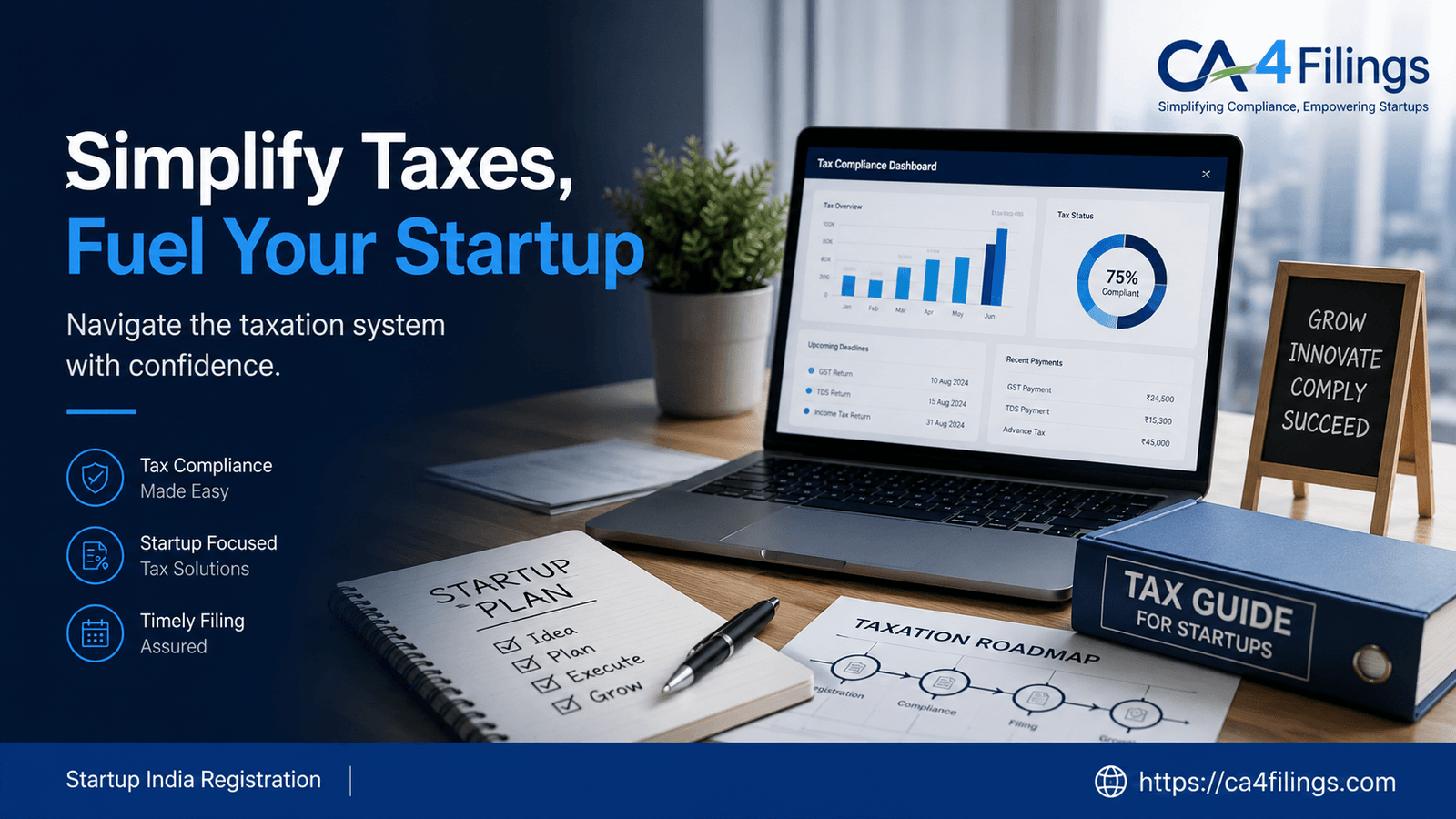
Starting a business in India is an exhilarating journey, but for many founders, the maze of compliance can quickly dim that initial spark. You might have a brilliant product, but how to navigate the taxation system as a registered startup is often the deciding factor between long-term sustainability and avoidable penalties. At CA4Filings, we often tell our clients that tax planning is not just about filing returns; it is about building a foundation that allows your business to scale without unnecessary friction. Ensuring you have completed your Startup India Registration is the first step toward unlocking various government incentives and tax holidays that every new founder should be aware of.
Understanding the Startup Taxation Landscape
The Indian taxation system is vast, and for a startup, it can feel overwhelming. However, once you are a registered entity, the government provides several avenues to ease your burden. The key is to view tax not as a hurdle, but as a strategic component of your financial optimization.
When we look at startup taxation, we are essentially looking at how you manage your corporate tax, GST, and TDS. Many founders fall into tax pitfalls because they treat their startup like a personal bank account. This is a mistake. Professional tax management requires a clear separation of personal and business finances, coupled with a proactive approach to tax compliance.
Key Tax Obligations Every Founder Must Know
Navigating the taxation system as a registered startup involves staying ahead of your tax obligations. Whether you are a Private Limited company or a Limited Liability Partnership (LLP), your requirements are specific.
Corporate Tax Filing: Depending on your turnover, your tax rates may vary. Utilizing the Section 80-IAC tax exemption for recognized startups is one of the most effective tax tips we provide to our clients.
GST Compliance: If your annual turnover exceeds the threshold limits, GST registration is mandatory. Regular filing is crucial to maintaining a clean record.
TDS (Tax Deducted at Source): You are responsible for deducting tax on specific payments like rent, professional fees, or salaries. Failure to do this correctly is one of the most common tax pitfalls we see.
Professional Tax: Do not forget to register for Professional Tax (PT) in the respective state where you operate.
Strategic Tax Planning for Financial Optimization
Financial optimization is not about evading tax; it is about smart tax planning. How to navigate the taxation system as a registered startup successfully requires you to leverage every available credit and deduction.
Utilizing Tax Credits and Deductions
Recognized startups can enjoy a tax holiday for three consecutive years out of the first ten years of incorporation. To claim this, your entity must be certified by the DPIIT. Furthermore, investing in R&D and employee-related expenses can often be structured to provide significant tax insights and savings. Always ensure your accounting software is updated, as accurate books are the backbone of any legitimate tax claim.
Avoiding Common Tax Pitfalls
One major error we see is founders failing to file their "Nil" returns when there is no business activity. Even if your startup has not generated revenue, maintaining compliance is essential. Missing a deadline can attract hefty late fees, which is the last thing a bootstrapped startup needs.
How to Navigate the Taxation System as a Registered Startup: A Step-by-Step Approach
To stay on top of your game, we recommend a disciplined routine. Here is how CA4Filings suggests you approach your tax cycle:
Maintain Digital Records: Use cloud-based accounting to track every invoice and expense.
Quarterly Reviews: Don't wait until the end of the financial year. Meet with your CA quarterly to assess your tax liability.
Audit Readiness: Keep your documentation (contracts, invoices, employee records) organized. Being audit-ready at all times gives you peace of mind.
Stay Updated: Taxation laws in India change frequently. Subscribe to government notifications or follow professional updates to keep your strategy relevant.
Frequently Asked Questions (FAQs)
1. Is it mandatory for all startups to pay income tax?
Yes, if your startup generates profit, it is liable for income tax unless you have specifically qualified for an exemption under the Startup India scheme.
2. What are the benefits of being a "recognized" startup?
Recognition from DPIIT allows you to apply for tax holidays, easier winding up procedures, and access to various government tenders.
3. How often should I consult with a professional about my taxes?
At minimum, you should have a tax management review once a quarter to prevent any surprises during the annual filing season.
4. Can I claim deductions for my marketing expenses?
Yes, legitimate business expenses, including marketing and advertising, are deductible from your gross revenue, lowering your overall taxable profit.
5. What happens if I miss a tax filing deadline?
Missing a deadline results in penalties and interest. Furthermore, it negatively impacts your startup's compliance rating, which could affect future funding rounds.
Secure Your Startup’s Future with CA4Filings
Knowing how to navigate the taxation system as a registered startup is a journey that requires an expert in your corner. At CA4Filings, we specialize in simplifying the complex world of Indian taxation for entrepreneurs. We don't just file your returns; we act as your financial partner, providing the tax insights you need to grow your business confidently.
Don’t let tax compliance hold your vision back. Contact the experts at CA4Filings today to streamline your startup's finances and focus on what you do best—building your business. Let’s make your taxation strategy your competitive advantage.
Latest Updates
ca4filings.com Services

























-registration.png)