Tips for Maintaining Transparency in Section 8 Companies
Discover expert Tips for Maintaining Transparency in Section 8 Companies. Learn about compliance, and building donor trust from CA4Filings.
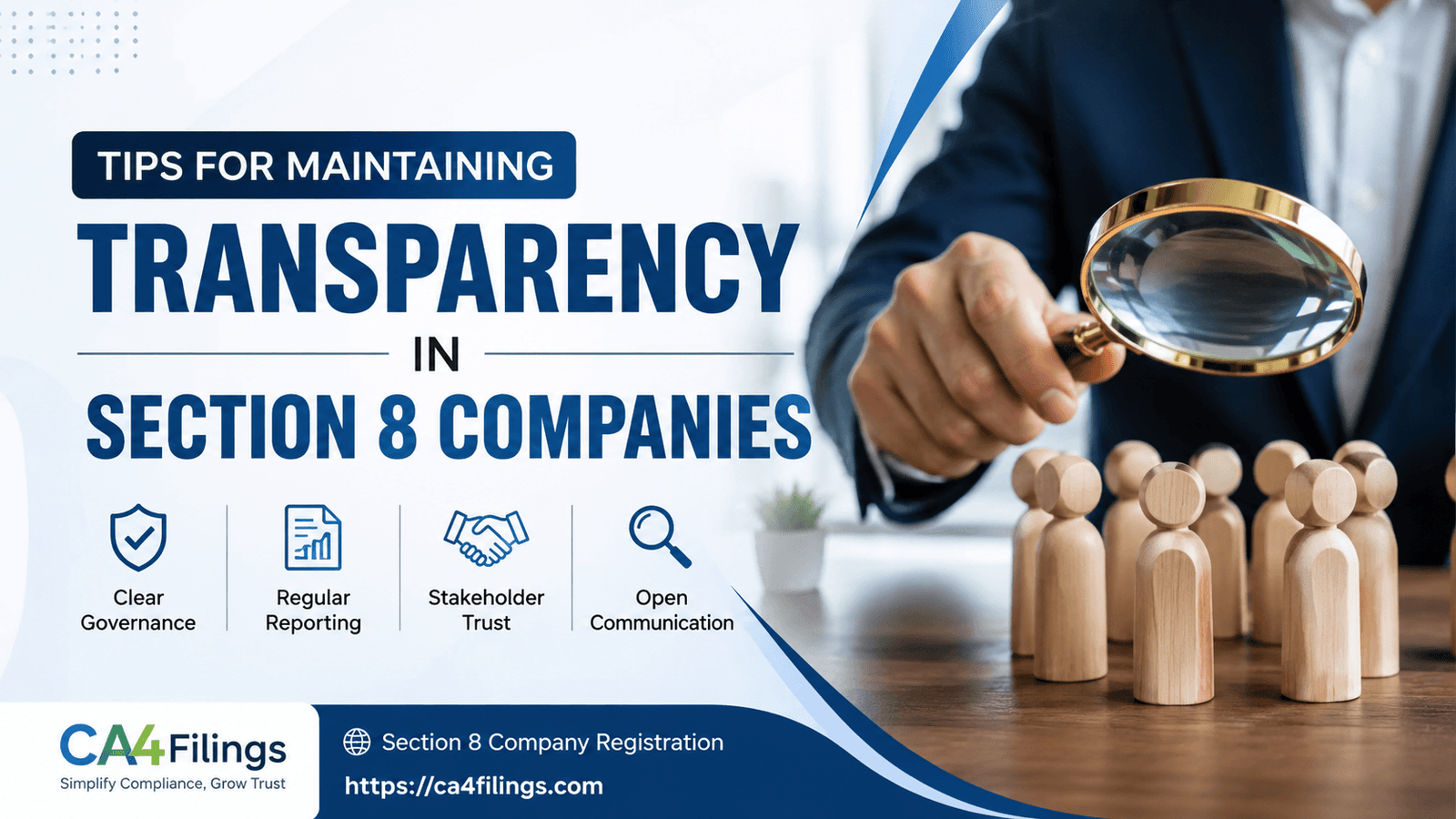
When you decide to start a non-profit venture in India, you are driven by a passion to create a tangible impact. Whether it is advancing education, supporting the underprivileged, or protecting the environment, the goal is noble. In India, choosing a Section 8 company structure is often the smartest route for such initiatives because it blends the credibility of a corporate structure with the soul of a charity. However, with great credibility comes great responsibility. Since these entities enjoy significant tax exemptions and public trust, the Ministry of Corporate Affairs (MCA) and the Income Tax Department keep a very close watch on them.
At CA4Filings, we often see passionate founders put all their energy into fieldwork while clean paperwork takes a backseat. This is a risky approach. Ensuring transparency isn’t just a legal chore; it is the very foundation of your organization's survival and growth. Donors, financial institutions, and government bodies want to see exactly where every single rupee goes. In this comprehensive guide, we will share practical Tips for Maintaining Transparency in Section 8 Companies to help you keep your compliance spotless and your reputation intact.
If you are still in the early planning stages or looking to formalize your NGO, navigating the initial paperwork can feel overwhelming. You can easily get started with our hassle-free services for Section 8 Company Registration to ensure your organization is built on a legally sound foundation right from day one.
Why Transparency in Section 8 Companies is Non-Negotiable
Unlike commercial businesses where success is measured by profit margins, a non-profit’s success is measured by its credibility. Achieving true transparency in Section 8 companies ensures that your internal operations match your public promises.
When your books are clean and your decisions are documented, you naturally build immense trust and communication in Section 8 companies among your core stakeholders—your board, your field workers, and your beneficiaries. Furthermore, a transparent organization rarely faces the wrath of sudden government audits or penalty notices.
Actionable Tips for Maintaining Transparency in Section 8 Companies
Maintaining an open-book policy requires a mix of robust digital tools, strict internal controls, and a culture of accountability. Here is a step-by-step breakdown of how you can achieve this seamlessly.
1. Implement Strict Internal Financial Controls
The absolute first step in maintaining accountability in nonprofit organizations is separating personal finances from organizational funds.
Zero Cash Policy for Major Expenses: Avoid making large payments in cash. Route every single transaction through your registered bank account via NEFT, RTGS, or UPI.
Dual Authorization: Never let a single person control the bank account. Implement a two-factor authorization system where any expense above a certain threshold (say, ₹25,000) requires approval from at least two directors.
Voucher Management: Maintain digital and physical vouchers for every micro-expense, including travel reimbursements and office tea expenses.
2. Adopt Best Practices for Financial Management in Nonprofit Sector
Accounting for a non-profit is fundamentally different from a regular private limited company. You are dealing with grants, restricted funds, and public donations.
Fund-Based Accounting: If a donor gives you ₹5 Lakhs specifically for "rural digital literacy," that money must be tracked separately. It cannot be mixed with your general administrative funds.
Regular Internal Audits: Do not wait for the end of the financial year to look at your books. Conduct quarterly internal reviews with your CA to catch errors early.
3. Maintain Absolute Compliance with Section 8 Regulations
The law mandates several annual and event-based filings. Staying on top of these is one of the most critical tips for maintaining transparency in Section 8 companies.
| Form / Requirement | Purpose | Due Date |
|---|---|---|
| Form AOC-4 | Filing financial statements and balance sheets | Within 30 days of the AGM |
| Form MGT-7 | Annual Return containing director details and compliance | Within 60 days of the AGM |
| Form MBP-1 | Disclosure of interest by directors | First board meeting of every financial year |
| DIR-3 KYC | Verification of Director Identification Numbers | By 30th September every year |
Failing to file these forms not only attracts heavy daily penalties but can also lead to the central government revoking your Section 8 license entirely.
Ensuring Transparency and Trust in Nonprofits via Public Disclosures
True transparency means being proactive rather than reactive. Don’t just hide your financial reports in a locker; share your impact with the world.
Proactive Website Disclosures
In the digital age, your website is your digital storefront. To practice effective ensuring transparency and trust in nonprofits, you should consider setting up a dedicated 'Governance' or 'Transparency' tab on your website. Use this space to publish your annual impact reports, audited balance sheets, and the names of your current board members. When a potential corporate donor looks at your website and finds your last three years of audited accounts readily available for download, their confidence in funding your project multiplies instantly.
Mastering Foreign Contribution Management (FCRA)
If your Section 8 company plans to receive foreign funding, you must strictly comply with the Foreign Contribution (Regulation) Act (FCRA). Foreign funds must land exclusively in the designated FCRA bank account with the State Bank of India (SBI), New Delhi Main Branch. Mixing foreign contributions with domestic donations is a severe legal offense that can permanently shut down an NGO.
Frequently Asked Questions
Can a Section 8 company pay a salary to its directors?
Generally, no. Section 8 companies are formed for promoting charitable objects, and profits or remnants cannot be paid as dividends or bonuses to members. However, if a director is providing a specific professional service (like acting as a full-time project head or legal consultant), they can be paid a reasonable, justified salary out of the company funds, provided it is permitted by the company's Articles of Association (AoA) and approved by the board.
What happens if a Section 8 company fails to maintain compliance?
Non-compliance is highly costly. The MCA can levy heavy financial penalties on both the company and the defaulting officers. In severe cases of mismanagement or fraud, the government can revoke the Section 8 license, force the company to amalgamate with another identical charity, or order it to be wound up entirely.
How does 12A and 80G registration help in maintaining transparency?
Securing 12A (tax exemption for the NGO) and 80G (tax deduction for the donor) certifications requires a rigorous review of your books by the Income Tax Department. Maintaining these certifications forces your organization to stick to legal financial boundaries, which inherently boosts your market credibility.
The Way Forward with CA4Filings
Running an NGO requires an immense amount of emotional and physical dedication. Worrying about changing corporate laws, tax filings, and accounting nuances shouldn't deplete your energy.
By implementing these Tips for Maintaining Transparency in Section 8 Companies, you safeguard your vision against legal hurdles and build an institution that stands the test of time. At CA4Filings, we act as your extended financial and legal team, handling everything from bookkeeping and internal audits to strict compliance with section 8 regulations. Let us handle the complex math and statutory filings while you focus on making the world a better place. Reach out to our expert team at CA4Filings today, and let's streamline your compliance journey together!
What specific goals or projects are you hoping to launch with your Section 8 company, and what part of the compliance process is currently causing you the most concern?
Latest Updates
ca4filings.com Services


























-registration.png)