How to Use Technology for Better Management of Section 8 Companies
Struggling with compliance? Discover how to use technology for better management of Section 8 companies to streamline operations and ensure transparency.
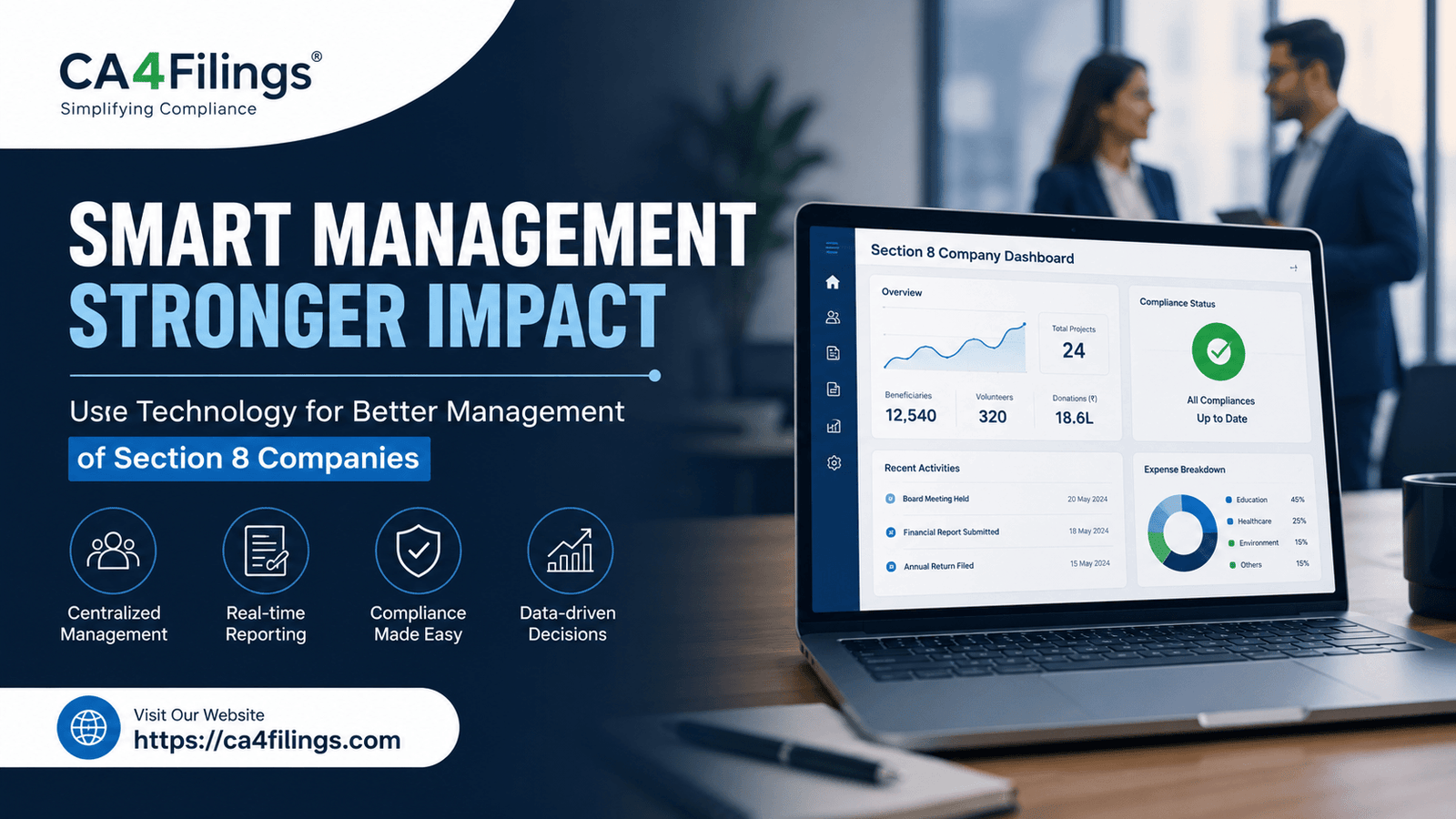
If you are running a non-profit organization in India, you already know that managing compliance is not just a legal requirement but the bedrock of your credibility. Many promoters come to us at CA4Filings feeling overwhelmed by the sheer volume of paperwork involved in maintaining their status. Getting started correctly is crucial, and if you have not yet formalized your entity, exploring Section 8 Company Registration is the first step toward building a sustainable foundation. Once your organization is established, the real challenge begins: maintaining compliance while focusing on your social cause. This is where learning how to use technology for better management of Section 8 companies becomes a game-changer for your team.
Why Technology is Essential for Non-Profit Compliance
In the past, managing a company meant physical files, dusty cabinets, and manual reminders. Today, the Ministry of Corporate Affairs (MCA) has moved everything to digital portals like V2 and V3. If you aren't using tech to keep up, you are likely falling behind.
For Section 8 companies—specifically designed for promoting commerce, art, science, sports, education, research, social welfare, religion, charity, or environmental protection—the compliance burden is significant. You must manage financial disclosures, board meetings, and annual filings simultaneously. Using technology helps you bridge the gap between human error and regulatory precision.
How to Use Technology for Better Management of Section 8 Companies
Integrating digital tools is not just about efficiency; it is about peace of mind. Here is how you can leverage modern systems to handle your affairs like a professional:
1. Implement Cloud-Based Accounting Software
Financial transparency is the most critical aspect of a Section 8 company. Since your funds are usually sourced from donors or grants, every rupee must be accounted for. Cloud-based accounting tools allow you to:
Track donations in real-time.
Generate automated financial statements.
Allow external auditors to access specific records, reducing the time spent on manual audits.
2. Automate Compliance Calendars
Missing a filing deadline, such as AOC-4 or MGT-7, can lead to hefty penalties and even the loss of your license. We often advise clients to use compliance management software that sends automated alerts 30, 60, and 90 days before a deadline. By using this technology for better management of Section 8 companies, you ensure that your secretarial records are always updated.
3. Digital Document Management Systems (DMS)
A Section 8 company generates significant paperwork—MoA, AoA, minutes of board meetings, and donor agreements. Instead of physical folders, use a secure, encrypted DMS. This makes it easier to retrieve documents when the ROC (Registrar of Companies) asks for them during an inspection.
Leveraging Digital Tools for Board Governance
Effective governance requires keeping your board informed. How to use technology for better management of Section 8 companies extends to how you conduct your internal affairs.
Virtual Board Meetings
Post-pandemic, the law permits virtual meetings for most board discussions. Using secure video conferencing tools not only saves costs on travel but also allows you to record the proceedings, which acts as a secondary layer of evidence for your minutes books.
E-Signature Solutions
One of the biggest bottlenecks in corporate filings is waiting for directors to sign physical papers. By implementing legally valid e-signature tools (like DSC-based signing), you can get critical documents signed in minutes, even if your board members are in different cities.
Expert Tips for Choosing the Right Tech Stack
When deciding how to use technology for better management of Section 8 companies, do not try to digitize everything at once. Start with these three priorities:
Security First: Ensure the software you choose is encrypted and follows data protection norms.
Scalability: Choose tools that can grow as your NGO grows.
Support: Always prefer software that provides dedicated customer support.
At CA4Filings, we have seen many organizations struggle because they picked complex software that no one knew how to use. Keep it simple, keep it compliant, and focus on your mission.
Frequently Asked Questions
Can I use automated software for all my MCA filings? While you can use tools to prepare and track filings, the actual submission on the MCA portal still requires careful human oversight, especially for verification and DSC usage.
Is cloud storage safe for NGO financial data? Yes, provided you use reputable providers with multi-factor authentication (MFA) and end-to-end encryption.
How does technology help with donor transparency? Technology allows you to provide digital reports and instant tax-exemption receipts (if registered under 80G), which builds immense trust with your donors.
How often should we update our digital compliance records? You should aim for a "live" system. Every time a board meeting is held or an expense is incurred, the record should be updated in your digital dashboard immediately.
Navigating the regulatory landscape does not have to be a nightmare. By understanding how to use technology for better management of Section 8 companies, you free up your valuable time to focus on the social impact that matters most. Digital tools are no longer a luxury; they are a necessity for any modern NGO wanting to scale and maintain long-term compliance.
If you are feeling overwhelmed or want a professional team to manage your compliance ecosystem, CA4Filings is here to help. From annual filings to complex secretarial audits, we take the stress out of your compliance journey. Reach out to CA4Filings today and let us handle your regulatory requirements so you can continue making a difference!
Latest Updates
ca4filings.com Services













-registration.png)