Understanding ROC Compliance: An Overview for Businesses
Navigating the regulatory landscape can be tricky. Read our guide on Understanding ROC Compliance: An Overview for Businesses to stay ahead.
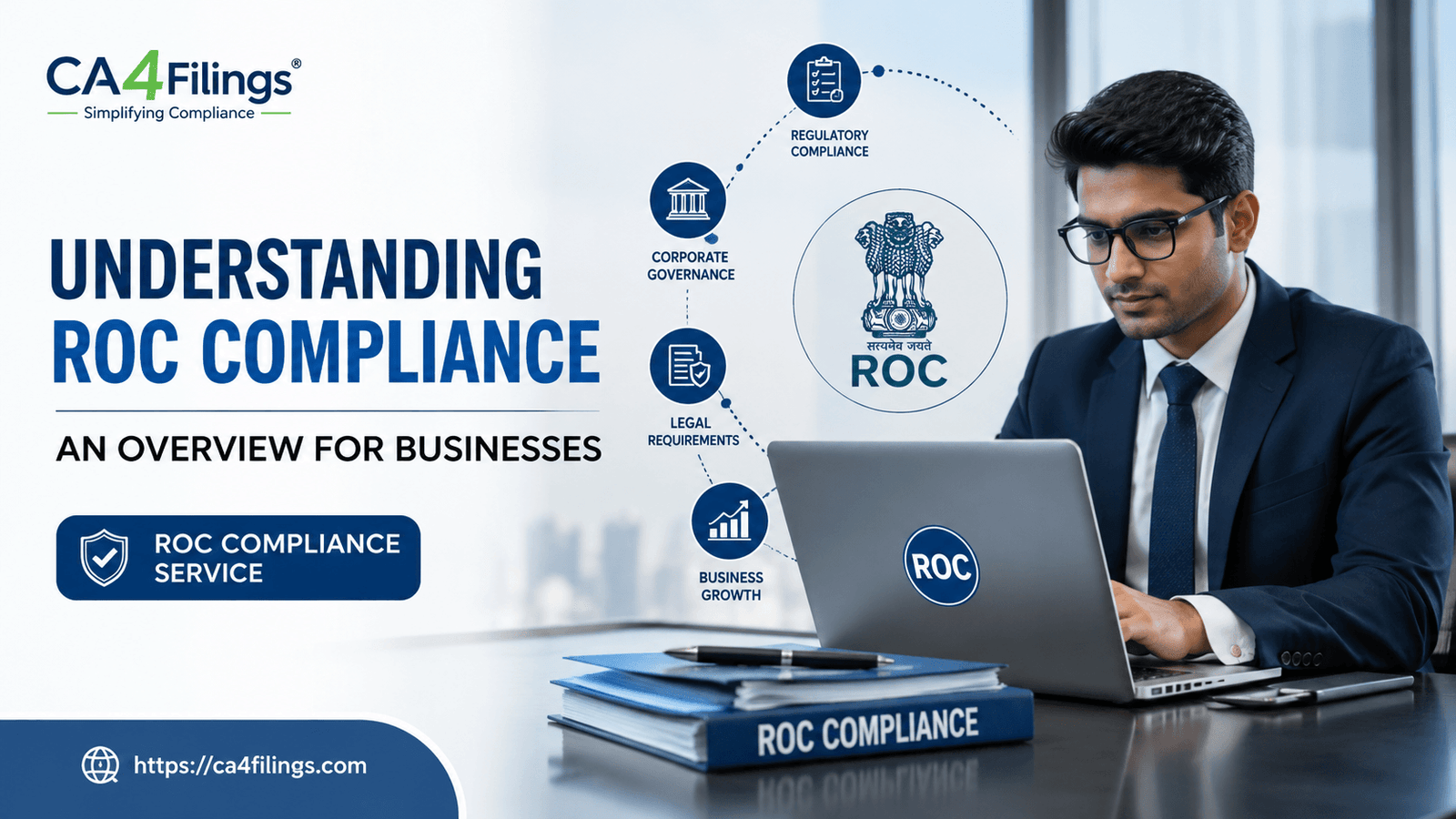
Starting a company is an exhilarating journey, but once you incorporate, you enter the formal world of corporate regulations. Many new entrepreneurs get caught up in scaling their operations and revenue, often overlooking the critical aspect of statutory compliance. If you are a business owner looking for professional guidance, our ROC Compliance Service is designed to handle these complexities for you. Today, we are diving deep into Understanding ROC Compliance: An Overview for Businesses to ensure your entity remains in good standing with the Ministry of Corporate Affairs (MCA).
The Registrar of Companies (ROC) acts as the watchdog for all corporate entities in India. Ensuring your firm adheres to ROC regulations is not just about avoiding penalties; it is about building a robust foundation for your business operations.
What is ROC Compliance and Why Does It Matter?
At its core, ROC compliance refers to the various filings and disclosures a company must make under the Companies Act, 2013. Think of it as the annual health check-up for your company. Whether you are a Private Limited company or a Limited Liability Partnership (LLP), the regulatory requirements are non-negotiable.
Failing to meet these compliance guidelines leads to hefty late fees, disqualification of directors, and, in severe cases, the striking off of your company name from the register. Corporate governance is the backbone of trust; when you maintain timely legal compliance, you instill confidence in your stakeholders, investors, and banks.
Understanding ROC Compliance: An Overview for Businesses: Key Filing Requirements
When Understanding ROC Compliance: An Overview for Businesses, you must be aware of the recurring filings that every company must track. Neglecting these is a common mistake we see among startups.
Annual Compliance Checklist
Form AOC-4: This form is used for filing your company’s financial statements, including the balance sheet and profit and loss account.
Form MGT-7/7A: This is for the filing of the Annual Return. It provides the ROC with details regarding the shareholding pattern, changes in directorship, and other essential business data.
Form MGT-14: Required for filing certain resolutions passed by the Board or shareholders.
Director KYC (DIR-3 KYC): A mandatory annual requirement for every director holding a Director Identification Number (DIN).
Event-Based Compliance
Beyond annual filings, you must keep track of specific events, such as:
Change in registered office address.
Appointment or resignation of directors.
Increase in authorized share capital.
Issue or transfer of shares.
Best Practices for ROC Compliance
Staying on top of your company compliance responsibilities doesn't have to be a nightmare if you follow a structured approach to compliance management. Here is our expert advice for managing the regulatory landscape:
Maintain a Compliance Calendar: Mark all due dates at the start of the financial year. Missing a deadline for a day can lead to permanent financial loss through compounding late fees.
Digital Vigilance: Always ensure your digital signatures (DSC) are valid. Most of these filings are done via the MCA portal, and an expired DSC can freeze your progress.
Keep Records Updated: Whether it is minutes of meetings or statutory registers, maintain them in real-time. Do not wait until the audit period to compile your data.
Consult Professionals: Company law is dynamic. Notifications and circulars are updated frequently. Working with a professional ensures you are always aligned with the latest legal updates.
Common Pitfalls in Business Compliance
In our years of practice at CA4Filings, we have noticed that many businesses fall into the trap of "reactive compliance." They only look at the portal when a notice is received. This is a dangerous approach. Business compliance should be proactive. Relying on outdated software or manual tracking often leads to human error. By focusing on Understanding ROC Compliance: An Overview for Businesses, you shift your mindset from merely "avoiding trouble" to "maintaining corporate integrity."
Frequently Asked Questions
What happens if I fail to file ROC forms on time?
Failure to file leads to additional fees, which increase daily. Repeated defaults can lead to the prosecution of directors and, eventually, the company being struck off the register.
Are there any exemptions for small companies?
Yes, the Companies Act provides certain relaxations for Small Companies and OPCs regarding the frequency of board meetings and the signing of financial statements. However, basic annual filings remain mandatory.
Is ROC compliance the same for an LLP and a Private Limited Company?
No, the forms and timelines differ. LLPs file forms like Form 11 and Form 8, whereas companies file AOC-4 and MGT-7.
How can CA4Filings help me?
We simplify the entire process for you. From preparing the documentation to ensuring the filing is accepted by the portal, we act as your partner in corporate regulations.
Understanding ROC Compliance: An Overview for Businesses is not just an administrative task—it is a critical aspect of sustaining your venture in the Indian market. By adhering to these corporate regulations and maintaining high standards of corporate governance, you ensure that your business remains healthy and growth-oriented. Do not let complex paperwork hold your vision back. At CA4Filings, we specialize in simplifying these technicalities so you can focus on what you do best—running your business. Get in touch with us today to streamline your compliance journey.
Latest Updates
ca4filings.com Services






















-registration.png)