The Role of ROC in Corporate Social Responsibility Initiatives
Understand The Role of ROC in Corporate Social Responsibility Initiatives. CA4Filings experts explain compliance, reporting, and impact tracking for your firm.
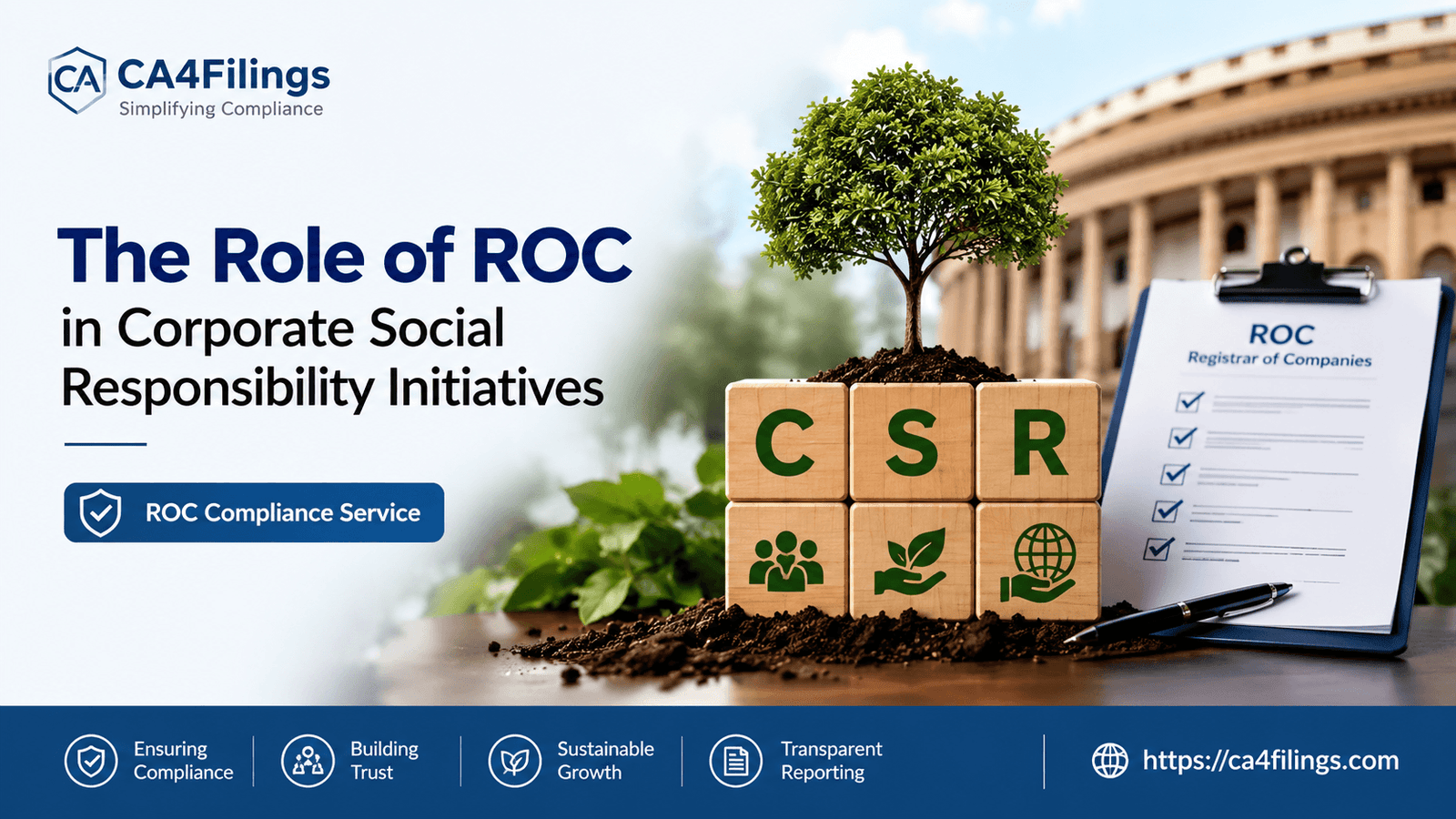
When we talk about business growth in India, we often focus on balance sheets and profit margins. However, modern businesses are increasingly measured by their commitment to society. Today, we are diving deep into The Role of ROC in Corporate Social Responsibility Initiatives. Many business owners often confuse the "ROC" (Registrar of Companies) with "Return on Community," but for a company director, the former is the regulatory gatekeeper of the latter. Navigating these regulatory waters can be tricky, which is why having expert support for your ROC Compliance Service is essential to ensure your CSR filings are accurate and timely.
Managing your obligations while trying to foster corporate sustainability can feel like a balancing act. Let’s break down exactly how the Registrar of Companies oversees your corporate social responsibility footprint.
Understanding the Regulatory Framework of CSR
The Ministry of Corporate Affairs (MCA) has made it clear: CSR is no longer just a "good to have"—it is a statutory duty for companies meeting specific turnover or profit thresholds. The Registrar of Companies (ROC) acts as the primary enforcement arm.
When a company initiates CSR initiatives, it isn’t just spending money; it is performing an act of corporate citizenship. The ROC monitors these activities primarily through mandatory filings. If your company falls under Section 135 of the Companies Act, 2013, you are required to report your activities annually. The ROC ensures that your social responsibility strategy aligns with the legal framework defined by the government.
The Role of ROC in Corporate Social Responsibility Initiatives: Monitoring and Compliance
The primary function of the ROC in this space is transparency. They don't just watch the money; they watch the impact. Here is how they keep a check on your ethical business practices:
Reporting Requirements: Every company must file form CSR-1, CSR-2, and ensure their Board’s Report contains a detailed Annexure on CSR.
Verification: The ROC checks if the funds allocated for community development are actually being spent on the approved Schedule VII activities.
Penalty Enforcement: Failure to comply with CSR norms can lead to heavy penalties for both the company and the officers in default. The ROC has the authority to issue show-cause notices for non-compliance.
Beyond Compliance: Measuring the Impact
While the ROC ensures you follow the law, companies should aim for more. This is where business impact measurement comes in. You aren't just filing papers; you are contributing to social change.
Key Metrics to Track
To ensure your social impact measurement is robust, consider the following:
Social impact indicators: Are you tracking the number of lives touched?
Stakeholder value: How does your project improve the lives of local communities?
Sustainable business practices: Are your initiatives environmentally friendly and long-term?
By maintaining high standards in your social responsibility metrics, you not only satisfy the ROC but also build a brand that stakeholders trust.
Why "Return on Community" Matters More Than Ever
We often hear about ROI (Return on Investment), but in the age of conscious capitalism, "Return on Community" is the new gold standard. When you invest in community engagement, you are investing in the long-term viability of your business. The ROC’s role is to ensure that this investment is genuine and not just a "paper" exercise.
At CA4Filings, we always tell our clients: if your CSR initiatives aren't documented correctly, they might as well not exist in the eyes of the law. Proper documentation is the bridge between your social impact measurement goals and legal safety.
Frequently Asked Questions
1. Does the ROC audit my CSR spending?
The ROC primarily oversees the filing and reporting compliance. However, if there are discrepancies in your filings or if the MCA initiates an inspection, your CSR records will be closely scrutinized to ensure the money was spent on genuine community development projects.
2. What happens if I fail to file CSR reports?
Non-compliance can result in significant fines. The ROC monitors these filings strictly. If you miss the deadlines for your CSR filings, it can trigger automated non-compliance notices against the company.
3. Can I use my own CSR foundation to meet these goals?
Yes, but you must register the implementing agency with the MCA via Form CSR-1. This is a critical step in The Role of ROC in Corporate Social Responsibility Initiatives, as it confirms the legitimacy of the entity executing your projects.
4. Are there specific themes I must choose for CSR?
Yes, the activities must align with Schedule VII of the Companies Act, which includes education, healthcare, environmental sustainability, and rural development.
Navigating the regulatory landscape of corporate social responsibility is complex, but it is a vital part of running a modern, ethical business in India. Understanding The Role of ROC in Corporate Social Responsibility Initiatives is the first step toward moving from mere compliance to creating real, lasting value for society.
Don't let regulatory hurdles distract you from your mission of driving social change. At CA4Filings, we specialize in helping businesses stay compliant while they focus on their core mission. Whether you need help with CSR reporting or general secretarial compliance, we are here to ensure your journey is seamless. Reach out to the team at CA4Filings today and let us help you build a compliant, sustainable future for your company.
Latest Updates
ca4filings.com Services


























-registration.png)