ROC Compliance for NGOs: What You Need to Know
Confused about statutory filings? Read our guide on ROC Compliance for NGOs: What You Need to Know to ensure your non-profit stays compliant.
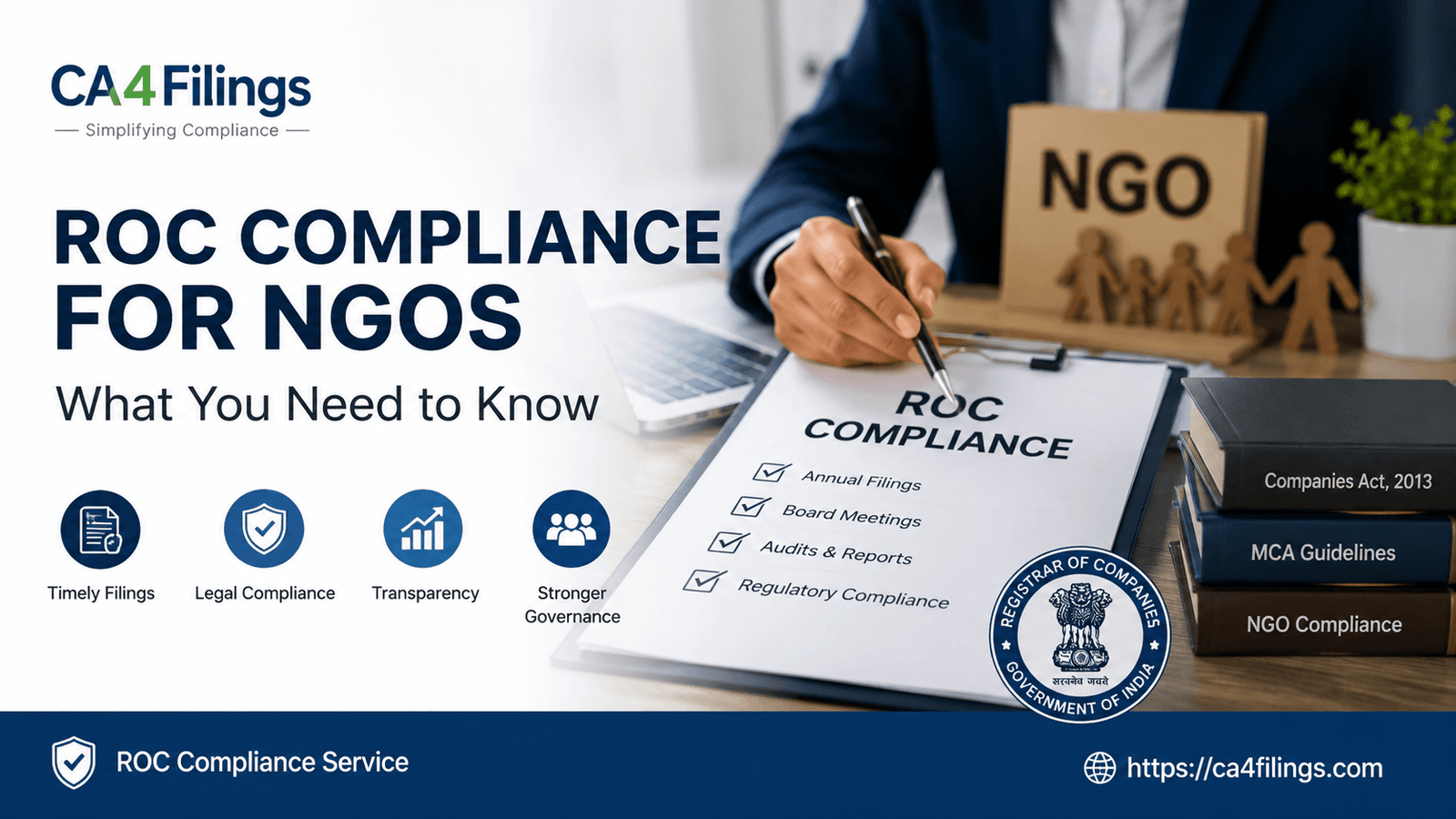
Running an NGO in India is a noble endeavor, but navigating the maze of legal requirements can often feel like a full-time job in itself. If you are operating as a Section 8 Company, you are under the watchful eye of the Registrar of Companies (ROC). Understanding ROC Compliance for NGOs: What You Need to Know is not just about avoiding penalties; it is about maintaining the transparency and trust that are the bedrock of your organization. At CA4Filings, we understand the complexities involved in these filings, which is why we offer a dedicated ROC Compliance Service to help you manage your statutory obligations seamlessly while you focus on your social impact.
Understanding the Importance of NGO Compliance Guidelines
When you register as a Section 8 Company, you gain the benefits of limited liability and a distinct legal identity. However, this comes with specific NGO legal obligations. Unlike other entities, NGOs are held to a higher standard of public accountability. Failure to adhere to these rules doesn't just invite hefty fines; it can lead to the striking off of your company's name from the register, effectively halting your operations.
The Ministry of Corporate Affairs (MCA) has digitized most processes, making it easier to track non-compliance. Today, even a minor delay in filing can attract additional fees, and prolonged neglect can lead to prosecution of directors.
Essential ROC Filing Requirements for Section 8 Companies
To keep your NGO in good standing, you must adhere to a strict calendar of filings. Here is a breakdown of the core ROC compliance for NGOs: What You Need to Know.
1. Appointment of Auditor (ADT-1)
Every Section 8 Company must appoint a statutory auditor. Once appointed, you are required to file form ADT-1 with the ROC within 30 days of the appointment. This is a one-time process for the tenure of the auditor, but it is a critical step in setting up your NGO audit requirements.
2. Annual General Meeting (AGM)
An NGO must hold its AGM within six months from the close of the financial year. During this meeting, members approve the financial statements and the board’s report. Missing the AGM deadline is one of the most common reasons for compliance notices.
3. Financial Statements (AOC-4)
After the AGM, you must file your audited financial statements with the ROC in form AOC-4. This document gives the government a clear picture of how your organization has utilized its funds.
4. Annual Return (MGT-7)
The MGT-7 form contains details about your directors, shareholders, and registered office. It is a comprehensive summary of your organization's activities for the year. Remember, accurate data here is essential for maintaining your credibility as a transparent non-profit organization.
Practical Tips for NGO Governance
Maintaining a clean record requires more than just meeting deadlines; it requires robust internal processes. Here are some expert tips from our team at CA4Filings:
Maintain a Compliance Calendar: Mark all due dates at the start of the financial year. Set alerts at least 30 days in advance.
Keep Records Updated: Ensure your Minutes Book, Register of Members, and Register of Directors are updated immediately after every meeting.
Digital Hygiene: Ensure your DSCs (Digital Signature Certificates) are active and renewed well before they expire. An expired DSC is a common bottleneck during crunch times.
Segregate Funds: Keep clear documentation of donations and project-specific expenses. NGO regulation requires strict accounting practices that align with your filings.
ROC Compliance Checklist: A Quick Reference
If you are wondering what documents you need to keep ready, use this checklist to streamline your efforts:
Audited Balance Sheet and Profit & Loss Account.
Director’s Report (containing all mandatory disclosures).
Minutes of the AGM.
Details of Board Meetings held during the year.
List of members and any changes in shareholding or directorship.
Updated Statutory Registers.
Having these documents ready throughout the year makes the final filing process smooth and stress-free.
FAQs: Addressing Your Concerns
Is ROC compliance for NGOs different from private limited companies?
While the fundamental forms (AOC-4, MGT-7) remain similar, NGOs have specific exemptions and modifications under the Companies Act, 2013, regarding board meetings and procedural disclosures.
What happens if I miss a filing deadline?
Missing a deadline results in 'Additional Fees,' which accrue daily. If the delay continues, the ROC may issue a show-cause notice, and in severe cases, the directors could be disqualified.
Do I need an auditor for my NGO even if we have no income?
Yes. Every Section 8 Company must have its books audited annually by a Chartered Accountant, regardless of the level of financial activity or income.
How often do I need to update my NGO’s information?
Any change in directorship, registered office address, or authorized capital must be filed with the ROC within the prescribed timelines (usually 30 days) using specific forms like DIR-12 or INC-22.
Staying on top of your legal obligations is essential for the longevity of your mission. We hope this guide on ROC compliance for NGOs: What You Need to Know has provided you with the clarity needed to keep your organization running smoothly. Compliance is not just a bureaucratic chore; it is the foundation upon which you build credibility with donors, stakeholders, and the government.
At CA4Filings, we believe that your time is best spent changing lives, not wrestling with paperwork. Our expert team of Chartered Accountants is here to ensure that your NGO remains compliant, transparent, and focused on its noble cause. Reach out to us today to secure your organization's future!
Latest Updates
ca4filings.com Services



















-registration.png)