How to Navigate the PAN Card Registration Process During COVID-19
Learn How to Navigate the PAN Card Registration Process During COVID-19 safely with this step-by-step guide by CA4Filings.
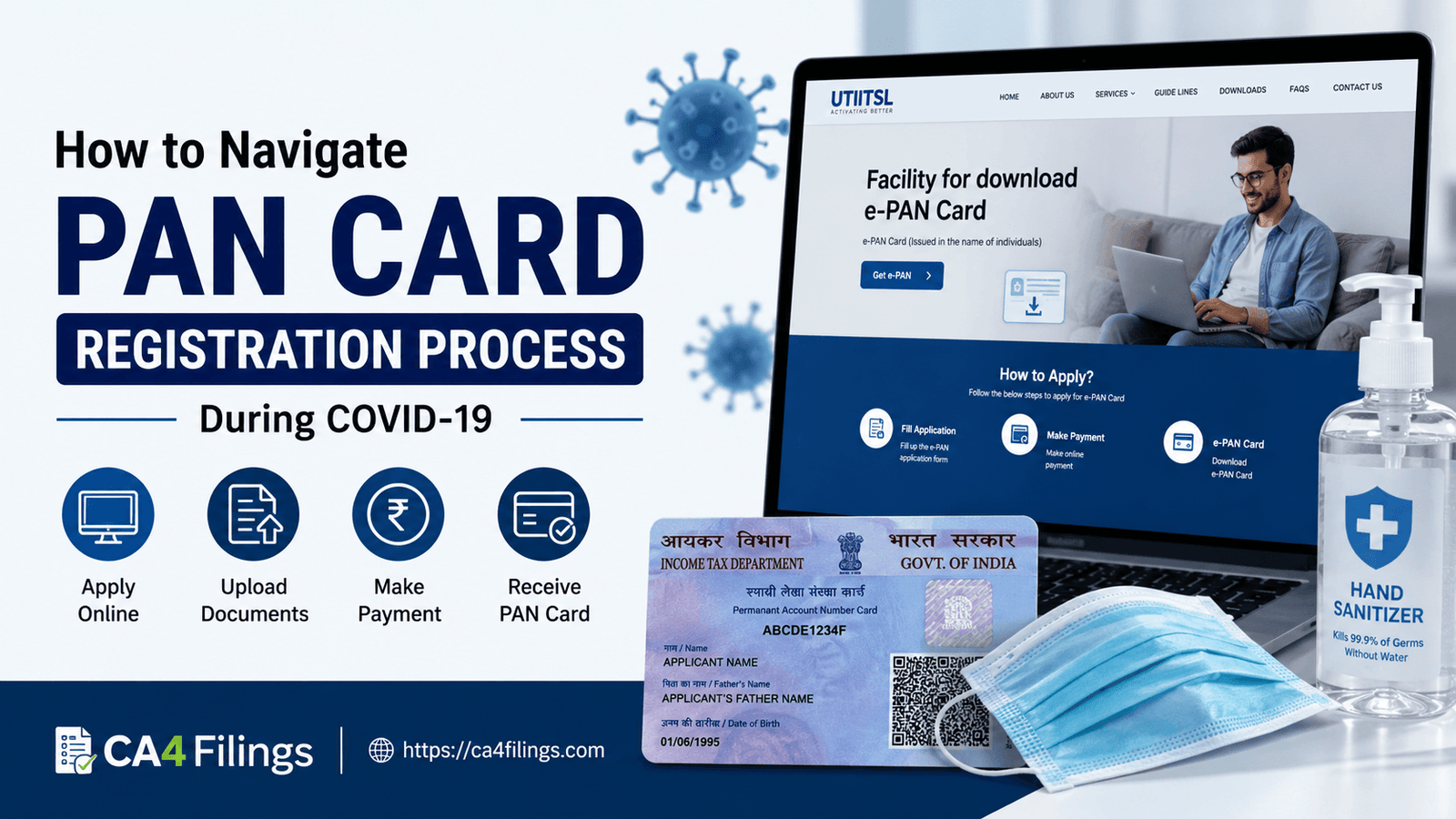
The global pandemic changed how we approach everyday administrative tasks. Back when lines at government offices were the norm, lockdowns and social distancing forced a massive shift toward digital infrastructure. Here at CA4Filings, a question we frequently answer for both individuals and businesses is how to handle essential tax compliance when physical movement is restricted. Specifically, many need to know How to Navigate the PAN Card Registration Process During COVID-19 without stepping out of their homes.
A Permanent Account Number (PAN) is a unique ten-digit alphanumeric identifier issued by the Income Tax Department. It is completely indispensable for high-value financial transactions, opening bank accounts, and filing tax returns. If you are looking to get your tax identification in order cleanly and safely, our seamless Pan Card Registration services are designed to handle the paperwork for you remotely. Let’s break down exactly how you can manage this application process safely using the government's official online registration infrastructure.
Why a PAN Card remains critical during a Pandemic
During a public health crisis, economic disruptions often require quick financial adjustments—whether that is securing a business loan, liquidating investments, or accessing government relief packages. None of these financial transactions are seamlessly possible without a valid personal identification number for tax purposes.
The Indian government relies heavily on PAN data to track financial flows and ensure tax compliance. For Indian citizens, missing out on a PAN means facing the highest permissible tax withholding rates (TDS) on interest income and property transactions. Furthermore, for an NRI (Non-Resident Indian) or foreign nationals looking to invest in the Indian market during a market correction, a PAN card is the very first compliance gateway.
How to Navigate the PAN Card Registration Process During COVID-19: A Step-by-Step Guide
The most effective way to avoid physical tax offices during a pandemic is to use the digital infrastructure provided by the online application portal (managed by Protean, formerly NSDL, or UTIITSL).
Here is the exact step-by-step guide to executing a completely contactless application:
Step 1: Choosing the Correct Application Form
Form 49A: This form is meant for Indian citizens, including located residents, companies, and trusts formed within India.
Form 49AA: This is the specific form required for an NRI, foreign citizens, or corporate entities registered outside India.
Step 2: Digital Identity Verification (The Contactless Method)
To ensure zero physical contact, you should opt for the e-KYC (electronic Know Your Customer) path. This method uses your Aadhaar data for instant identity verification.
Select the "Paperless e-KYC & e-Sign" option on the portal.
Your name, gender, date of birth, and address will be automatically pulled from the Aadhaar database.
An OTP (One-Time Password) will be sent to your Aadhaar-registered mobile number to authenticate the application.
Step 3: Filling Out the Details
Carefully fill in your personal specifics, income sources, and the relevant Assessing Officer (AO) code. If you choose the e-KYC route, you do not need to upload a separate photo, as your Aadhaar photograph is used by default.
Step 4: Making the Digital Payment
Payment can be processed safely online via credit card, debit card, or net banking. The fee is nominal (around ₹100–₹110 for a physical card sent within India, and higher if the physical card needs to be dispatched to a foreign address).
Step 5: Processing and Track Application Status
Once the submission is successful, you will receive a 15-digit acknowledgement number. You can use this number to track your application status online. Under regular government guidelines, an e-PAN (digital copy) is generated within a few days, followed by the delivery of the physical card via speed post.
Essential Documents Required for Registration
If you cannot use the Aadhaar-based OTP method (for instance, if your mobile number isn't linked to Aadhaar, or if you are a foreign national), you will need to upload scanned copies of your papers.
Here is a quick reference table of the documents required based on your status:
| Applicant Category | Proof of Identity (POI) | Proof of Address (POA) | Date of Birth (DOB) Proof |
|---|---|---|---|
| Indian Citizens | Aadhaar, Passport, Voter ID, or Driving License | Aadhaar, Utility Bills (not older than 3 months), Bank Statement | Matriculation Certificate, Passport, or Birth Certificate |
| NRI / Foreign Nationals | Passport, PIO card, or OCI card issued by the Govt of India | Foreign Bank Statement, Passport, or Residence Status Certificate | Passport, Birth Certificate, or Citizen ID certified by the Embassy |
Expert Tips for a Smooth Remote Application
To avoid unnecessary rejections and delays while learning How to Navigate the PAN Card Registration Process During COVID-19, keep these practical tips from our advisory team in mind:
Update Aadhaar First: Ensure your name spelling and birth year match perfectly across all forms. If your Aadhaar holds outdated data, the automated e-KYC process will fail.
Opt for e-PAN: If you need the identification urgently for a banking transaction or an urgent filing, choose the e-PAN option. It holds the exact same legal validity as a physical plastic card and arrives in your inbox much faster.
Keep Scans Clean: If you are uploading documents manually, ensure the scans are clear, legible, and fall strictly under the prescribed file size limits (usually under 50KB for photos/signatures). Blurred documents lead to immediate application holding states.
Frequently Asked Questions (FAQs)
Can I complete the entire PAN card application online without visiting an office?
Yes. By using the e-KYC and e-Sign facilities on the official online application portal, the entire workflow is completely digital and paperless. No physical documents need to be mailed or submitted in person.
How long does it take to receive a PAN card during pandemic disruptions?
While courier dispatches of physical cards might face minor logistics delays depending on local containment rules, an electronic version (e-PAN) is typically generated and emailed within 3 to 7 working days of successful verification.
What should foreign nationals do if they cannot provide an Aadhaar card?
Foreign nationals must submit Form 49AA online and provide a copy of their Passport or overseas citizenship cards, along with a certified proof of address. The documents must be duly apostilled or attested by the Indian Embassy in their resident country.
What happens if my Aadhaar is not linked to my current mobile number?
If your mobile number is not linked, you cannot use the instant OTP-based e-KYC method. You will have to upload scanned copies of your identity and address proofs along with a digital signature, or physically forward the printed acknowledgement form to the income tax processing center.
Understanding How to Navigate the PAN Card Registration Process During COVID-19 is all about leveraging India's robust digital public infrastructure. By transitioning to online registration channels, opting for paperless e-KYC verification, and choosing digital payment methods, you can secure your permanent account number quickly and safely from home.
Navigating government portals and ensuring your data aligns perfectly with tax compliance rules can still occasionally feel overwhelming. If you want to eliminate the guesswork, avoid tracking errors, or manage applications for non-residents and corporate setups smoothly, let our team handle it. Reach out to CA4Filings today, and we will take care of your registration from start to finish!
Latest Updates
ca4filings.com Services

























-registration.png)