Differences Between OPC and Limited Liability Partnership (LLP)
Explore the key differences between OPC and LLP, including ownership, compliance, liability and taxation, to choose the best fit for your startup.
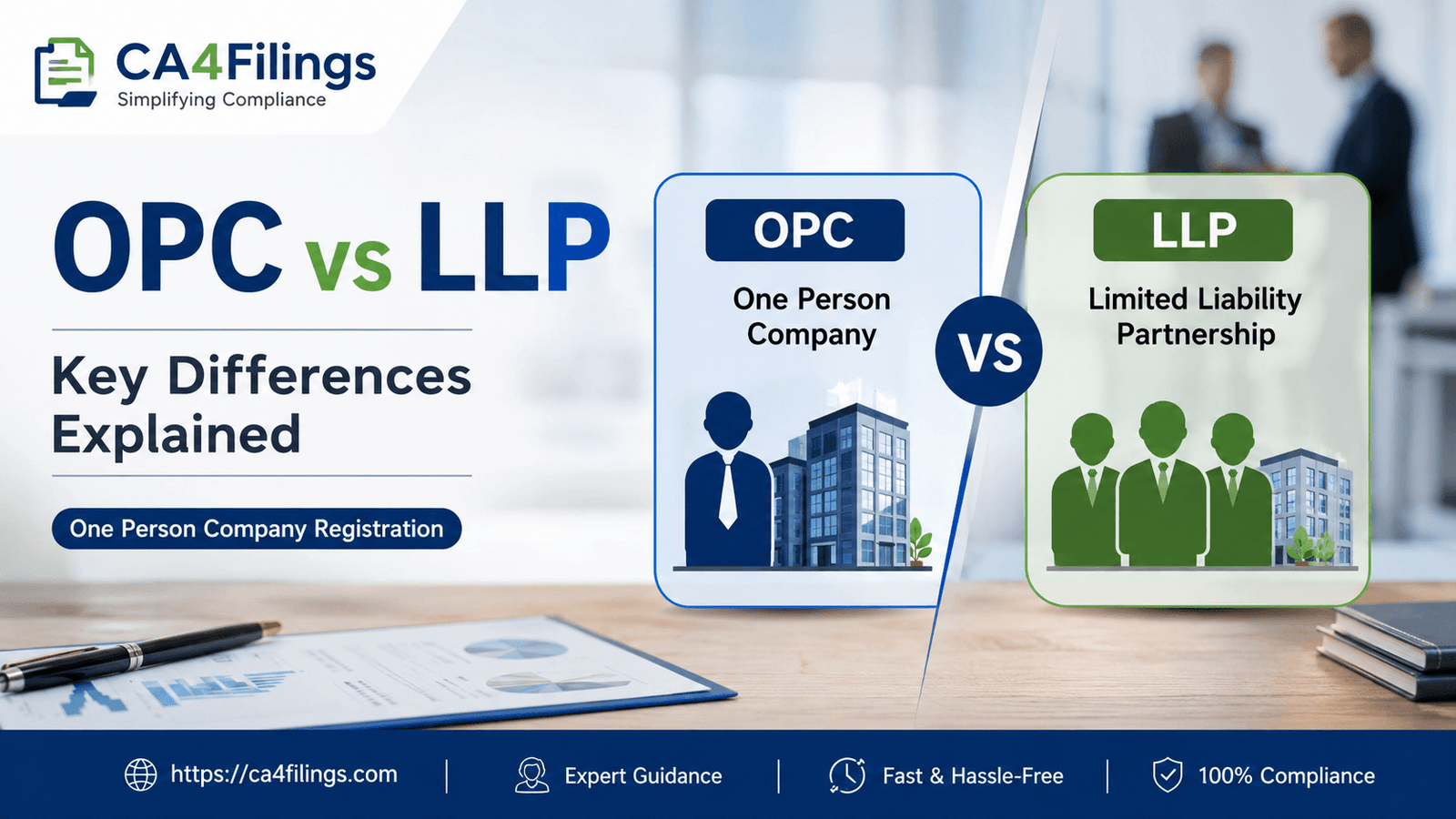
Starting a new business is an exciting milestone, but the legal framework you choose acts as the foundation for your future growth. Many budding entrepreneurs often find themselves stuck when evaluating the Differences Between OPC and Limited Liability Partnership (LLP). Choosing the right path is crucial, and if you are leaning toward a solo setup, we highly recommend exploring our One Person Company Registration service to ensure your paperwork is handled with professional precision. Whether you are a solo founder or looking to partner with someone, understanding the nuances of these structures is essential for long-term compliance and tax efficiency.
Understanding the Core Concepts: OPC vs LLP
Before diving into the technicalities of this business entity comparison, let’s look at what these terms actually mean in the Indian context.
An One Person Company (OPC) is a hybrid structure that combines the benefits of a sole proprietorship with the legal protection of a private limited company. It is designed for single individuals who want to maintain full control.
On the other hand, a Limited Liability Partnership (LLP) is a partnership-based structure where partners have limited liability. It is a preferred choice for professionals like Chartered Accountants, architects, or consultants who want to work together while protecting their personal assets.
Key Management Differences and Ownership Structure
When analyzing the management differences, the most glaring point is the number of people involved.
Ownership: An OPC requires exactly one shareholder. In contrast, an LLP requires a minimum of two partners, with no upper limit on the number of partners.
Decision Making: In an OPC, the single owner holds all the cards, making decision-making swift and unilateral. In an LLP, the ownership structure is defined by an LLP Agreement. Management is often shared, and power is distributed based on what the partners agree upon in their legal document.
Liability Protection and Compliance
Both entities offer liability protection, meaning your personal assets (like your house or car) are generally safe from business debts. However, the rigor of compliance differs significantly.
OPC Compliance: An OPC must comply with the provisions of the Companies Act, 2013. This involves mandatory annual filings, board meetings, and stricter audit requirements.
LLP Compliance: An LLP is governed by the Limited Liability Partnership Act, 2008. It is generally considered more flexible with fewer mandatory filings compared to a company structure.
Taxation Implications for Your Business
When considering taxation implications, both entities are taxed at a flat rate of 30% plus applicable surcharges and cess. However, there are subtle differences:
Dividend Distribution Tax: While the Dividend Distribution Tax (DDT) has been abolished for companies, the taxation on profit withdrawals in an LLP is often viewed as more straightforward for partners.
Remuneration: In an LLP, remuneration paid to partners is allowed as a business expense, reducing the taxable profit of the firm. In an OPC, the owner often draws a salary, which must be structured carefully to align with corporate tax laws.
Pros and Cons of OPC and LLP: A Quick Breakdown
To help with your business entity decision-making, here is a simple table highlighting the trade-offs:
| Feature | One Person Company (OPC) | Limited Liability Partnership (LLP) |
|---|---|---|
| Minimum Members | 1 | 2 |
| Max Members | 1 | No limit |
| Compliance | High (Companies Act) | Moderate (LLP Act) |
| Decision Making | Individual | Shared/Consensus |
| Audit | Mandatory | Mandatory only if turnover > 40 Lakhs or Contribution > 25 Lakhs |
How to Choose the Right Structure for Your Startup
When looking at business entity formation, your choice should depend on your goals. Are you planning to raise venture capital later? Do you want to work alone, or do you have a trusted business partner?
If you are a solo entrepreneur who wants a corporate identity and plans to convert to a full-fledged Private Limited company later, an OPC is your best bet. If you are starting a consulting firm with friends or colleagues and want a flexible, partnership-based internal management style, an LLP is the way to go.
Frequently Asked Questions
Can an OPC be converted into an LLP?
No, an OPC is a company structure and cannot be directly converted into an LLP. However, you can wind up the OPC and start a new LLP.
What are the main Differences Between OPC and Limited Liability Partnership (LLP) regarding auditing?
An LLP is exempt from audit if its annual turnover does not exceed ₹40 lakhs or if its capital contribution does not exceed ₹25 lakhs. An OPC does not enjoy this threshold-based audit exemption; it generally requires a statutory audit regardless of turnover.
Which entity is better for foreign investment?
Both entities have specific regulations regarding Foreign Direct Investment (FDI). Generally, Private Limited companies are more popular for attracting venture capital, but LLPs are allowed to receive FDI under the automatic route in certain sectors.
Does an OPC have a perpetual succession?
Yes, just like a Private Limited company, an OPC has perpetual succession, meaning the business continues to exist regardless of the death or incapacity of the member.
Choosing between an OPC and an LLP is a critical step in your entrepreneurial journey. While we have covered the primary Differences Between OPC and Limited Liability Partnership (LLP), your final decision should align with your specific financial goals and operational needs.
At CA4Filings, we specialize in helping entrepreneurs navigate the complexities of corporate law. We don't just register your business; we guide you through the pros and cons to ensure you start on the right foot. If you are ready to kickstart your venture, reach out to the experts at CA4Filings today, and let’s turn your vision into a legally compliant reality!
Latest Updates
ca4filings.com Services



























-registration.png)