How to Utilize Your NGO Registration to Influence Policy Changes
Discover how to utilize your NGO registration to influence policy changes in India. Expert tips from CA4Filings to amplify your advocacy efforts.
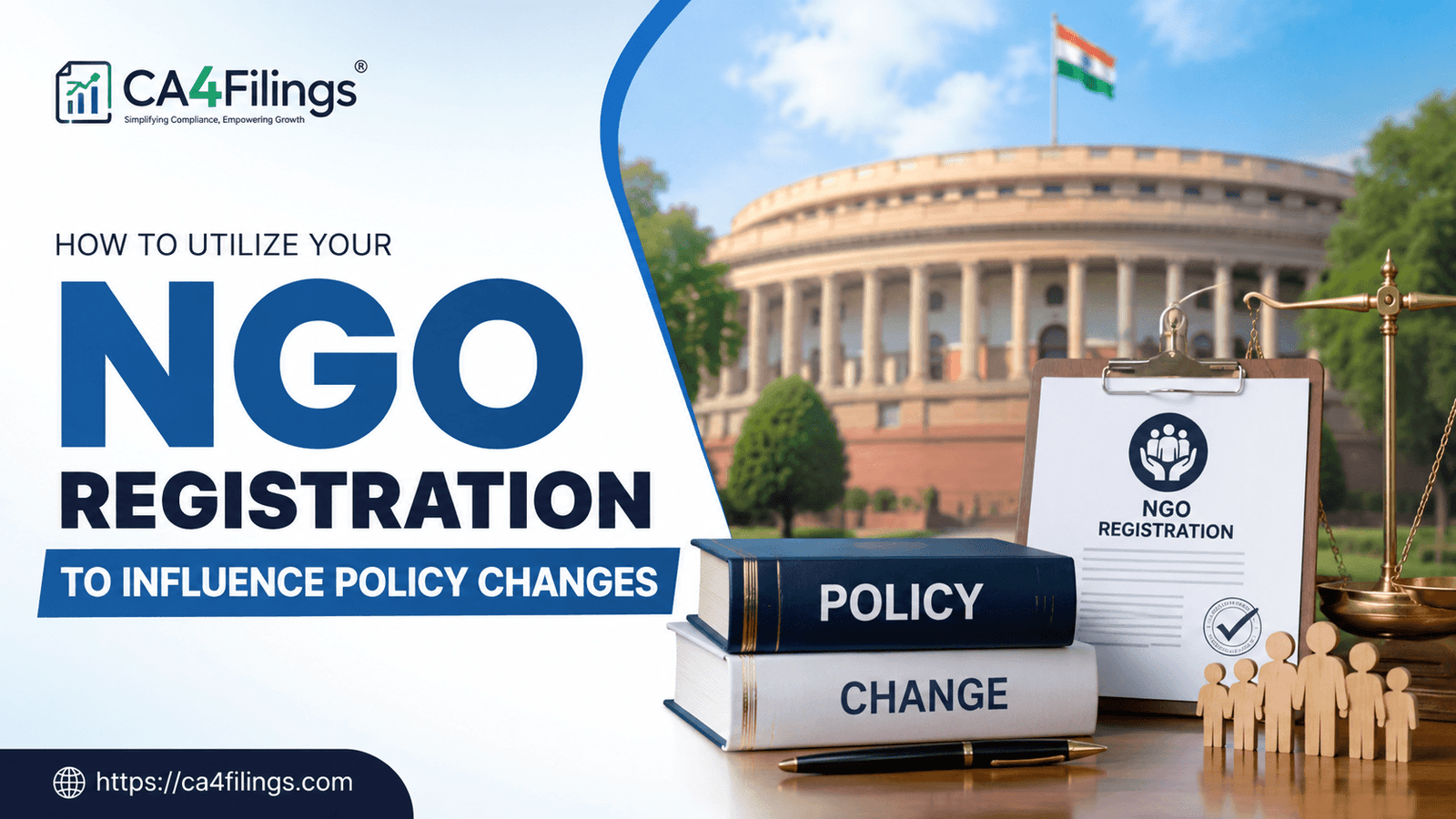
When you first decided to formalize your social cause, the journey likely began with the paperwork for NGO Registration. While the legal status gives you credibility, many organizations stop there, treating their registration merely as a document for tax exemptions. However, as Chartered Accountants, we see the true potential of your entity every day. Understanding how to utilize your NGO registration to influence policy changes is the key to transitioning from a local service provider to a systemic changemaker.
Policy advocacy isn’t just for large international lobbies. In India, grassroots organizations are often the most vital source of ground-level data that policymakers desperately need. When you speak from a position of legal legitimacy, your voice carries the weight of your beneficiaries, your data, and your mission.
Why Legal Status Matters in Policy Advocacy
Before you start writing letters to ministries, it is important to understand why your registration is your most powerful tool. When you ask how to utilize your NGO registration to influence policy changes, the answer lies in "institutional trust."
Credibility: Government departments are more likely to engage with a registered entity because it signifies compliance, transparency, and accountability.
Data Integrity: As a registered NGO, your reports, audits, and field studies are considered authentic data points.
Capacity to Partner: Only registered entities can formally enter into MoUs with state and central government bodies.
Step-by-Step: How to Utilize Your NGO Registration to Influence Policy Changes
If you are ready to make a seat for yourself at the policy table, follow these strategic steps.
1. Build a Credible Evidence Base
Policymakers rarely act on emotions alone; they act on data. Your biggest advantage is the work you do on the ground. Keep meticulous records of your project outcomes. If you are working in education or healthcare, document the gaps you find in existing government schemes. Use this data to create "Policy Briefs"—short, punchy documents that highlight a problem and offer a practical solution.
2. Leverage Your Compliance as a Strength
A clean compliance record is a silent campaigner. Ensure your annual filings, FCRA requirements (if applicable), and audit reports are always up to date. When you approach a policymaker, you are not just a group of concerned citizens; you are a compliant, well-governed organization. This eliminates the "risk" factor for bureaucrats looking to engage with civil society.
3. Engage in Consultative Processes
The Indian government frequently releases draft policies for public comment. Often, these notifications go unnoticed. As a registered NGO, it is your responsibility to track the gazettes and websites of relevant ministries. When you submit your feedback, use your NGO letterhead. Clearly mention your registration details to show that your input is backed by actual field experience.
4. Networking with Stakeholder Groups
Policy influence is rarely a solo endeavor. Connect with other NGOs working in the same domain. A coalition of ten registered NGOs carries significantly more weight than a single entity. By pooling your resources and research, you create a collective voice that is harder to ignore.
Strategic Tips for Effective Advocacy
Beyond the mechanics, success often depends on your approach. Here is what we advise our clients at CA4Filings:
Focus on Local to National: Start by influencing local municipal or district-level policies. Success at the district level builds a track record that makes it easier to approach state or national authorities later.
Maintain Professionalism: Always frame your advocacy as "constructive partnership" rather than "confrontation." Present yourself as a solution provider.
Digital Presence: Use social media to showcase the impact of your work. When policymakers see that your cause has public support, they are more likely to take your policy suggestions seriously.
FAQs: Navigating Policy Advocacy
Q: Do I need special permission to influence policy changes? A: No, as long as your activities remain within the objectives mentioned in your trust deed or memorandum of association, you have every right to advocate for your cause.
Q: Can I use NGO funds for lobbying? A: You must be careful here. While you can spend funds on research and advocacy, direct political lobbying can violate certain legal provisions. Always consult with us to ensure your advocacy spending stays within the legal framework.
Q: How do I get an appointment with a government official? A: Formal requests sent through your registered office address, highlighting the specific policy issue and the data you have collected, are the most professional way to secure a meeting.
Q: Is it necessary to be a large NGO to influence policy? A: Absolutely not. In fact, many policies are influenced by small, hyper-local NGOs that provide precise, real-time data that large organizations might miss.
Partner with CA4Filings for Impact
Influencing policy is a marathon, not a sprint. It requires patience, meticulous documentation, and a clear understanding of the regulatory landscape. When you learn how to utilize your NGO registration to influence policy changes, you aren't just running an organization—you are shaping the future of your sector.
At CA4Filings, we do more than just help you register; we ensure your organization is equipped to grow and influence. Whether you need help with your annual compliance, FCRA renewals, or guidance on how to present your research effectively, our team is here to support your mission.
Latest Updates
ca4filings.com Services





















-registration.png)