How to Successfully Transition from a Informal Group to a Registered NGO
Thinking of scaling your social impact? Learn How to Successfully Transition from a Informal Group to a Registered NGO with our expert CA guide.
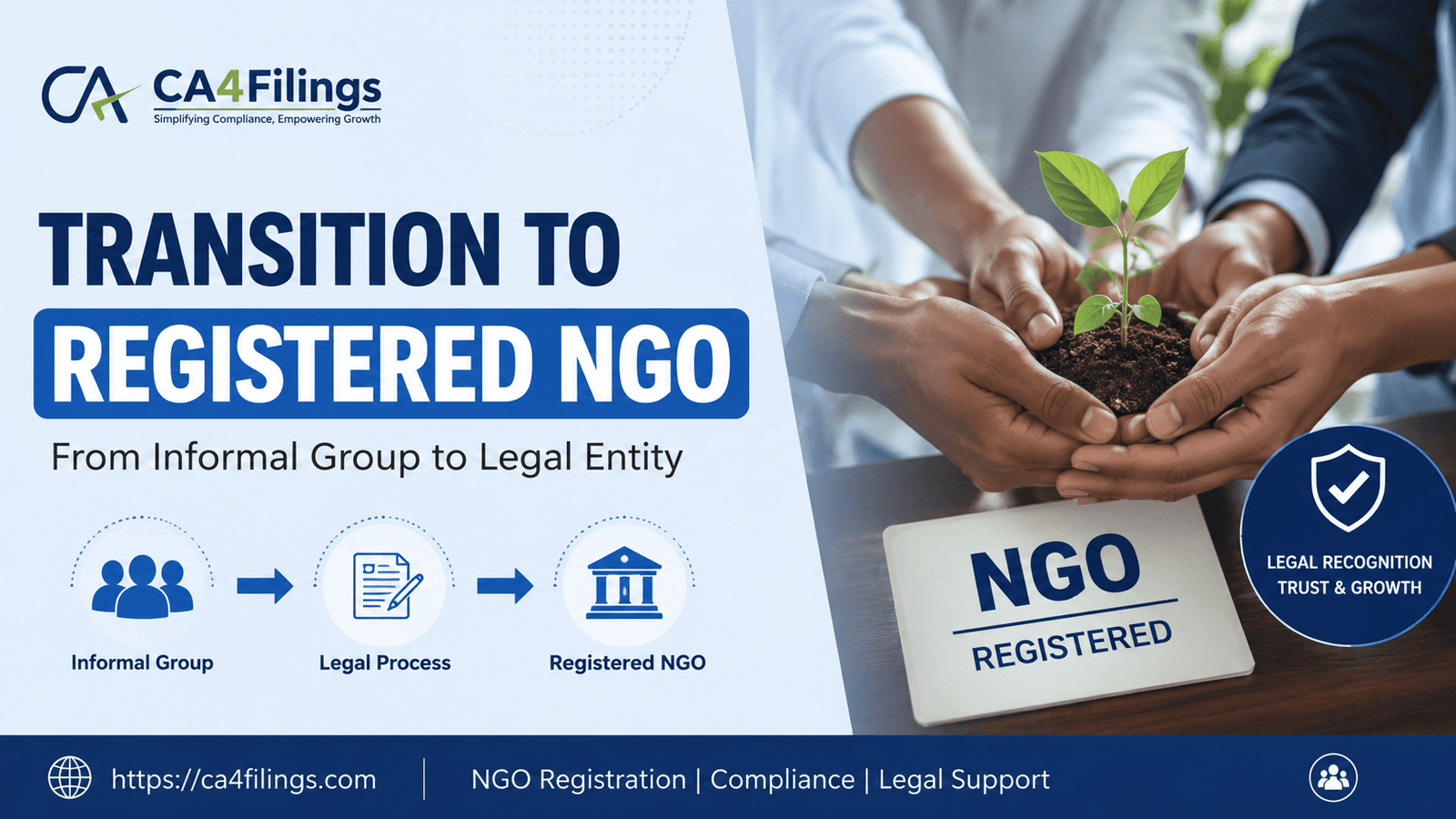
Many great social initiatives in India start in living rooms or local parks, fueled by a small group of friends or volunteers with a shared vision. However, there comes a point when your good intentions require more structure to scale, receive donations, or partner with the government. Understanding How to Successfully Transition from a Informal Group to a Registered NGO is the most critical hurdle you will face. By formalizing your entity through NGO Registration, you gain legal recognition, tax benefits, and, most importantly, the trust of donors. At CA4Filings, we have helped countless changemakers navigate this exact journey, moving from a handshake agreement to a fully compliant institution.
Why Should You Formalize Your Informal Group?
When you operate as an informal group, you are essentially functioning as individuals. This limits your reach because corporate CSR departments or large institutional donors simply cannot fund unregistered entities. Once you learn How to Successfully Transition from a Informal Group to a Registered NGO, you unlock several benefits:
Tax Exemptions: Registered NGOs can apply for 80G and 12A certifications, making donations to your cause tax-deductible for contributors.
Perpetual Existence: An organization survives even if the founding members move on, ensuring the mission lives forever.
Transparency: Legal structures provide accountability, which is essential when handling public funds.
Accountability: You get a legal identity to sign MOUs, open bank accounts in the name of the organization, and hire staff legally.
Choosing the Right Legal Structure for Your NGO
The first step in understanding How to Successfully Transition from a Informal Group to a Registered NGO is choosing the right legal vessel. In India, there are three primary paths:
1. Trust (Public Charitable Trust)
Often used for small, localized social work. It is easy to form but has less flexibility regarding management changes. It is usually governed by a Board of Trustees.
2. Society
Popular for sports, welfare, or educational groups. Societies require a minimum of seven members and are governed by the Societies Registration Act, 1860.
3. Section 8 Company
This is the most "corporate" and credible structure. It is ideal if you plan to scale, attract international funding, or work closely with corporate houses. It operates under the Companies Act, 2013, providing high credibility and structural stability.
How to Successfully Transition from a Informal Group to a Registered NGO: The Workflow
Transitioning isn’t just about filling forms; it’s about institutionalizing your vision. Follow this roadmap to ensure a smooth transition:
Step 1: Draft the Governing Document
Every NGO needs a "rulebook." Depending on your structure, this will be a Trust Deed (for a Trust), a Memorandum of Association and Rules & Regulations (for a Society), or an MOA and AOA (for a Section 8 Company). This document defines your objectives, how you will operate, and what happens to assets if the organization closes.
Step 2: Assemble Your Core Team
You need a minimum number of founding members. Ensure these individuals are truly committed, as they will be the legal signatories for all future financial and legal matters.
Step 3: Name Approval and Documentation
Choose a name that reflects your mission. Avoid names that sound like existing famous NGOs or government bodies. Once the name is approved, you will need to draft the legal paperwork, obtain Digital Signature Certificates (DSC) for the directors, and file the incorporation documents.
Step 4: The Filing Process
This is where the actual registration happens with the Registrar of Societies, the Charity Commissioner, or the Ministry of Corporate Affairs. Precision here is key; a single typo in your objectives can lead to a rejection of your application.
Common Pitfalls to Avoid During the Transition
As you learn How to Successfully Transition from a Informal Group to a Registered NGO, beware of these common mistakes:
Vague Objectives: Don’t list too many activities in your MOA. Be specific about your mission to avoid scrutiny.
Poor Record Keeping: Even if you were "informal" yesterday, start maintaining clear records of every rupee spent. This builds a history of credibility.
Ignoring Compliance: Post-registration, you have annual filing requirements. Don't wait until the deadline to scramble; keep your financial statements audited from the first day.
Frequently Asked Questions (FAQs)
Do I need a physical office address to register an NGO?
Yes, you need a verifiable address to receive communication from the government. It can be a rented space, a commercial premise, or even a residential address if allowed under local bylaws.
How long does it take to register?
Depending on the structure (Trust vs. Section 8), the process can take anywhere from 30 to 90 days, provided all documentation is accurate.
Can we convert an existing society into a Section 8 company?
Yes, it is possible, though it requires specific legal procedures. It is often easier to start fresh or consult an expert to handle the merger process.
Is it expensive to maintain an NGO?
It depends on your scale. While registration has a government fee, annual compliance (audits, tax filings) is a necessary cost of doing professional, transparent work.
Partner with CA4Filings for a Seamless Transition
How to Successfully Transition from a Informal Group to a Registered NGO is a journey that requires careful navigation of the legal landscape. At CA4Filings, we don't just file papers; we act as your strategic partner to ensure your vision of social change is built on a foundation of legal strength. Don't let compliance hurdles slow down your mission.
Latest Updates
ca4filings.com Services





















-registration.png)