How to Build a Strong Network for Your Registered NGO
Want to grow your impact? Learn how to build a strong network for your registered NGO with expert tips from CA4Filings. Unlock funding and support!
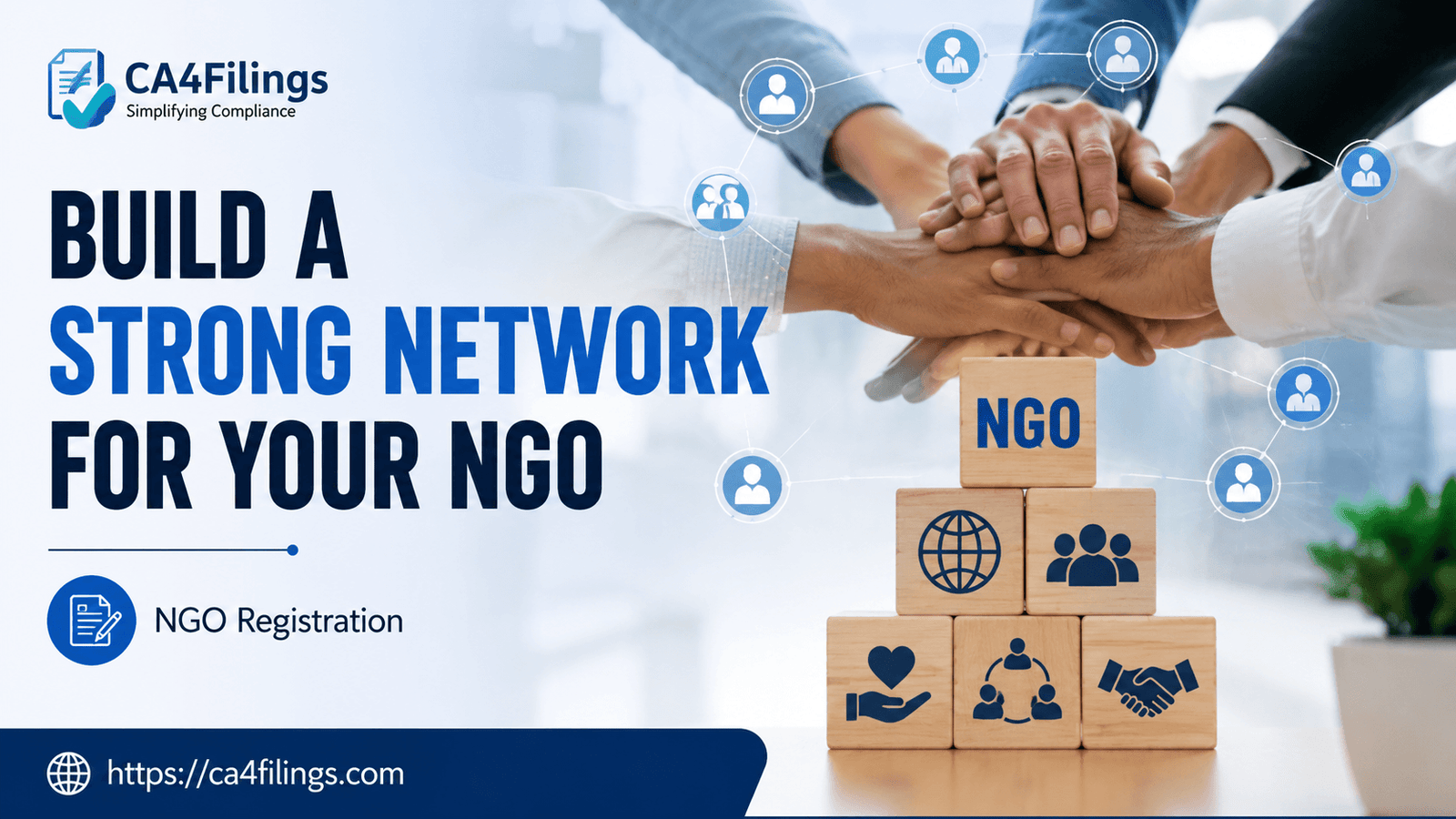
Starting an organization is only the first step of a long, noble journey. At CA4Filings, we often see enthusiastic founders complete their NGO Registration process, only to realize that the real hurdle is sustaining the mission. Whether you are working on education, healthcare, or rural development, your impact is limited by the reach of your connections. Knowing how to build a strong network for your registered NGO is not just a growth strategy; it is the lifeblood of your organization’s longevity.
Networking in the social sector is vastly different from corporate networking. It isn't about selling a product; it’s about sharing a vision. When you are looking for how to build a strong network for your registered NGO, you need to shift your focus from "what I need" to "what we can achieve together."
Why Networking is Non-Negotiable for NGOs
Many founders believe that if their cause is noble, donors will automatically find them. Unfortunately, the social sector is crowded. Networking helps you move beyond the "anonymous" stage. It allows you to:
Access Untapped Funding: Many high-net-worth individuals and CSR heads prefer to fund organizations they have been introduced to via mutual contacts.
Share Knowledge: You don't have to reinvent the wheel. Connecting with older, established NGOs can help you learn from their operational mistakes.
Build Credibility: In the world of social work, trust is the currency. A strong network acts as social proof of your legitimacy.
Strategies on How to Build a Strong Network for Your Registered NGO
If you are wondering how to build a strong network for your registered NGO, start by focusing on quality over quantity. Here is a practical roadmap to get you started.
1. Leverage Professional Events and Conferences
Attend seminars related to social impact, philanthropy, and government policy. These events are goldmines. Instead of handing out business cards like a salesperson, focus on listening. When you speak to others, explain your impact—not just your activities. For instance, instead of saying "We teach kids," say "We are helping 200 children complete their primary education in a remote village."
2. Digital Networking: Beyond Social Media
Social media is a starting point, but deep networking happens in the inbox and through direct conversations. Use LinkedIn to connect with CSR managers of companies that align with your mission. When you send a connection request, include a personalized note. A well-crafted message about how your NGO’s goals align with their corporate values often yields better results than a generic pitch.
3. Collaborate with Other Non-Profits
Collaboration is often more powerful than competition. If your NGO focuses on sanitation and another on healthcare, partner for a community camp. This allows you to tap into their donor database and reach a wider audience, naturally helping you understand how to build a strong network for your registered NGO.
4. Engage with Local Government Bodies
In India, the local administration can be one of your strongest allies. By keeping local officials informed about your work and inviting them to your field events, you build institutional trust. This not only opens doors for government grants but also makes it easier to navigate local regulatory requirements.
Maintaining Your Network: The Follow-Up Game
The biggest mistake NGOs make is reaching out only when they need money. Networking is about relationship management.
Send Periodic Updates: Don’t wait for a crisis to email your network. Send a quarterly impact report showing how their support or advice helped you grow.
Be a Resource for Others: If you come across an article or an opportunity that might benefit someone in your network, share it with them. When you add value to others, they will naturally want to support your mission.
Publicly Acknowledge Support: Whether it’s a small donation or a bit of advice, acknowledging people publicly (with their permission) encourages others to engage with you.
Frequently Asked Questions
How long does it take to build a sustainable network?
Networking is a marathon, not a sprint. Typically, you should see meaningful connections forming within 6 to 12 months of consistent engagement.
Should I hire a professional for networking?
Not necessarily. In the early stages, the founder's passion is the most effective tool. However, as you scale, having a dedicated person for donor relations can be helpful.
How do I approach corporate donors?
Always research their CSR policy first. Never send a mass email. Tailor your proposal to show how their specific CSR goals are met by your project.
Is it necessary to attend every event?
No. Focus on the events where your potential partners, mentors, or donors are actually present. Being "everywhere" leads to burnout.
Building an impact-driven organization is challenging, but you don't have to do it alone. Understanding how to build a strong network for your registered NGO will provide you with the resources, mentorship, and community support required to scale your vision. Remember, your network is a reflection of your commitment to the cause.
At CA4Filings, we understand the complexities of running an NGO—from the initial registration to the nuances of compliance and growth. We are here to ensure your foundation is rock solid so you can focus on what matters most: changing lives.
Latest Updates
ca4filings.com Services




















-registration.png)