ISO Certification Myths: Debunking Common Misconceptions
Confused about standards? We are debunking ISO Certification Myths: Debunking Common Misconceptions to help your business grow with clarity and confidence.
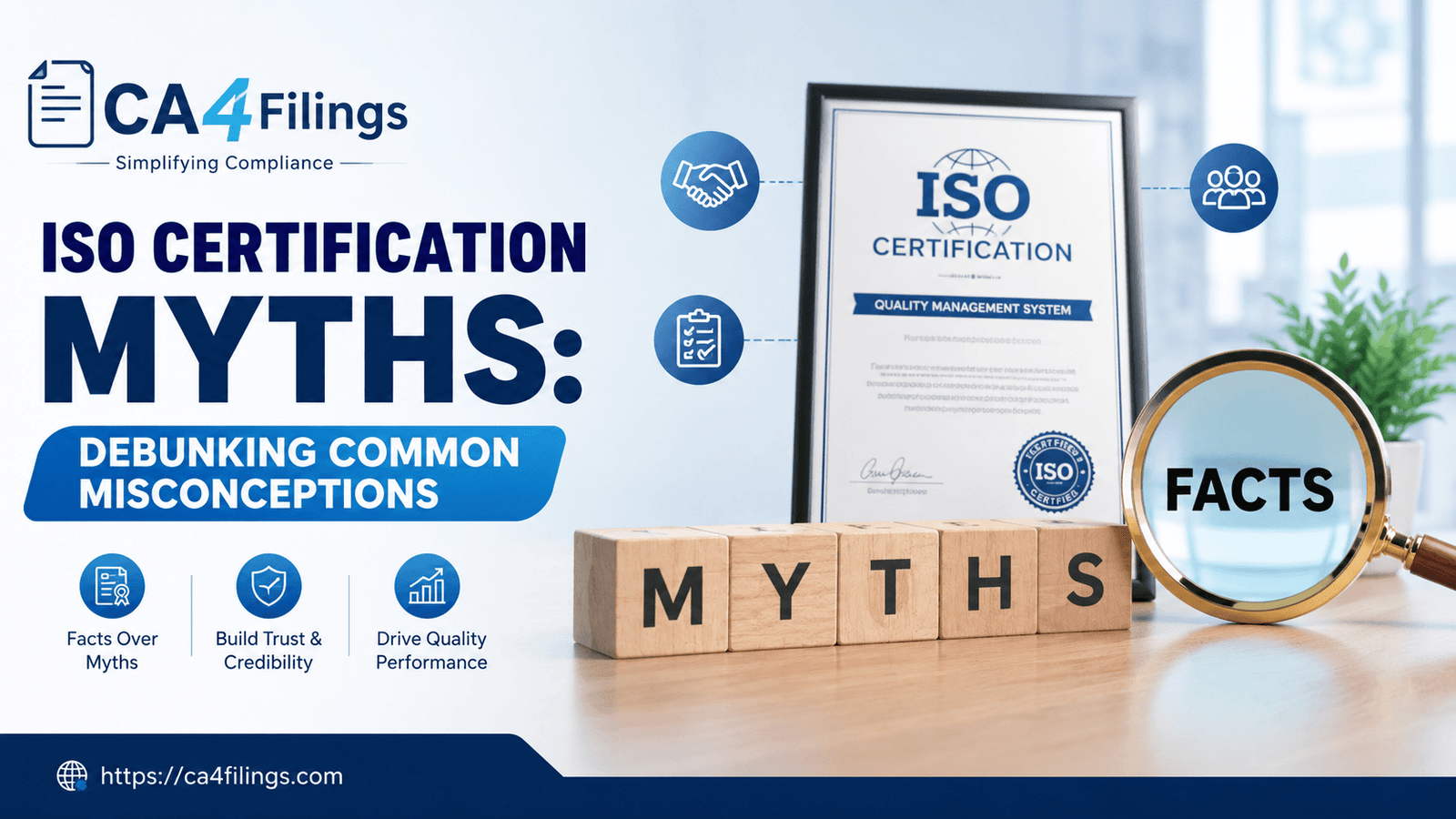
Running a business in India today is all about building trust and ensuring quality, which is why many entrepreneurs come to us asking about ISO Certification. However, the professional landscape is often clouded by rumors and half-truths that keep business owners from taking the next step. As Chartered Accountants, we see firsthand how these barriers can stall growth. That is exactly why we are focused on ISO Certification Myths: Debunking Common Misconceptions today. By clearing the air, we want to help you understand how these standards are actually powerful tools for efficiency, rather than the bureaucratic headaches they are often painted to be.
Why Do ISO Myths Exist?
ISO standards are globally recognized frameworks, yet there is a significant gap between reality and perception. Often, these myths stem from outdated business practices or experiences with rigid consultants who prioritize paperwork over actual processes. When we talk about myth-busting ISO certification, we are really talking about refocusing on what matters: the quality of your operations and the satisfaction of your customers.
Debunking the Biggest ISO Misconceptions
Let’s get straight to the facts. Here are the most common misconceptions about ISO that we encounter at CA4Filings.
Myth 1: ISO Standards Are Only for Large Corporations
This is perhaps the most prevalent of all ISO myths. Many small business owners in India believe that ISO requirements are too complex or expensive for them. In reality, the standards are designed to be scalable. Whether you run a startup with five employees or a manufacturing plant with five hundred, the principles—focusing on risk management, quality control, and customer feedback—apply universally.
Myth 2: It Requires Excessive Documentation
When we hear clients worry about the "paperwork trap," we tell them this: ISO is about documenting what you do, not creating mountains of unnecessary files. If you are already running your business efficiently, you are likely already meeting many of the requirements. It is about organizing your existing processes, not inventing new, burdensome ones.
Myth 3: ISO Certification Is a One-Time Task
A common misunderstanding is that once the certificate is on the wall, the job is finished. The truth about ISO certification is that it is a journey of continuous improvement. The goal is to build a culture of quality that evolves with your business.
Why You Should Ignore the Common Misconceptions About ISO
If you listen to the noise, you might miss out on the tangible benefits of ISO certification. These standards provide a structured approach to business management that helps you identify bottlenecks and reduce waste. From a CA’s perspective, these are not just "quality" standards; they are financial efficiency standards. Reducing errors directly translates to better margins.
The Role of ISO Accreditation
It is vital to distinguish between standards and accreditation. When you look at ISO accreditation, you are ensuring that the certification body auditing you is competent and recognized. At CA4Filings, we always emphasize the importance of choosing the right partners to ensure your certificate holds real market value.
How to Get Started the Right Way
Assess Your Needs: Understand which standard (e.g., ISO 9001 for quality) aligns with your industry.
Gap Analysis: Compare your current processes against the standard.
Process Implementation: Bridge the gaps identified during the analysis.
Internal Audit: Test your systems before the actual certification audit.
Final Certification: Work with an accredited body to get certified.
Frequently Asked Questions (FAQs)
Does ISO certification actually improve profitability?
Yes. By streamlining processes and reducing rework or waste, companies often see a positive impact on their bottom line.
How long does the process usually take?
The timeline varies depending on the size of your organization and the current state of your documentation, but it is rarely as long as people fear.
Is the certification valid forever?
No, it typically requires periodic surveillance audits and a recertification audit every three years to ensure you are maintaining the standards.
Will I need to hire extra staff to handle the ISO requirements?
Usually, no. The idea is to integrate these practices into the roles your team already performs.
Can any business apply for ISO?
Most businesses, regardless of their industry or size, can pursue certification if they are committed to maintaining the required management systems.
Partner with CA4Filings for Your Quality Journey
Clearing up the confusion surrounding ISO Certification Myths: Debunking Common Misconceptions is only the first step. The real value comes when you implement these standards to build a more resilient, scalable, and profitable business.
You do not have to navigate the documentation or the audit process alone. At CA4Filings, we take the complexity out of compliance, allowing you to focus on what you do best—growing your business. If you are ready to stop believing the myths and start reaping the rewards of a certified management system, reach out to our team today. Let us help you set the standard for quality in your industry.
Latest Updates
ca4filings.com Services






















-registration.png)