Tips for Streamlining Your GST Return Filing Process
Struggling with tax deadlines? Discover expert Tips for Streamlining Your GST Return Filing Process and ensure your business stays compliant with ease.
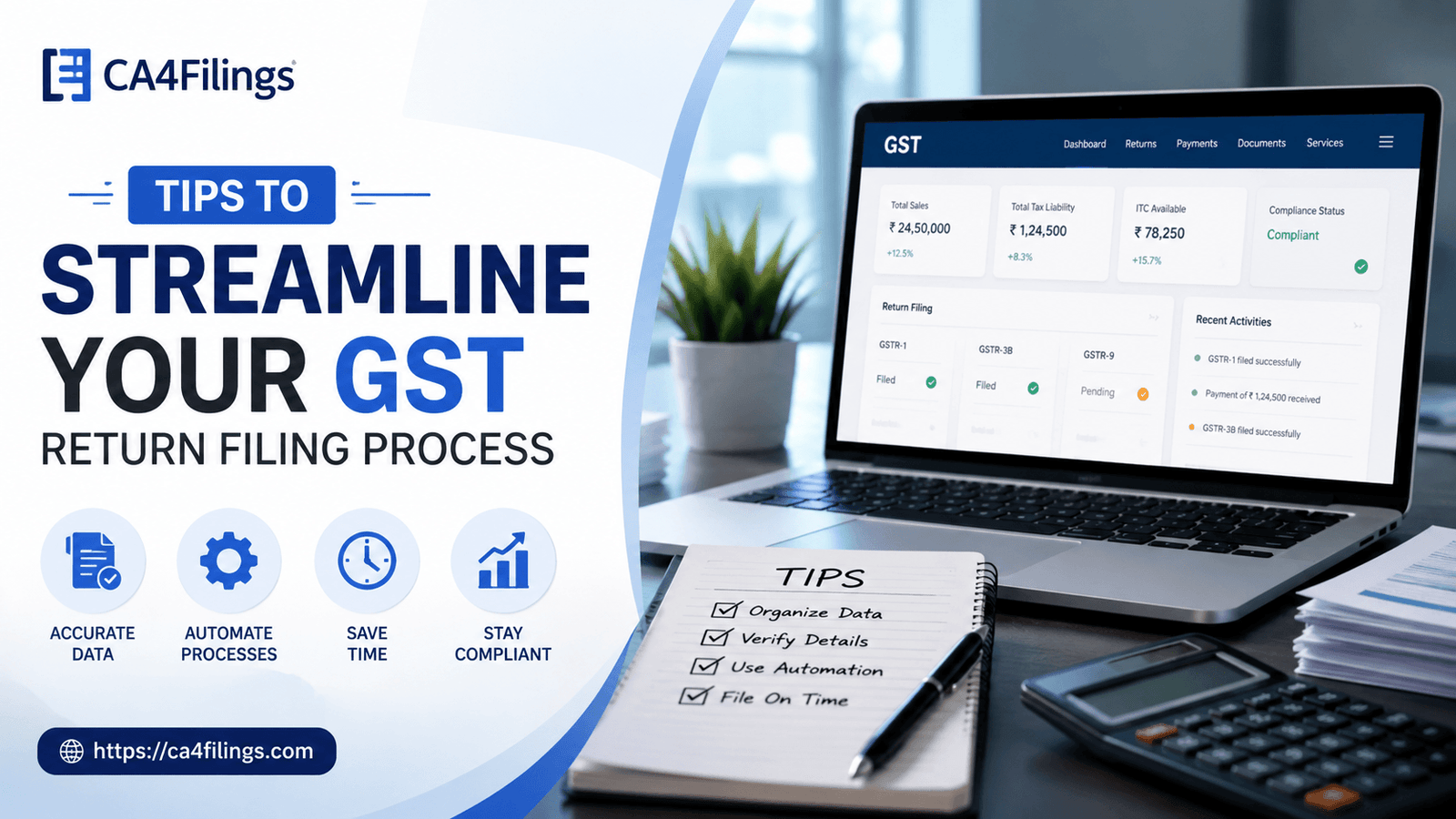
Managing tax obligations is often the most stressful part of running a business in India. If you feel like your paperwork is piling up and the monthly deadlines are constantly looming, you aren’t alone. Many business owners struggle to balance their core operations while keeping up with changing tax regulations. At CA4Filings, we often see clients overwhelmed by the sheer volume of data, but the good news is that with the right approach to GST Return Filing, you can regain control. Implementing these essential Tips for Streamlining Your GST Return Filing Process can transform a chaotic chore into a predictable, manageable workflow for your team.
Why Streamlining Your GST Process Matters
In the world of indirect taxation, time is money. Missing a deadline for your GST returns doesn't just result in late fees and interest; it impacts your compliance rating, which can affect your working capital if your suppliers are wary of your filing history. When you simplify your internal workflows, you reduce the risk of human error—the leading cause of notice letters from the department. A streamlined approach to your tax compliance ensures that your books are always audit-ready, saving you from last-minute panic as the due date approaches.
Practical Tips for Streamlining Your GST Return Filing Process
To get your filing process under control, you need a shift in perspective. Instead of treating GST as an end-of-month hurdle, treat it as a continuous business activity. Here are our expert recommendations to help you navigate this.
1. Maintain Real-Time Data Entry
The biggest mistake we see is waiting until the last week of the month to record invoices. To successfully implement these tips for streamlining your GST return filing process, shift to daily or weekly data entry. When you account for sales and purchase invoices as they occur, you eliminate the massive backlog that leads to errors in data entry.
2. Leverage Modern Accounting Software
Are you still using manual spreadsheets to track your input tax credits? It is time to upgrade. Modern cloud-based accounting tools automatically map your invoices to the correct GST codes and HSN/SAC classifications. This automation is a game-changer for your GST process, as it reduces the manual labor required for the submission of your GSTR-1 and GSTR-3B forms.
3. Conduct Regular Reconciliation
Reconciliation between your purchase register and the GSTR-2B statement provided by the government portal is non-negotiable. If you fail to verify your input tax credit (ITC) claims monthly, you risk losing out on credits or triggering a notice for mismatched data.
Perform a monthly GSTR-2B vs. Purchase Register match.
Flag missing invoices early to communicate with your vendors.
Ensure vendors have actually filed their returns so you can claim your credit.
Mastering the Technical Side of Tax Regulations
Understanding the nuances of tax regulations is vital for any growing business. Tips for streamlining your GST return filing process would be incomplete without focusing on how you handle your documentation.
Organizing Your Documentation
Keep a dedicated folder system—either physical or digital—for all tax-related documents. This should include:
Inward supply invoices (Purchase)
Outward supply invoices (Sales)
Debit/Credit notes
Payment vouchers and bank statements for tax payments
By keeping these documents organized, you ensure that even if you are audited, the tax filing process remains smooth and transparent. Consistency is the secret ingredient to long-term compliance.
Common Pitfalls to Avoid in Your Filing Process
Even with the best intentions, businesses often fall into traps that complicate the GST returns cycle. Being aware of these can save you significant effort:
Ignoring HSN Codes: Incorrect HSN coding is a frequent reason for scrutiny. Always verify the codes for your specific goods or services.
Late Payment of Taxes: Even if you file the return, the interest clock on tax liability starts ticking from the due date. Ensure your tax payments are made before the filing deadline to avoid unnecessary interest burdens.
Failure to Use Available Tools: The government portal provides various offline tools and utilities. Use them to validate your data before the final upload.
Frequently Asked Questions (FAQs)
How can I reduce the time spent on GST compliance? By automating data entry and performing monthly reconciliations, you significantly reduce the manual effort needed, which is one of the most effective tips for streamlining your GST return filing process.
What happens if I miss a filing deadline? Missing a deadline leads to late fees and interest. Furthermore, it creates a "non-compliant" image on the portal, which might affect your business credibility.
Is it better to outsource my GST returns? For many businesses, outsourcing to professionals like CA4Filings is more cost-effective than hiring a dedicated full-time accountant, as it guarantees professional oversight of your GST returns.
How do I ensure my Input Tax Credit is accurate? Always match your purchase register against the GSTR-2B generated by the GST portal before finalizing your return.
Partner with CA4Filings for Expert Support
We know that as a business owner, your time is better spent growing your company rather than getting bogged down in complex tax forms. While these tips for streamlining your GST return filing process will certainly help you establish better internal habits, expert guidance ensures you stay ahead of ever-changing tax regulations.
At CA4Filings, we specialize in taking the stress out of tax season. From managing your monthly filings to providing strategic advice on tax planning, our team is committed to keeping your business fully compliant. Reach out to us today to see how we can handle your tax requirements while you focus on what you do best—running your business.
Latest Updates
ca4filings.com Services

























-registration.png)