How to File GST Returns During Business Transition or Sale
Master the essentials of How to File GST Returns During Business Transition or Sale. Get expert tips from CA4Filings to ensure seamless compliance today.
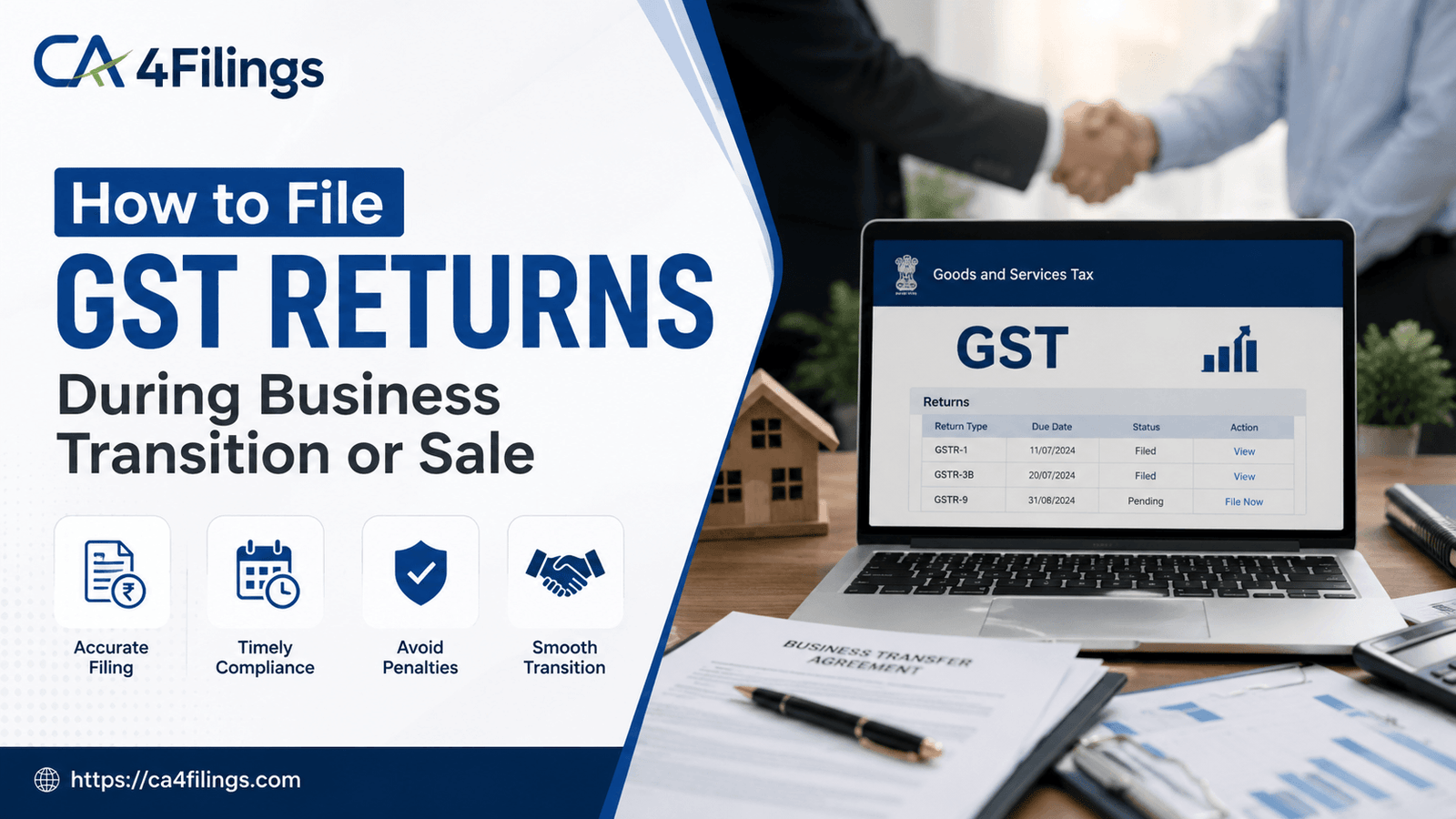
Selling a business or undergoing a structural change is a major milestone for any entrepreneur in India. Amidst the excitement of finalizing deals and handing over operations, one critical area often gets overlooked: tax compliance. Understanding How to File GST Returns During Business Transition or Sale is essential to avoid unwanted litigation. If you are struggling with the complexities of GST Return Filing, remember that staying organized during this phase is the key to a smooth exit.
Why GST Compliance Matters During a Business Sale
When you transfer your business, you are essentially transferring liabilities, assets, and tax records. The GST portal does not automatically update just because you’ve signed an agreement. You must proactively manage the transition. Failing to follow the correct How to File GST Returns During Business Transition or Sale procedures can lead to heavy tax penalties later.
Key Steps to Handle GST During Transition
1. Notify the GST Department
The first step in the GST return process is informing the authorities. Under the GST Act, when a business is transferred as a "going concern," the transferor must apply for the cancellation or amendment of their registration. You cannot simply stop filing.
2. Transfer of Input Tax Credit (ITC)
One of the biggest concerns during a business sale is the unutilized Input Tax Credit. You must file FORM GST ITC-02. This allows you to transfer the remaining credit to the transferee (the buyer). If you don't file this, that credit is essentially lost.
3. Finalizing Pending Returns
Before closing your GST account, ensure all outstanding GST returns are filed. Even if there is no transaction in the final month, a "Nil" return is mandatory. Tax compliance is non-negotiable here.
Practical Insights on How to File GST Returns During Business Transition or Sale
Many business owners mistakenly believe that the buyer takes over the GST liability automatically. That is not how it works. The buyer takes over the GST number only if there is a legal transfer of ownership. If you are selling the assets but retaining the legal entity, your GST filing instructions remain unchanged until the official de-registration process is complete.
Common Mistakes to Avoid
Stopping filings before the official cancellation date.
Forgetting to reconcile the ledgers before transferring them.
Ignoring the tax implications of the transfer of stock.
Frequently Asked Questions
Does the buyer automatically inherit my GST liability? No, liability is subject to the terms of your transfer agreement. However, for GST purposes, you must settle all dues for the period you operated the business.
Is it mandatory to file GST ITC-02? Yes, if you want to transfer your unused Input Tax Credit to the new owner, filing ITC-02 is mandatory.
What happens if I forget to file a final return? You may face significant tax penalties and interest, which can complicate the sale closure.
Expert Guidance from CA4Filings
Transitioning or selling your business is stressful enough without the headache of tax compliance. At CA4Filings, we specialize in ensuring your business exit is seamless. If you need professional assistance on How to File GST Returns During Business Transition or Sale, reach out to us today. Let our experts handle the paperwork while you focus on your next venture!
Latest Updates
ca4filings.com Services
























-registration.png)