How GST Return Filing Can Impact Your Tax Liability
Worried about your taxes? Learn how GST Return Filing Can Impact Your Tax Liability and why staying compliant is crucial for your business growth.
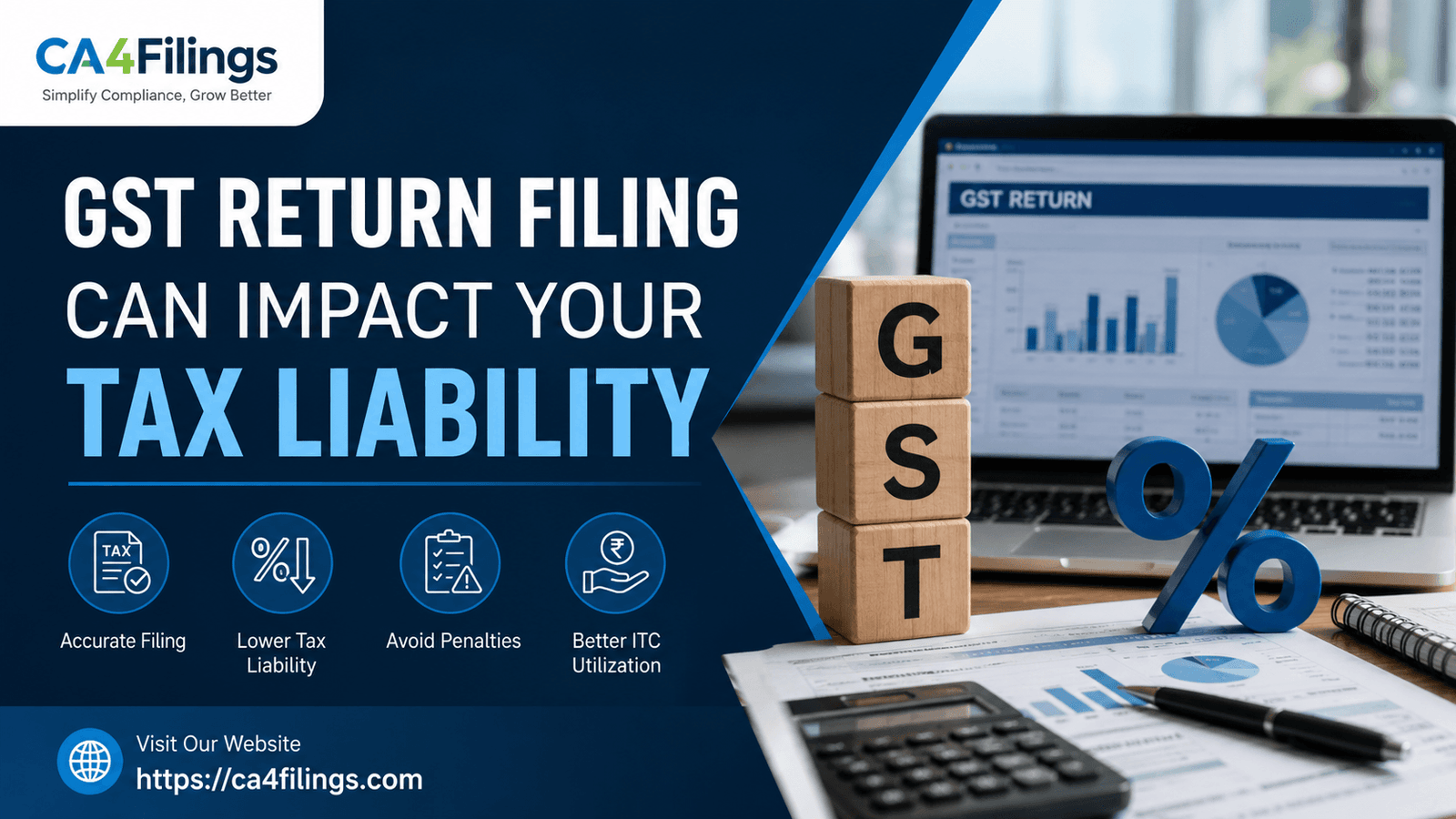
Many business owners view GST compliance as just another chore on their monthly to-do list. However, as Chartered Accountants at CA4Filings, we often see that the way you manage your GST Return Filing is actually the backbone of your financial health. Understanding How GST Return Filing Can Impact Your Tax Liability is not just about avoiding notices; it is about optimizing your cash flow and ensuring your business operations run smoothly without unnecessary financial drain.
When you fail to align your records with the government’s portal, you aren’t just risking a penalty—you are often paying more than you actually owe. Let’s dive into how these processes interlink and why precision matters.
The Direct Link Between GST Returns and Tax Outgo
Many taxpayers assume that their tax liability is fixed the moment they raise an invoice. That is a common misconception. In reality, your final tax impact is determined by the data you report in your monthly and quarterly filings.
When you file your GSTR-1 (outward supplies) and GSTR-3B (summary of liabilities and input tax credit), you are essentially declaring your final tax position to the department. If these filings are inaccurate, you face two major problems:
Input Tax Credit (ITC) Mismatches: If you fail to reconcile your purchase invoices with the GSTR-2B generated by the portal, you might claim credit for taxes that aren't appearing in your suppliers' returns. This leads to reversals, interest, and sometimes hefty demand notices.
Increased Working Capital Lock-up: Delayed or incorrect filing prevents you from claiming the credit you are entitled to, which directly hits your pocket.
Why Timely Compliance Saves You Money
One of the most critical aspects of How GST Return Filing Can Impact Your Tax Liability is the timing of your filings. GST regulations are unforgiving when it comes to deadlines.
The Cost of Late Filing
When you miss a filing deadline, you trigger two immediate financial penalties:
Late Fees: A fixed amount charged per day of delay.
Interest: A substantial 18% per annum on the net tax liability paid late.
If your business operates on thin margins, these penalties can quickly eat into your profits. Furthermore, an "on-time filing" habit prevents the accumulation of interest, which is calculated from the day following the due date.
How Inaccurate Data Impacts Your Bottom Line
Accuracy is the difference between a tax-efficient business and one constantly firefighting with the GST department. When you don't focus on How GST Return Filing Can Impact Your Tax Liability, you risk "discrepancy notices."
Common Pitfalls Affecting Tax Impact
Ineligible ITC Claims: Trying to claim credit for personal expenses or blocked categories like catering or construction of immovable property.
Incorrect Tax Classification: Applying a higher tax rate than the product or service warrants, which makes your services uncompetitive in the market.
Mismatch in HSN Codes: Incorrect HSN reporting can trigger automated scrutiny, leading to a long-drawn-out audit process.
Strategic Benefits of Professional Filing
Managing How GST Return Filing Can Impact Your Tax Liability on your own can be overwhelming. As experts, we believe that a structured approach to tax compliance provides several business advantages:
Improved Compliance Rating: A high rating makes your business more trustworthy to suppliers and clients alike.
Avoiding Tax Penalties: Proactive reconciliation ensures you never have to pay a single rupee in unnecessary late fees or interest.
Better Cash Flow Management: When your ITC is claimed correctly and on time, you effectively reduce the amount of cash you need to pay for your tax liabilities, keeping more liquid cash within your business.
Frequently Asked Questions
1. Does a delay in filing only attract a late fee?
No, it also attracts interest at 18% per annum on the tax amount that was supposed to be paid. This is often more expensive than the late fee itself.
2. How does GST return filing impact my input tax credit?
If you don't file your returns accurately, you may lose out on claiming your rightful Input Tax Credit. If your supplier hasn't filed their returns, your ITC for those purchases will not be reflected in your GSTR-2B, which can force you to pay tax out of your own pocket.
3. Can I correct errors in my GST returns after filing?
Generally, once a return is filed, it cannot be edited. However, you can make adjustments in the subsequent month’s return for certain types of errors, but this often leads to complexities in your tax liability calculations.
4. Is GST compliance mandatory for all small businesses?
If your turnover exceeds the threshold limits prescribed under GST law, you must register and file returns. Ignoring this can lead to severe tax penalties and legal trouble.
5. Why should I hire professionals for GST return filing?
GST law is dynamic. Professionals keep track of changing notifications, circulars, and portal updates, ensuring that your business stays compliant and your tax liability is optimized.
Understanding How GST Return Filing Can Impact Your Tax Liability is the first step toward building a resilient business. Whether it is ensuring the right HSN coding or performing regular GSTR-2B reconciliations, every step you take reduces your risk profile. Don't let compliance errors drain your hard-earned profits.
At CA4Filings, we specialize in simplifying the complexities of GST. Our team of experienced Chartered Accountants works closely with you to ensure your filings are accurate, timely, and optimized for your tax efficiency. Reach out to us today, and let us handle your compliance so you can focus on scaling your business.
Latest Updates
ca4filings.com Services

























-registration.png)