Future Trends in GST Return Filing: What Businesses Should Expect
Discover the Future Trends in GST Return Filing: What Businesses Should Expect. Stay ahead with expert insights from CA4Filings to simplify compliance.
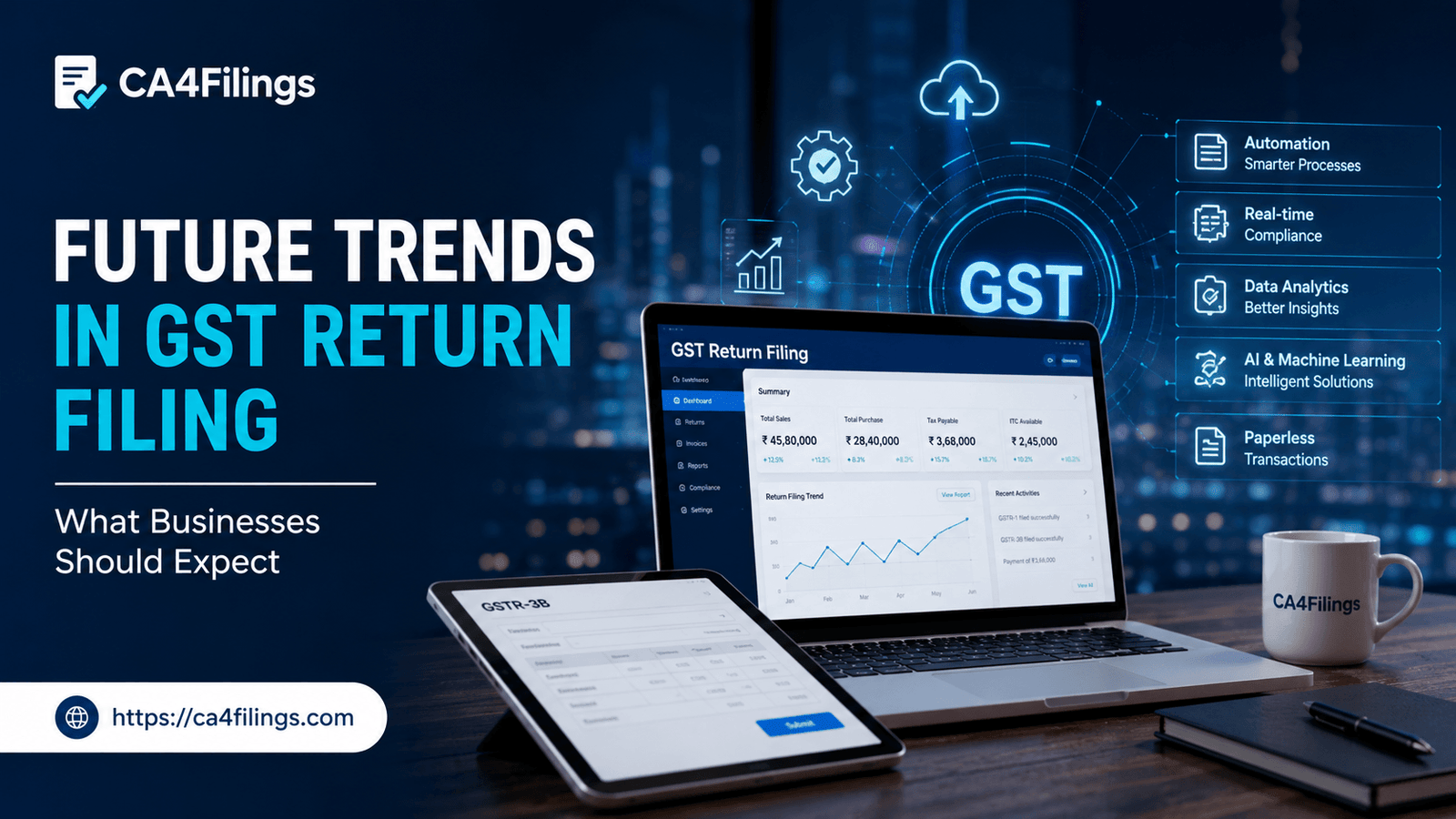
The landscape of Indian taxation is evolving rapidly, and staying informed is no longer optional—it is a business necessity. When we discuss Future Trends in GST Return Filing: What Businesses Should Expect, we are looking at a system moving toward total automation, transparency, and real-time reconciliation. At CA4Filings, we understand how daunting these shifts can feel, which is why we specialize in GST Return Filing services to help you navigate these complex regulatory waters with ease. As the government continues to leverage technology to reduce the compliance burden, businesses must be ready to adapt to these changes to remain compliant and efficient.
The Shift Toward Real-Time Compliance
One of the most significant future trends we are observing is the move from periodic filing to real-time, event-based reporting. The days of "end-of-month panic" are slowly fading. The government’s focus is on integrating transactional data directly into the GST portal.
What Does This Mean for You?
Automation of Data Flow: Soon, your internal accounting software will likely "talk" directly to the GST server. Manual data entry will become a liability, increasing the risk of errors.
Real-Time ITC Matching: Input Tax Credit (ITC) matching is becoming increasingly automated. You will no longer wait until the end of the month to see if your vendor has filed their returns; you will know instantly.
Proactive Compliance: Instead of waiting for a notice, businesses will be able to rectify discrepancies in real-time, significantly lowering the risk of penalties.
Integrating Artificial Intelligence and Data Analytics
As we look at Future Trends in GST Return Filing: What Businesses Should Expect, it is impossible to ignore the role of smart analytics. The tax department is using sophisticated algorithms to identify tax evasion patterns.
If your business has inconsistent reporting or unusual spikes in ITC claims, the system flags these automatically. To stay ahead of the curve, you need to ensure that your financial hygiene is top-notch. We often advise our clients that data integrity is the new currency of compliance. By maintaining clean records, you avoid unnecessary scrutiny and keep your compliance processes smooth.
E-Invoicing and the Digital Paper Trail
E-invoicing is not just a trend; it is the new standard. We expect the threshold for mandatory e-invoicing to continue dropping, eventually covering even smaller taxpayers. This is a massive step forward to streamline the audit trail.
Expert Insight: Think of e-invoicing as the backbone of your GST compliance. Since the data is captured at the source, the scope for manual manipulation is virtually non-existent. For businesses, this means the expectations for accuracy are higher than ever before.
How to Prepare and Adapt
It is natural to feel overwhelmed by these regulations, but you don't have to navigate them alone. Being proactive is the key to managing these changes effectively. Here is how you can prepare:
Invest in Scalable Accounting Systems: Use cloud-based software that updates automatically with new GST law changes.
Regular Reconciliation: Do not wait for the return filing date. Perform monthly reconciliations of GSTR-2B versus your purchase register.
Audit Your Supply Chain: Ensure your vendors are compliant. If your vendor fails to file, it directly impacts your ability to claim ITC.
Continuous Learning: Dedicate time to understand new notifications. At CA4Filings, we make it our job to translate these complex insights into simple action plans for our clients.
Embracing a Paperless Future
The tax ecosystem is pushing for a 100% digital environment. While this transition can be challenging, the long-term benefit is a more organized business structure. Embracing digital signatures, cloud storage for invoices, and automated reconciliation tools will pay off significantly in terms of saved time and reduced interest/penalty liabilities.
Frequently Asked Questions
1. Will the GST filing process become completely automated?
While complete human elimination isn't the goal, the process is trending toward "system-driven" filing. The government wants to move toward a system where you simply review and approve data pulled directly from your invoices.
2. How can I stay ahead of changing GST regulations?
The best way is to partner with experts. Regulatory changes happen via notifications and circulars that are often dense. At CA4Filings, we track these daily and update our clients so they don't have to worry about missing a deadline.
3. What is the biggest risk for businesses in the near future?
The biggest risk is "non-compliance by association." If your suppliers do not comply with the new digital reporting standards, your ITC claims will be blocked. Managing your vendor ecosystem is crucial.
4. How do I choose the right technology for GST compliance?
Look for software that offers API integration with the GST portal, automated reconciliation, and built-in alerts for missing invoices.
The evolution of tax compliance is inevitable. When considering Future Trends in GST Return Filing: What Businesses Should Expect, remember that technology is your best ally, not your enemy. By adopting proactive strategies and staying informed, you can turn compliance from a burden into a streamlined business process.
At CA4Filings, we are committed to helping you stay ahead of the curve. Whether you need help with day-to-day reconciliation or strategic advice on structuring your digital records, our expert team is here to support you. Don’t let compliance gaps hold your growth back. Contact CA4Filings today and let us simplify your tax journey!
Latest Updates
ca4filings.com Services























-registration.png)