Understanding the Role of GST Returns in Cancellation Processes
Master the essentials of understanding the role of GST returns in cancellation processes to ensure seamless compliance and avoid heavy penalties.
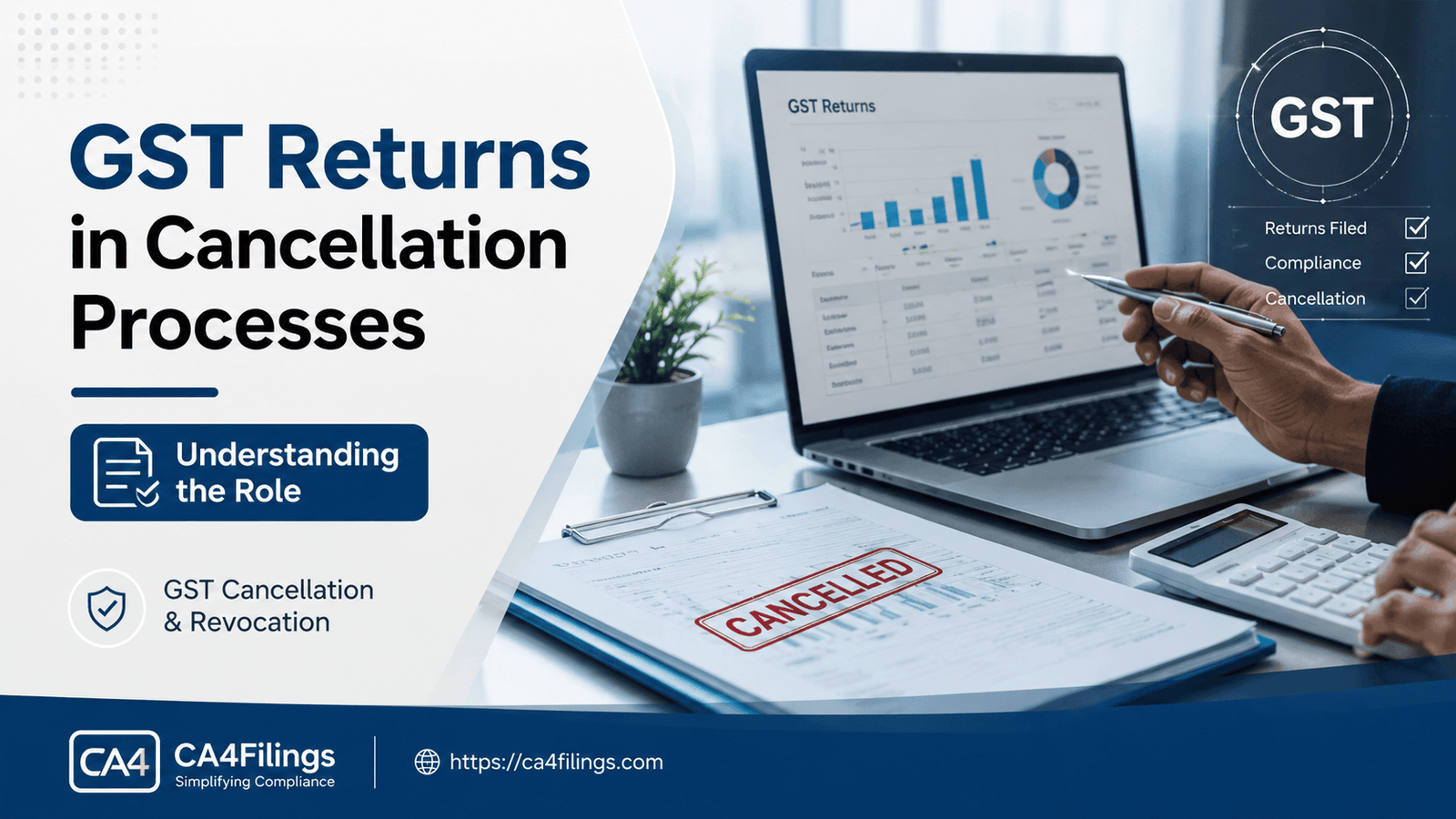
Running a business in India comes with its fair share of rewards and responsibilities. Among these responsibilities, managing your taxes smoothly sits right at the top. Since its implementation, the Goods and Services Tax (GST) has transformed the Indian business landscape, making robust financial records more important than ever. However, there are times when a business needs to close down, restructure, or deal with a turnover that falls below the threshold limit. When these situations arise, handling the formal closure of your registration becomes a critical task. Understanding the Role of GST Returns in Cancellation Processes is absolutely vital for businesses to ensure that this exit or transition happens without triggering legal notices or hefty fines from revenue authorities.
When navigating these waters, keeping up with your tax filings up until the very last day is not just good practice—it is a strict legal mandate under GST regulations. If you find yourself needing to wind down operations, you will likely need to deal with a structured process of GST Cancellation & Revocation to legally close your registration or fix an accidental cancellation. At CA4Filings, we often see business owners assuming that once operations stop, their tax obligations disappear instantly. In reality, the GST network requires a systematic wrap-up of all your pending logs, making accurate returns the definitive bridge between an active business status and a legally clean cancellation.
Why the GST System Prioritizes Your Returns
The GST system is designed as a continuous, digital chain where your data directly impacts your vendors and clients. For revenue authorities, your regular GST returns act as a transparent window into your transactional history.
When a registration enters the cancellation processes, the tax department uses these returns to verify that you have accounted for all liabilities, passed on the correct Input Tax Credit (ITC), and paid your due taxes. Without timely returns, the system flags the profile, assuming there might be undisclosed revenue or un-utilized tax liabilities.
Understanding the Role of GST Returns in Cancellation Processes: Step-by-Step
To get a clear picture of Understanding the Role of GST Returns in Cancellation Processes, we need to break the entire cycle down into manageable stages. The role of your filings changes depending on whether you are initiating the cancellation yourself or responding to a department notice.
1. Clearing Pending GSTR-1 and GSTR-3B Filings
Before you or your consultant hits the "Apply for Cancellation" button on the GST portal, every single regular return (GSTR-1 and GSTR-3B) up to the effective date of cancellation must be filed. If you have months of unfiled returns, the portal simply will not allow you to submit your cancellation application.
2. The Crucial Final Return (GSTR-10)
Once the cancellation order (Form GST REG-19) is issued by the tax officer, the story doesn't end there. The GST network mandates the filing of a Final Return in Form GSTR-10 within three months of the date of cancellation or the date of the cancellation order, whichever is later.
Expert Note: GSTR-10 is entirely different from an Annual Return (GSTR-9). Its primary purpose is to ensure you pay tax on any remaining stock of raw materials, semi-finished goods, or capital goods held on the day immediately preceding the cancellation date.
3. Department-Initiated Cancellations
If a business fails to file accurate returns for a continuous period of six months (or a specified quarter limit for QRMP taxpayers), the proper officer has the power to cancel the registration from their end. Even in this scenario, understanding the role of GST returns in cancellation processes is vital, because you cannot apply for a revocation (reversal) of that cancellation until all your back taxes are fully paid and filed.
The Impact of Incomplete Filings on Businesses
Neglecting your compliance during a business closure creates serious compliance issues that can haunt business owners personally. Because your PAN is tied directly to your GSTIN, leaving an un-cancelled or improperly cancelled registration active can damage your financial records and credit credibility.
Key Risks of Poor Exit Compliance
Continuous Penalty Accumulation: Late fees accrue daily for every return missed, even if your business turnover is zero.
Input Tax Credit Blocks for Buyers: If you do not file your GSTR-1 properly before closing, your genuine buyers won't see the credit in their GSTR-2B, leading to strained business relationships and legal disputes.
Recovery Proceedings: Revenue authorities can initiate recovery proceedings against the personal assets of directors or partners if tax obligations are left unaddressed.
Checklists for a Smooth GST Cancellation
To achieve smooth functioning during your closure process, we recommend following a strict procedural checklist.
Practical Actions to Take:
Reconcile Your Stock: Physically count your leftover raw materials and capital goods. Calculate the ITC involved and prepare to reverse or pay it back.
Check the Cash and Credit Ledgers: Ensure all balances are accurately utilized against outstanding liabilities.
Keep Your Documentation Safe: Retain your purchase invoices, sales logs, and bank statements for at least 72 months from the due date of filing the annual return for that relevant year.
FAQs on GST Returns and Cancellation
Can I stop filing GST returns as soon as I close my shop?
No. You must continue filing your regular GST returns right up to the "Effective Date of Cancellation" approved by the tax officer. Stopping early will result in systemic late fees.
What happens if I miss filing the Final Return (GSTR-10)?
Missing the GSTR-10 deadline triggers an immediate notice from the GST system. A standard late fee accumulates, and the department can issue an assessment order estimating your tax liability on left-over stock arbitrarily.
Can a cancelled GST registration be restored?
Yes, if the department cancelled it due to non-filing, you can apply for revocation within the prescribed timelines. However, you must first file all your pending accurate returns and clear all outstanding tax obligations, interest, and late fees.
Understanding the Role of GST Returns in Cancellation Processes highlights that a clean exit is just as important as a compliant start. The Indian GST compliance framework leaves no room for casual omissions when winding down business operations. Keeping your financial records flawless during this transitional phase saves you from future litigation and unwanted financial stress.
If managing the complexities of stock reversals, final returns, and portal applications feels overwhelming while you are managing a business transition, let the experts handle it. At CA4Filings, our team of experienced Chartered Accountants manages your complete cancellation, revocation, and compliance lifecycle smoothly and accurately. Contact CA4Filings today to ensure your business closure is perfectly compliant, secure, and completely stress-free.
Latest Updates
ca4filings.com Services

























-registration.png)