Impact of Technology on GST Cancellation and Revocation Processes
Discover the profound Impact of Technology on GST Cancellation and Revocation Processes. Learn how digital tools and automation streamline tax compliance.
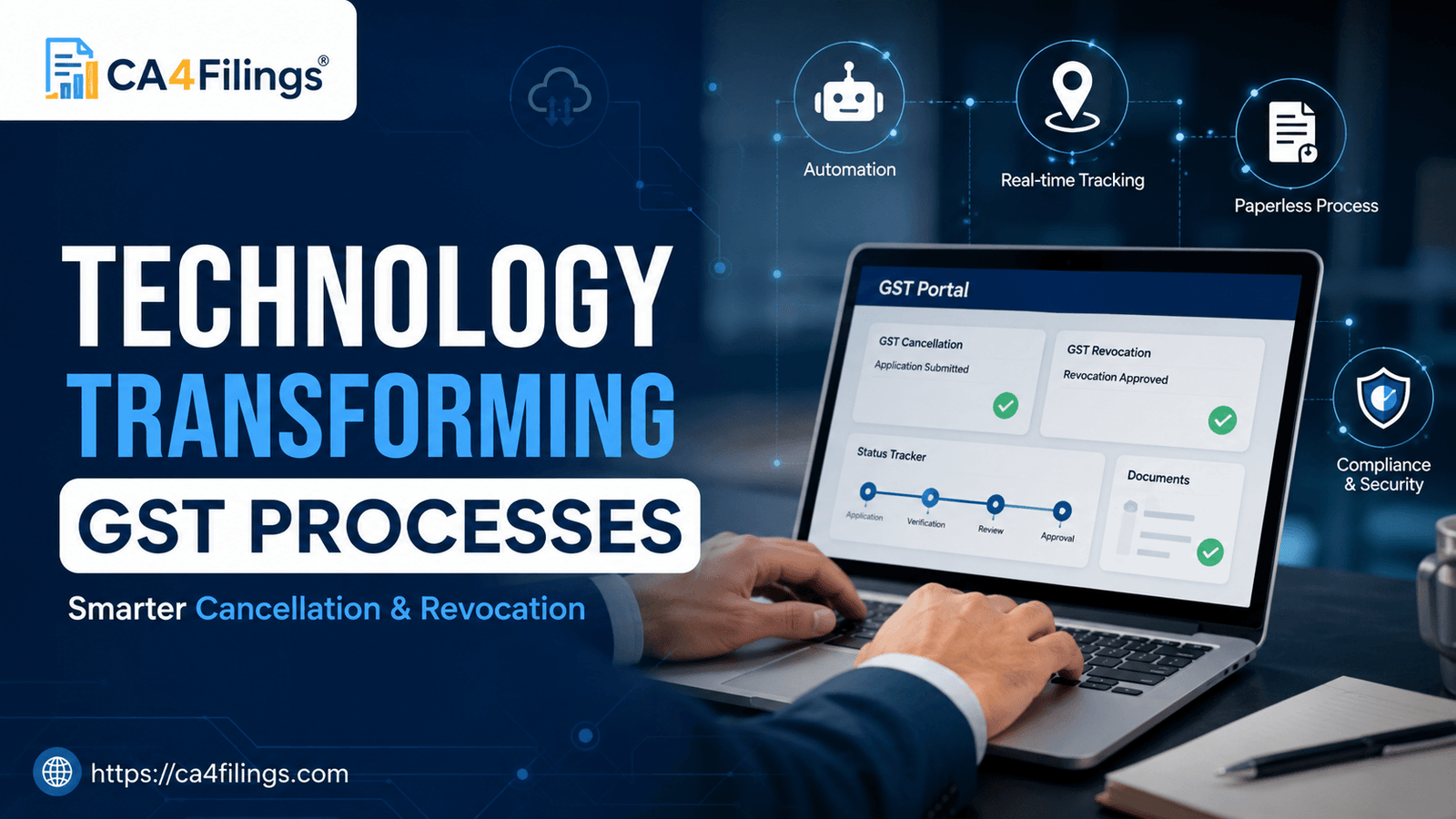
Navigating the landscape of indirect taxation in India has never been a static journey. Since its inception, the Goods and Services Tax (GST) framework has continually evolved, shifting from a cumbersome paper-laden regime to a highly sophisticated, data-driven ecosystem. As business owners, one of the most critical aspects you might encounter is the sudden suspension or cancellation of your GST registration. Understanding the profound Impact of Technology on GST Cancellation and Revocation Processes is no longer just for tax professionals—it is vital for every entrepreneur looking to safeguard their business operations.
At CA4Filings, we routinely assist businesses dealing with sudden department notices, helping them navigate the complexities of GST Cancellation & Revocation through the online portal. Over the last couple of years, the technology impact on these specific tax procedures has grown exponentially. The days of manual collusion or long delays due to physical paperwork are rapidly fading. Today, automated algorithms, data analytics, and real-time tracking dictate how a GST cancellation is triggered and how smoothly a tax revocation can be executed. Let us dive deep into how this digital transformation alters your tax compliance journey.
The Shift from Manual Checkpoints to Automated Triggers
Historically, tax cancellation was a reactive measure. An officer would manually audit physical records, notice discrepancies after several months, and then initiate a lengthy legal process. Today, technology in taxation has turned this system on its head. The Goods and Services Tax Network (GSTN) utilizes massive data integration to monitor business activities in real time.
Automated System Alerts
The primary driver behind modern GST cancellation is automated risk profiling. The system continuously tallies your GSTR-1, GSTR-3B, and GSTR-2B. If a business fails to file returns for a continuous period of six months (or three quarters for composition dealers), the system automatically flags the GSTIN for suspension.
Advanced Data Analytics (BIFA)
The tax department heavily relies on the Business Intelligence and Fraud Analytics (BIFA) platform. This digital tool uses advanced machine learning to spot anomalies like:
Major mismatches between input tax credit (ITC) claimed and ITC available.
Sudden spikes in sales volume without a corresponding increase in infrastructure or purchases.
E-way bill generation anomalies against non-existent vehicle numbers.
When these algorithmic red flags go off, the system automatically triggers a show-cause notice for GST cancellation, minimizing human intervention and maximizing tax efficiency.
Deconstructing the Impact of Technology on GST Cancellation and Revocation Processes
To truly appreciate the Impact of Technology on GST Cancellation and Revocation Processes, one must look at both sides of the coin. While digitalization has made the department's enforcement swift and stringent, it has also brought unprecedented accuracy and speed to the rectification process for honest taxpayers.
1. Eliminating Subjectivity through Digital Standardization
In the manual era, a tax cancellation often depended on an individual officer's interpretation. Digitalization standardizes the entire workflow. The reasons for suspension are auto-populated based on system data, ensuring absolute accuracy regarding the exact default.
2. Accelerated Timelines for Tax Revocation
If your registration is cancelled by an officer on their own motion (suo motu), you have a specific window to apply for a tax revocation. Thanks to digital tools, the entire application for revocation (Form GST REG-21) is processed online.
Once you upload the missing returns and clear the outstanding tax liability, the portal automatically updates your status. This integration drastically reduces the turnaround time, allowing businesses to resume operations quickly and avoiding prolonged cash flow disruptions.
How Automation Impacts the Revocation Workflow: A Step-by-Step View
When a business faces a cancelled status, the path to recovery relies entirely on online GST processes. Here is how tax automation guides a taxpayer through the digital workflow of revocation:
Step 1: Automated Verification of Pending Compliance: Before you can even hit the "Apply for Revocation" button, the portal's built-in validation checks if all pending returns up to the date of cancellation have been filed.
Step 2: Electronic Payment and ITC Reversal: Any tax liabilities, late fees, or interest must be paid through the electronic cash ledger. The system instantly matches the payments, eliminating the need to submit physical challans to a tax office.
Step 3: Seamless Portal Uploads: Supporting documents, such as proof of business premises or explanations for delayed filing, are uploaded directly as digital PDFs.
Step 4: Digital Signature Verification: Applications are authenticated using Digital Signature Certificates (DSC) or Electronic Verification Codes (EVC), ensuring high security and preventing identity fraud.
Challenges Brought by the Digital Transformation
While the benefits of tax automation are immense, it would be unfair not to address the challenges that small business owners face due to this rapid shift toward technology.
The Problem of "System-Generated" Errors
Sometimes, technical glitches on the GST portal or delayed banking updates can lead to erroneous suspensions. Because the system is automated, it doesn't understand human nuance; a delay of a few hours in a server update can occasionally trigger a harsh compliance notice.
Stringent Deadlines and Hard Stops
The digital portal operates on strict cryptographic timelines. If the law states you have 30 or 90 days to apply for a GST revocation, the portal will literally lock the option once the clock runs out. Relying on manual extensions or pleading a case before an officer becomes incredibly difficult when the digital gate is closed.
Expert Advice from CA4Filings: Navigating the Tech-Driven Era
As experienced CAs, our advice to businesses is clear: you cannot fight technology with manual methods. To survive and thrive in this digital-first tax ecosystem, your business must adopt proactive compliance habits.
Reconcile Data Regularly: Run monthly or fortnightly reconciliations between your purchase register, GSTR-2B, and GSTR-3B. Do not wait for the end of the financial year.
Monitor the GST Portal Weekly: Assign a team member or a professional partner like CA4Filings to check your GST portal dashboard regularly. System-generated show-cause notices often give a tight 7-day window for a reply. Missing an email alert can result in immediate, automated suspension.
Maintain Tech-Savvy Records: Keep digital copies of your rent agreements, utility bills, and geo-tagged photos of your principal place of business. If the system flags your address as risky, having these ready for immediate online upload can save your registration from being axed.
Frequently Asked Questions (FAQs)
Q1. Can the GST portal cancel my registration automatically without a notice?
No. While the system identifies the default automatically, the principles of natural justice are coded into the software. The system will first change your status to "Suspended" and issue an automated Show Cause Notice (SCN) via email and the portal. You are always given a window to respond before actual cancellation occurs.
Q2. How has technology improved the speed of the GST revocation process?
Previously, physical files had to move from desk to desk, often taking months. Now, with online filing, automated validations, and digital signatures, an officer can review and approve a revocation application within days of submission, provided all compliances are updated.
Q3. What should I do if the portal does not allow me to file for revocation because the time limit has expired?
If the portal has locked the revocation option due to a time bar, you may need to file an appeal before the Appellate Authority or check for any recent amnesty schemes extended by the government that temporarily open the portal for old cancellations.
Q4. Does a mismatch in GSTR-1 and GSTR-3B lead to automatic cancellation?
A significant, unclarified mismatch can lead to system-generated text alerts and eventual suspension under Rule 21A. The system views large mismatches as a potential risk indicator for fake invoicing.
The undeniable Impact of Technology on GST Cancellation and Revocation Processes has transformed Indian taxation from a game of chance into a science of precision. Digital tools, data analytics, and automation have made enforcement swift, leaving zero room for non-compliance. However, for the diligent taxpayer, this digital transformation provides a transparent, structured, and highly efficient way to rectify errors and restore business operations without bureaucratic delays.
Remaining compliant in this automated era requires expert oversight. At CA4Filings, we leverage our deep domain expertise and understanding of the GSTN architecture to keep your business fully aligned with the latest digital tax procedures. Don't let an automated system alert halt your business growth—reach out to CA4Filings today, and let us handle your compliance seamlessly!
Latest Updates
ca4filings.com Services


























-registration.png)