How to Handle FSSAI Inspections: Tips and Best Practices
Learn How to Handle FSSAI Inspections: Tips and Best Practices to ensure smooth compliance, avoid heavy penalties, and build trust with food safety officers.
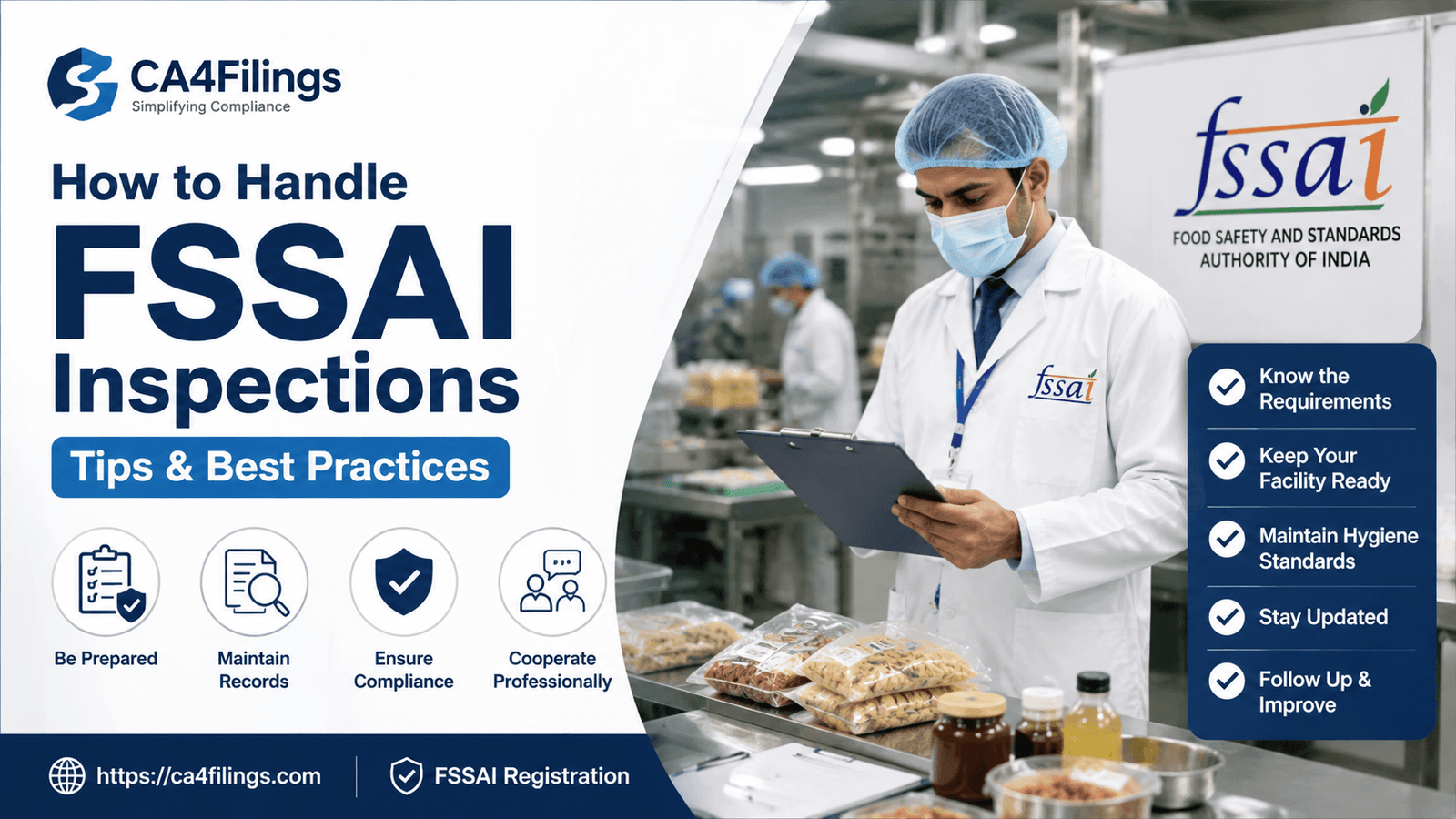
Operating a successful food business in India is an incredible journey, but it comes with a deeply layered web of food safety laws. As a food business operator (FBO), one of the most critical regulatory milestones you will encounter is a sudden or scheduled visit from a Food Safety Officer (FSO). Knowing How to Handle FSSAI Inspections: Tips and Best Practices can mean the difference between a smooth operation and facing severe legal or financial setbacks. At CA4Filings, we often tell our clients that regulatory inspections do not have to be stressful if you have already set up a foundation of solid legal and operational hygiene.
Before you can even worry about an inspection, the very first step in your food journey is securing your legal entitlement to operate. If you are starting a new kitchen, a restaurant, or an FMCG brand, ensuring a valid FSAAI Registration or License is your non-negotiable step zero. Without this fundamental document, dealing with FSSAI inspections becomes an immediate legal liability, often resulting in heavy fines or the sealing of your premises. Once your registration is securely in place, your focus must shift toward maintaining ongoing compliance with rigorous food safety standards.
Understanding the Basics of FSSAI Inspections
Food safety regulations in India are governed by the Food Safety and Standards Authority of India (FSSAI). The primary purpose of an inspection is to verify whether your establishment strictly complies with the provisions of the Food Safety and Standards Act, 2006. Food Safety Officers are legally empowered to enter any food facility unannounced to audit sanitary conditions, examine raw materials, inspect infrastructure, and collect food samples for laboratory testing.
Understanding How to Handle FSSAI Inspections: Tips and Best Practices starts with recognizing that an inspection is an evaluation of your daily practices, not just a paperwork check. The officer wants to ensure that the food you serve or manufacture is safe for human consumption and that your facility does not present any public health risks.
Pre-Inspection Preparedness: Setting the Foundation
True compliance happens long before the inspector knocks on your door. Here are the core operational practices you must implement permanently:
1. Strict Adherence to Schedule 4 Requirements
Schedule 4 of the FSSAI regulations outlines the general sanitary and hygienic practices that every food business must follow. This includes proper ventilation, adequate lighting, clean water supply, efficient drainage, and structured waste disposal mechanisms. Ensure your layout prevents cross-contamination between raw materials and cooked food items.
2. Maintain Up-to-Date Documentation
During regulatory inspections, paperwork is your shield. Keep a dedicated file in an easily accessible location containing:
Your active FSSAI License or Registration display card.
Medical fitness certificates for all food handlers (renewed annually).
Water testing laboratory reports (chemical and microbiological analysis).
Pest control certificates and treatment logs.
FSMS (Food Safety Management System) plan or manual.
3. Train Your Workforce via FoSTaC
FSSAI mandates that food businesses must have trained Food Safety Supervisors. Investing in Food Safety Training and Certification (FoSTaC) for your core team ensures that your employees understand hygiene standards and know exactly what to do during FSSAI compliance audits.
During the Inspection: Managing the FSO and the Process
When an officer arrives, your immediate demeanor and structured communication play a massive role in building a constructive inspector relationship. Here is an actionable guide on How to Handle FSSAI Inspections: Tips and Best Practices in real-time:
1. Verify Credentials and Welcome the Officer
Always politely request the Food Safety Officer to present their official identification card. Welcome them professionally. Remember, transparency is your best ally. Instruct your staff to be respectful, cooperative, and precise when answering questions.
2. Accompany the Inspector
Never leave the inspector to roam around your facility alone. A designated manager or your Food Safety Supervisor must accompany them throughout the walkthrough. Take detailed notes of everything the officer points out, whether it is a minor cleaning issue or a storage recommendation.
3. Handling Sample Collection Legally
If the officer decides to take samples of food items for testing, understand your rights under the food safety laws:
The officer must divide the sample into four distinct parts.
Each part must be sealed, labeled, and signed by both you (the FBO) and the officer.
One part goes to the Food Analyst, two parts are stored safely with the Designated Officer, and the fourth part can be sent to an accredited private lab by you if you wish to challenge the official findings later.
Expert Advice from CA4Filings: Never attempt to hide or destroy materials during an inspection. If an issue is flagged, acknowledge it professionally and ask the officer for the specific rectifications required. Cooperation builds trust; resistance triggers suspicion.
Post-Inspection Framework: Action and Rectification
Once the walkthrough is complete, the officer will compile an inspection report, often using the standardized FSSAI inspection checklist. This checklist scores your facility on compliance levels: Fully Compliant, Partially Compliant, Non-Compliant, or Not Applicable.
1. Handling the Inspection Report
Review the report carefully before signing it. If the officer notes specific areas of concern, you will be issued an "Improvement Notice" under Section 32 of the FSS Act. This notice will detail the exact changes required and provide a reasonable timeframe (usually 14 to 30 days) to implement them.
2. Timely Rectification and Reporting
Do not delay compliance. Take immediate steps to correct every single defect mentioned in the report. Once corrected, write a formal compliance report, attach photographic or documentary evidence of the fixes, and submit it to the FSSAI office. Prompt action prevents your case from escalating to a license suspension or legal penalties.
Mastering How to Handle FSSAI Inspections: Tips and Best Practices
To summarize, mastering How to Handle FSSAI Inspections: Tips and Best Practices relies heavily on ongoing self-audits. Treat every week like an inspection week. Conduct surprise interior audits of your storage units, check expiry labels, monitor employee fingernail and uniform hygiene, and verify your cold chain temperatures. When compliance becomes part of your business culture, an official regulatory inspection changes from a terrifying obstacle into a routine affirmation of your excellence.
Frequently Asked Questions (FAQs)
Q1: Can an FSSAI officer shut down my food business instantly during an inspection?
Ans: An FSO cannot instantly cancel your license, but if they find an immediate, grave threat to public health (e.g., severe contamination or toxic conditions), they can issue an emergency prohibition order to halt operations temporarily until the hazard is rectified.
Q2: What happens if I refuse to cooperate with an FSSAI inspector?
Ans: Obstructing a Food Safety Officer from performing their duty is a serious offense under the FSS Act. It can lead to heavy fines, immediate suspension of your FSSAI license, and potential imprisonment under severe circumstances.
Q3: How frequently do FSSAI inspections take place?
Ans: The frequency depends on the risk category of your food business (e.g., manufacturing units face more frequent audits than small retail shops) and whether any consumer complaints have been registered against your brand.
Q4: Are digital records acceptable during FSSAI compliance audits?
Ans: Yes, keeping digital logs of pest control, temperature monitoring, and supplier invoices is fully acceptable, provided they are easily accessible and can be presented to the officer immediately upon request.
Navigating the complex ecosystem of Indian food regulations demands vigilance, clean operational habits, and robust documentation. Knowing How to Handle FSSAI Inspections: Tips and Best Practices empowers food entrepreneurs to stand confidently before regulatory bodies, proving that their enterprise respects both consumer health and state laws. From managing your inspector relationship with transparency to submitting swift post-inspection rectifications, your proactive approach determines your regulatory success.
Let CA4Filings Manage Your Regulatory Compliance!
Don't let compliance paperwork distract you from growing your food brand. From seamless initial licensing to managing complex regulatory queries, the expert Chartered Accountants and corporate legal advisors at CA4Filings are here to guide you at every step. Contact CA4Filings today to fortify your food business against compliance risks!
Latest Updates
ca4filings.com Services




























-registration.png)