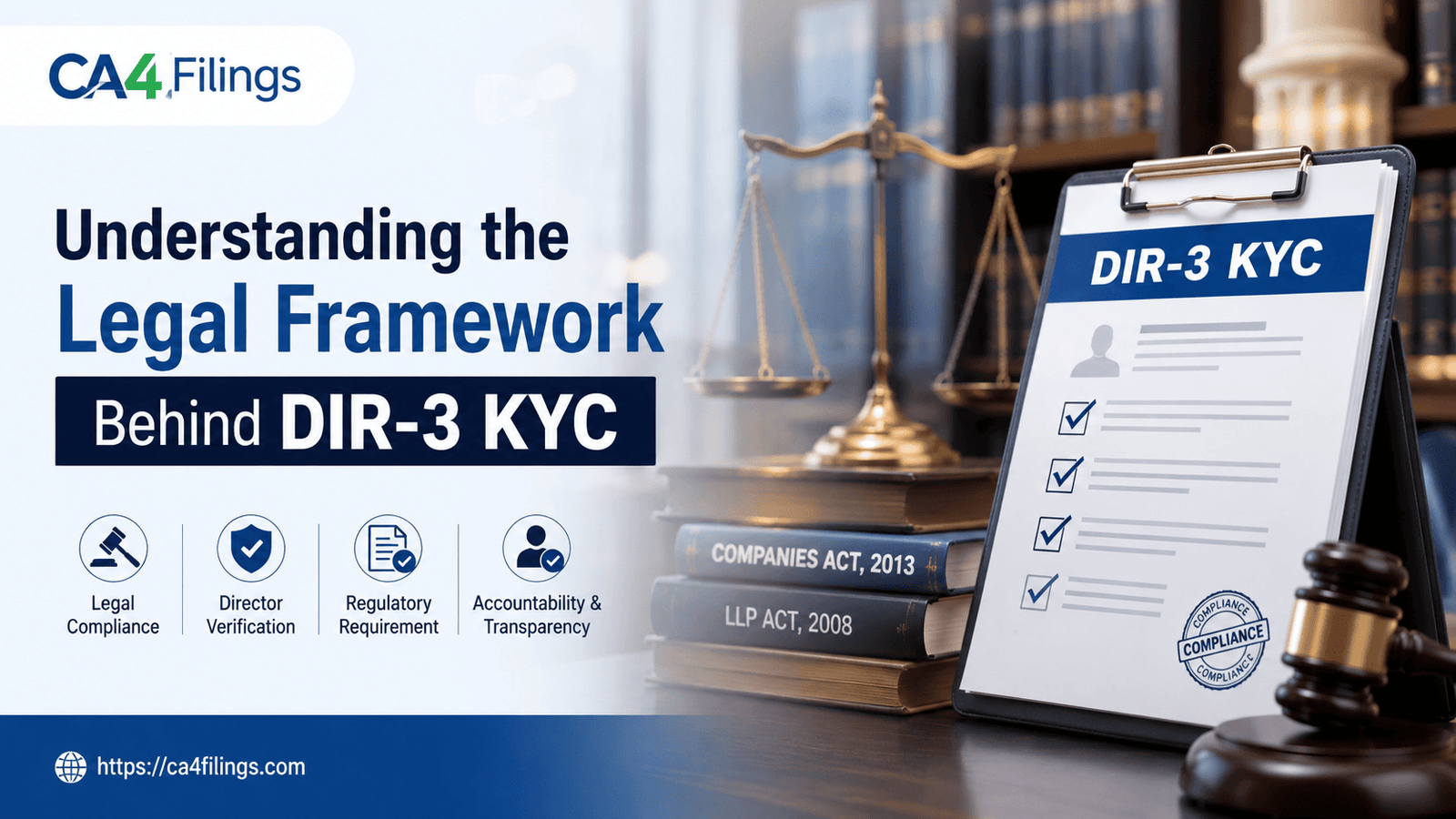
Understanding the Legal Framework Behind DIR-3 KYC
Need help with compliance? Dive into our expert guide on Understanding the Legal Framework Behind DIR-3 KYC to ensure your director status remains active.
Every year, directors across India face a crucial deadline that keeps their professional status intact. When it comes to Understanding the Legal Framework Behind DIR-3 KYC, many professionals feel overwhelmed by the technicalities. However, ensuring your compliance is straightforward if you know the rules. At CA4Filings, we simplify these DIR-3 KYC procedures to help you navigate the regulatory landscape with confidence. By staying updated with these requirements, you protect your professional standing and contribute to the overall health of the Indian corporate ecosystem.
The Foundation of Corporate Governance in India
The legal framework governing companies in India has undergone a massive transformation, especially after the implementation of the Companies Act, 2013. The introduction of the Director Identification Number (DIN) was a landmark move toward ensuring transparency and accountability.
When we talk about Understanding the Legal Framework Behind DIR-3 KYC, we are essentially looking at the government's effort to keep a clean database of all company directors. The regulations mandate that every individual who holds a DIN must verify their details annually. This is not just a bureaucratic hurdle; it is a vital part of corporate governance that prevents shell companies and fraudulent activities.
What is the Legal Basis for DIR-3 KYC?
The requirement originates from the Companies (Appointment and Qualification of Directors) Rules, 2014. Specifically, Rule 12A serves as the primary legislation that enforces this annual exercise.
The Ministry of Corporate Affairs (MCA) introduced these guidelines to ensure that the contact details—specifically mobile numbers and email addresses—linked to a director are authentic and currently operational. By mandating this, the MCA ensures that any communication sent to a director actually reaches them, thereby strengthening regulatory compliance across the board.
Why Compliance is Non-Negotiable
For many company directors, the filing process might seem like a mere formality. However, the legal consequences of failing to comply are severe. If you miss the deadline, your DIN is marked as 'Deactivated,' and a hefty late fee is imposed. To reactivate it, you must pay a penalty, which adds unnecessary financial and administrative stress.
Understanding the Legal Framework Behind DIR-3 KYC: Key Requirements
To maintain compliance with the current corporate law, you must ensure your data is accurate. The filing requirements are designed to capture the most recent information about your identity and residency.
Identity Verification: You must provide a PAN, Passport (for foreign nationals), or Aadhaar card as proof of identity.
Contact Verification: A mandatory OTP-based verification for both your mobile number and email ID.
Digital Signature: The form must be digitally signed by the director and further certified by a practicing professional (CA, CS, or CMA).
These steps ensure that the person behind the DIN is traceable and reachable, which is the cornerstone of the government's vision for digital transparency.
Common Challenges in the Filing Process
Even with clear guidelines, directors often face issues during the filing process. One common hurdle is the mismatch in data between the PAN database and the MCA records. As experienced practitioners at CA4Filings, we often see directors struggling because their name or date of birth on their official documents doesn't perfectly align with their DIN records.
How to Stay Ahead of Regulatory Changes
Keep Records Updated: Ensure your PAN details are updated well before the filing season.
Use Valid Credentials: Always use a mobile number and email address that you personally control.
Proactive Filing: Don't wait for the last date. Last-minute system congestion is a reality with the MCA portal.
Frequently Asked Questions
Is DIR-3 KYC mandatory for all directors?
Yes, it is mandatory for every individual who has been allotted a DIN, regardless of whether they are currently a director in any company.
What happens if I miss the deadline?
Failure to comply leads to the deactivation of your DIN. You will be required to pay a late fee (often around ₹5,000) to have it reactivated.
Do I need a Digital Signature (DSC) to file this?
Yes, the form requires a Class 3 Digital Signature Certificate for submission.
Can I update my name or address through DIR-3 KYC?
No, the form is for verification of existing data. If you need to change your name or address, you must file Form DIR-6.
Understanding the Legal Framework Behind DIR-3 KYC is essential for every responsible director in India. By adhering to these requirements, you not only avoid penalties but also contribute to a more transparent business environment. Compliance is the backbone of a successful corporate career, and at CA4Filings, we are committed to making this process seamless for you. If you need expert assistance or have questions regarding your annual filings, reach out to our team today—we are here to ensure your corporate status remains in perfect standing.
Latest Updates
ca4filings.com Services

























-registration.png)